
Who created 'Pippi Longstocking'?
Show answer
Astrid Lindgren
The Swedish writer is among the most translated children's authors in the world.
💡 Did you know? Pippi is billed as 'the strongest girl in the world'.
10 questions · Society & Everyday
For centuries, art was allowed to women as an ornament and denied to them as a profession. This pack brings together ten who made it their work anyway, often against the express resistance of their own family, the church or the state. Hildegard of Bingen wrote on theology, medicine and music in the 12th century, at a time when women were all but forbidden to preach. Jane Austen published without her name in her lifetime, “by a Lady”. Clara Schumann had to go to court to be allowed to marry, and noted that a woman must not desire to compose, while composing herself. Virginia Woolf, who unlike her brothers was not sent to Cambridge, wrote the sentence that sums it all up: a woman must have money and a room of her own if she is to write. Others made their own lives the material of their work. Frida Kahlo began to paint in bed, with a mirror above her, after the accident that shattered her spine. Käthe Kollwitz put the hunger of Berlin’s working-class districts and her grief for a son killed in the war into her prints. Simone de Beauvoir wrote the book that gave millions of women the language to understand their own situation. And then there are those who changed the way we see and hear: Coco Chanel freed the female body from the corset, Astrid Lindgren invented the strongest girl in the world, and Maria Callas turned opera into real theatre.
Practise for freePurFact brings every card back right before you would forget it. That's how knowledge sticks.
Astrid Lindgren
The Swedish writer is among the most translated children's authors in the world.
💡 Did you know? Pippi is billed as 'the strongest girl in the world'.
Frida Kahlo
In her paintings she explored pain, the body and identity.
💡 Did you know? She began painting in bed after a serious bus accident.
Coco Chanel
She revolutionised women's fashion with understated elegance.
💡 Did you know? The 'little black dress' is credited to her.
Simone de Beauvoir
The French philosopher helped shape existentialist thought.
💡 Did you know? She wrote: 'One is not born, but rather becomes, a woman.'

Foto: Cassandra Austen · CC BY-SA 3.0 · Wikimedia Commons
Jane Austen
Her ironic novels about love and class are considered classics.
💡 Did you know? In her lifetime her novels appeared anonymously: the first credited only 'By a Lady'.

Foto: George Charles Beresford / Adam Cuerden · Public domain · Wikimedia Commons
Virginia Woolf
The British author pioneered modern stream-of-consciousness writing.
💡 Did you know? She belonged to the influential 'Bloomsbury Group' of artists.

Foto: Franz von Lenbach · Public domain · Wikimedia Commons
Clara Schumann
She was one of the greatest piano virtuosos of the 19th century.
💡 Did you know? Her portrait once featured on the German 100-mark note.
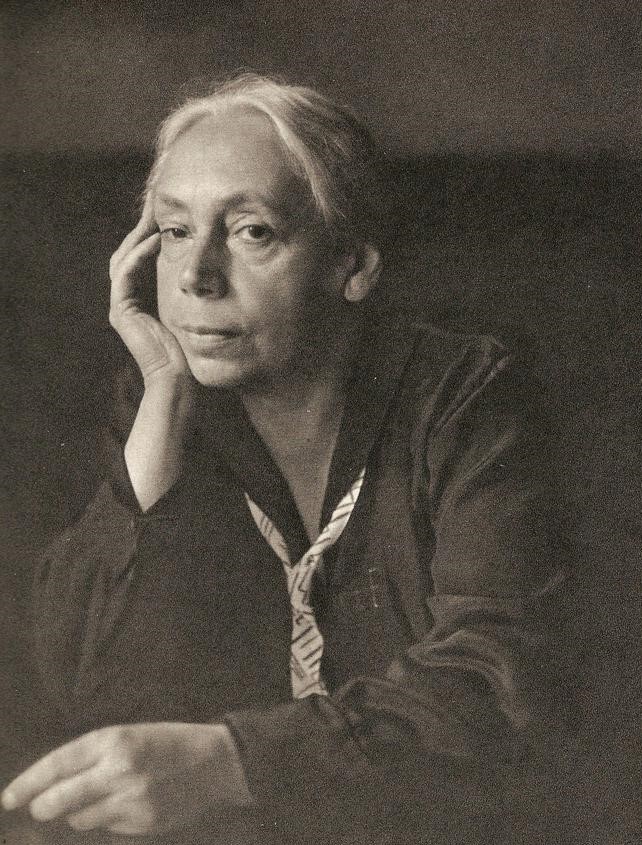
Foto: Hugo Erfurth · Public domain · Wikimedia Commons
Käthe Kollwitz
The German artist is known for her socially critical work.
💡 Did you know? An enlarged version of her Pietà stands in Berlin's Neue Wache.
Maria Callas
The soprano was famous for her drama and stage presence.
💡 Did you know? Her dramatic weight loss made headlines at the time.

Foto: Unbekannt · Public domain · Wikimedia Commons
Hildegard of Bingen
She wrote works on medicine, theology and music.
💡 Did you know? Her herbal remedies are still marketed today ('Hildegard medicine').
Society & Everyday: all topics →
Home · All topics · Legal notice · Privacy · Terms · Contact