

Foto: Alexis Lours · CC BY 4.0 · Wikimedia Commons
Show answer
Coal Tit
The coal tit is a tiny tit with a white nape patch: it lives mainly in conifer forests.
💡 Did you know? The small coal tit prefers conifer forests.
30 questions · Nature
All about Bird songs (more European): This is the Coal Tit. This is the Marsh Tit. This is the Crested Tit. This is the Long-tailed Tit. This is the Goldcrest. This is the Short-toed Treecreeper. This is the Common Nightingale. The black redstart is a dark little bird with a rust-red tail that it constantly quivers. It likes to nest on buildings and sings from first light. This is the Common Redstart. Good to know: The small coal tit prefers conifer forests. Marsh tit and willow tit are very hard to tell apart. The crested tit sports a small pointed crest. The long-tailed tit looks like a ball of cotton wool with a long tail. The goldcrest, at about 5 grams, shares with the firecrest the title of Europe's smallest bird. The short-toed treecreeper spirals up tree trunks. The nightingale sings at night too: hence its name. The black redstart was originally a bird of rocky cliffs and now readily nests on buildings. The common redstart conspicuously quivers its rusty-red tail. The spotted flycatcher catches insects in flight and returns to the same perch.
Practise for freePurFact brings every card back right before you would forget it. That's how knowledge sticks.
Which bird is singing?
Foto: Alexis Lours · CC BY 4.0 · Wikimedia Commons
Coal Tit
The coal tit is a tiny tit with a white nape patch: it lives mainly in conifer forests.
💡 Did you know? The small coal tit prefers conifer forests.

Foto: Stephan Sprinz · CC BY 4.0 · Wikimedia Commons
Marsh Tit
The marsh tit has a glossy black cap and is hard to tell from the willow tit.
💡 Did you know? Marsh tit and willow tit are very hard to tell apart.

Foto: Andrey Gulivanov · CC BY 2.0 · Wikimedia Commons
Crested Tit
The crested tit stands out with its pointed, black-and-white patterned crest.
💡 Did you know? The crested tit sports a small pointed crest.

Foto: Ігор Червоненко · CC BY-SA 4.0 · Wikimedia Commons
Long-tailed Tit
The long-tailed tit looks like a small ball of fluff with an overlong tail: often in roving flocks.
💡 Did you know? The long-tailed tit looks like a ball of cotton wool with a long tail.

Foto: Francis C. Franklin · CC BY-SA 3.0 · Wikimedia Commons
Goldcrest
The goldcrest, at around five grams, shares with the firecrest the title of Europe's smallest bird, with a yellow-orange crown stripe.
💡 Did you know? The goldcrest, at about 5 grams, shares with the firecrest the title of Europe's smallest bird.

Foto: Charles J. Sharp · CC BY-SA 4.0 · Wikimedia Commons
Short-toed Treecreeper
The short-toed treecreeper is a small, bark-coloured bird that climbs tree trunks in a spiral.
💡 Did you know? The short-toed treecreeper spirals up tree trunks.

Foto: Warrieboy · CC BY-SA 4.0 · Wikimedia Commons
Common Nightingale
The nightingale is a plain brown bird: famous not for its looks but for its powerful, varied song.
💡 Did you know? The nightingale sings at night too: hence its name.

Foto: Muelder · CC BY-SA 4.0 · Wikimedia Commons
Black Redstart
The black redstart is a dark little bird with a rust-red tail that it constantly quivers. It likes to nest on buildings and sings from first light.
💡 Did you know? The black redstart was originally a bird of rocky cliffs and now readily nests on buildings.

Foto: Jerzy Strzelecki · CC BY-SA 3.0 · Wikimedia Commons
Common Redstart
The common redstart has a rusty-red tail it quivers conspicuously; the male has a black throat.
💡 Did you know? The common redstart conspicuously quivers its rusty-red tail.

Foto: Бусел В.А. · CC BY-SA 4.0 · Wikimedia Commons
Spotted Flycatcher
The spotted flycatcher is a drab grey-brown: it sits upright on perches and snaps insects in flight.
💡 Did you know? The spotted flycatcher catches insects in flight and returns to the same perch.

Foto: Mark Medcalf · CC BY 2.0 · Wikimedia Commons
European Pied Flycatcher
In the pied flycatcher the male is boldly black-and-white, while the female is a drab brown.
💡 Did you know? The male is black-and-white, the female a plain brown.

Foto: User:Diliff · CC BY-SA 3.0 · Wikimedia Commons
Eurasian Skylark
The skylark is a brown-streaked ground bird of open fields: famous for its minutes-long song flight high in the sky.
💡 Did you know? The skylark often sings for minutes while hovering high in the air.

Foto: Arnstein Rønning · CC BY-SA 3.0 · Wikimedia Commons
Fieldfare
The fieldfare is a large, boldly patterned thrush. In winter it roams in large flocks and strips berry bushes bare.
💡 Did you know? Fieldfares often breed in colonies and defend their nests together against predators.

Foto: Fernando Losada Rodríguez · CC BY-SA 4.0 · Wikimedia Commons
Mistle Thrush
The mistle thrush is the largest native thrush: it likes to sing from high treetops, even in a storm.
💡 Did you know? The mistle thrush sings even in stormy weather: the 'stormcock'.

Foto: Francis Franklin · CC BY-SA 3.0 · Wikimedia Commons
Eurasian Bullfinch
The bullfinch stands out with the male's bright rose-red breast and black cap.
💡 Did you know? The male bullfinch stands out with its bright red breast.

Foto: Charles J. Sharp · CC BY-SA 4.0 · Wikimedia Commons
Hawfinch
The hawfinch is the largest native finch, with a strikingly thick, powerful bill. With it, it cracks even hard fruit stones with ease.
💡 Did you know? The hawfinch's powerful bill can crack even hard cherry stones.

Foto: Charles J. Sharp · CC BY-SA 4.0 · Wikimedia Commons
European Serin
The serin is Europe's smallest finch: yellowish, with a hurried, jangling song.
💡 Did you know? The serin is the smallest European finch.

Foto: Joe Pell · CC BY 2.0 · Wikimedia Commons
Common Linnet
The linnet is a finch of open country: the male has a red forehead and breast in the breeding season.
💡 Did you know? In the breeding season the male sports a red forehead and breast.

Foto: Charles J. Sharp · CC BY-SA 4.0 · Wikimedia Commons
Eurasian Siskin
The siskin is a small, yellow-green finch that acrobatically works alder and birch cones.
💡 Did you know? Siskins love alder and birch seeds in winter.

Foto: hedera.baltica from Wrocław, Poland · CC BY-SA 2.0 · Wikimedia Commons
Western Jackdaw
The jackdaw is the smallest native crow: known by its grey nape and pale eyes.
💡 Did you know? The jackdaw is the smallest native crow, with pale blue eyes.

Foto: Frank Schulenburg · CC BY-SA 4.0 · Wikimedia Commons
Northern Raven
The raven is the largest songbird in the world: jet-black, highly intelligent, with a deep, rolling call.
💡 Did you know? The raven is the largest songbird in the world.

Foto: Apatura1955 · CC0 · Wikimedia Commons
Eurasian Golden Oriole
The golden oriole, despite the male's bright yellow-and-black, is hard to see: it stays hidden in high foliage.
💡 Did you know? The bright yellow male often stays hidden in the foliage despite its colour.

Foto: Antonios Tsaknakis · CC BY-SA 4.0 · Wikimedia Commons
Red-backed Shrike
The red-backed shrike has a reddish back and a black eye-mask: it stores prey impaled on thorns.
💡 Did you know? The red-backed shrike impales prey on thorns as a larder.
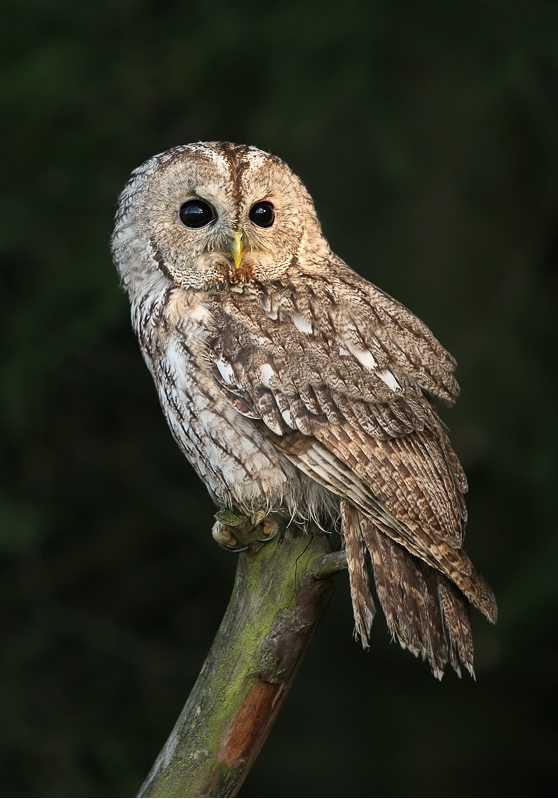
Foto: Martin Mecnarowski (http://www.photomecan.eu/) · CC BY-SA 3.0 · Wikimedia Commons
Tawny Owl
The tawny owl is a medium-sized, round-headed owl: the source of the classic nocturnal „hoo-hoo“ call.
💡 Did you know? The familiar 'hoo-hoo' call in the woods is usually the tawny owl.

Foto: Andreas Trepte · CC BY-SA 2.5 · Wikimedia Commons
Common Kestrel
The kestrel is a small raptor that can hover on the spot over fields.
💡 Did you know? The kestrel can hover on the spot in its 'windhover' flight.

Foto: Dion Art · CC BY-SA 4.0 · Wikimedia Commons
Black Woodpecker
The black woodpecker, the size of a crow, is Europe's largest woodpecker: jet-black with a red cap.
💡 Did you know? The black woodpecker, crow-sized, is Europe's largest woodpecker.

Foto: This picture was realized by Richard Bartz by using a Canon EF 70-300mm f/4-5.6 IS USM Lens · CC BY-SA 2.5 · Wikimedia Commons
Mallard
The mallard is the commonest and best-known wild duck. The drake has a glossy green head, while the female is plain brown for camouflage.
💡 Did you know? The mallard is the ancestor of almost all domestic ducks.

Foto: Alexis Lours · CC BY 4.0 · Wikimedia Commons
Grey Heron
The grey heron is a large grey wading bird with a long neck and dagger-like bill. It can be seen waiting patiently by water, hunting fish and frogs.
💡 Did you know? The grey heron often stands motionless in the water and stabs lightning-fast for fish.

Foto: Alexis Lours · CC BY 4.0 · Wikimedia Commons
Eurasian Coot
The coot is a black waterbird with a white frontal shield: found on almost any pond.
💡 Did you know? The coot is recognised by its white frontal shield.

Foto: JJ Harrison (https://www.jjharrison.com.au/) · CC BY-SA 3.0 · Wikimedia Commons
Great Crested Grebe
The great crested grebe is an elegant waterbird with a crest: famous for its elaborate courtship head-shaking.
💡 Did you know? The great crested grebe performs an elaborate courtship 'penguin dance'.
Home · All topics · Legal notice · Privacy · Terms · Contact