Foto: Juan Emilio · CC BY-SA 2.0 · Wikimedia Commons
Show answer
European Robin
The robin is unmistakable with its orange-red breast and one of the best-loved garden birds. It is not very shy and often follows gardeners to snatch worms turned up by the spade.
💡 Did you know? The robin even sings at night under streetlights and defends its territory fiercely.
Foto: Charles J. Sharp · CC BY-SA 4.0 · Wikimedia Commons
Show answer
Common Blackbird
The blackbird is one of the commonest birds in gardens and parks. The male is jet black with a yellow bill, the female brown; its song is among the most beautiful of native birds.
💡 Did you know? The blackbird was originally a shy forest bird and only later became a familiar city dweller.
Foto: Sławek Staszczuk · CC BY-SA 3.0 · Wikimedia Commons
Show answer
Great Tit
The great tit is the largest and commonest native tit. It is very confiding at bird feeders and a regular winter visitor.
💡 Did you know? The great tit is the largest native tit and has a black stripe down its chest.
Foto: Luc Viatour · CC BY-SA 3.0 · Wikimedia Commons
Show answer
Eurasian Blue Tit
The blue tit is smaller than the great tit and recognised by its blue cap and wings. It clambers acrobatically upside down on twigs and fat balls.
💡 Did you know? The small blue tit is easy to spot by its blue cap and is an acrobatic climber.
Foto: Terragio67 · CC BY-SA 4.0 · Wikimedia Commons
Show answer
House Sparrow
The house sparrow, or sparrow, lives sociably close to humans. In many cities it has become scarcer despite once being so common.
💡 Did you know? The house sparrow has lived close to humans for thousands of years.
Foto: Hobbyfotowiki · CC0 · Wikimedia Commons
Show answer
Great Spotted Woodpecker
The great spotted woodpecker is Germany's commonest woodpecker, black and white with a red patch. You often hear it before you see it: by its typical drumming and loud calls.
💡 Did you know? Its drumming on tree trunks is not for finding food but a far-carrying territorial signal.
Foto: Luc Viatour · CC BY-SA 3.0 · Wikimedia Commons
Show answer
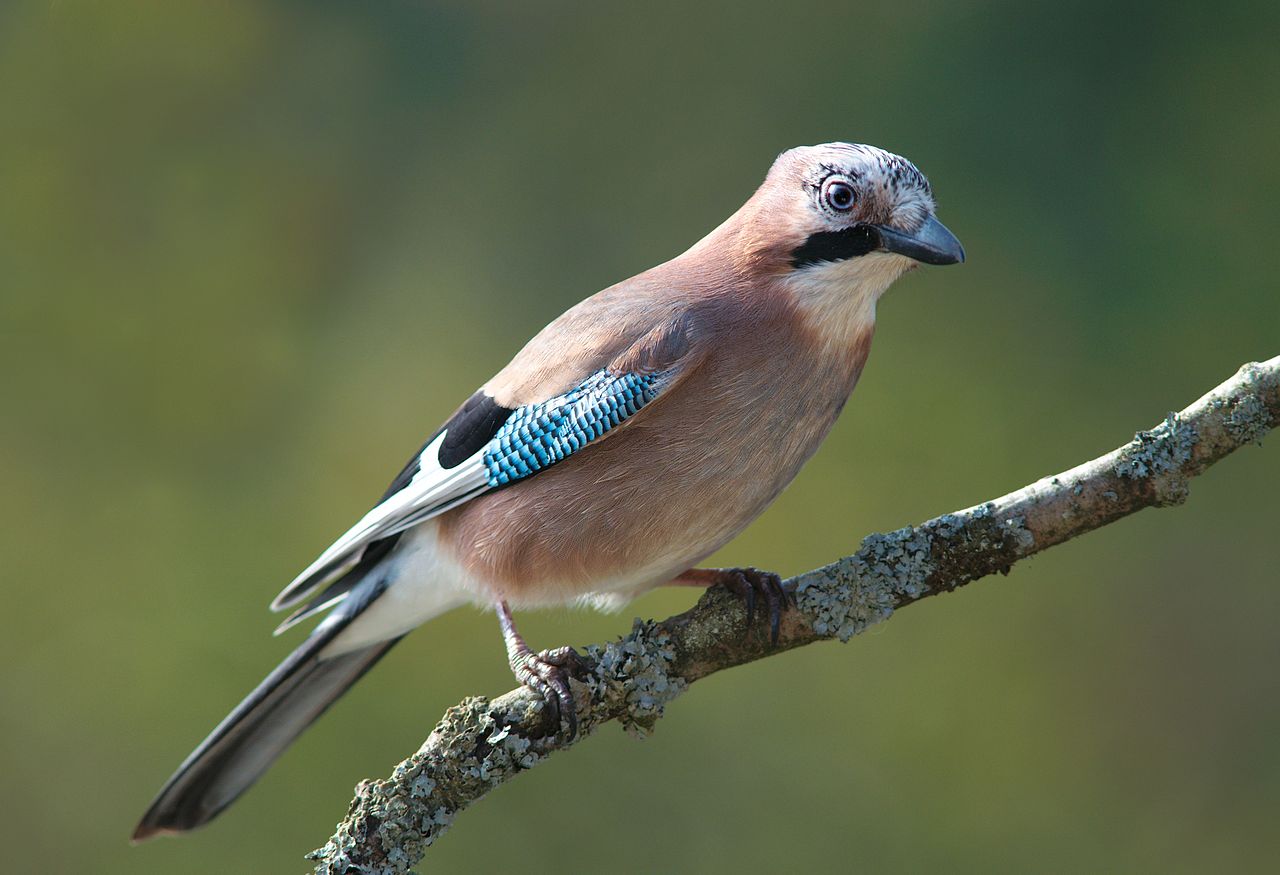
Eurasian Jay
The jay is a colourful member of the crow family with strikingly blue-patterned wing feathers. As the 'police of the woods' it warns other animals of danger with loud screeching.
💡 Did you know? The jay buries thousands of acorns as a winter store and so unintentionally plants new oak trees.
Foto: Charles J. Sharp · CC BY-SA 4.0 · Wikimedia Commons
Show answer
Common Starling
In breeding plumage the starling is black with a metallic sheen and pale spots. It is a gifted mimic and outside the breeding season forms huge flocks.
💡 Did you know? Starlings form huge flocks that make billowing patterns in the evening sky.
Foto: MichaelMaggs (Bearb. Arad) · CC BY-SA 2.5 · Wikimedia Commons
Show answer
Common Chaffinch
The chaffinch is one of the commonest birds in Europe. The male stands out with its rusty-red breast and blue-grey cap.
💡 Did you know? The chaffinch is one of Europe's commonest birds; its song varies regionally almost like a 'dialect'.
Foto: Alexis Lours · CC BY 4.0 · Wikimedia Commons
Show answer
Eurasian Magpie
The magpie is a striking black-and-white member of the crow family with a long tail. It is considered especially clever; its reputation as a thief of shiny objects, though, is exaggerated.
💡 Did you know? The magpie is one of the few animals that can recognise itself in a mirror.
Foto: Alexis Lours · CC BY 4.0 · Wikimedia Commons
Show answer
Carrion Crow
The carrion crow is an entirely black, sturdy member of the crow family. Crows are among the most intelligent birds and can even solve tricky puzzles.
💡 Did you know? Carrion crows are considered extremely intelligent and even use tools.
Foto: Francis C. Franklin · CC BY-SA 3.0 · Wikimedia Commons
Show answer
European Goldfinch
The goldfinch is a colourful finch with a red face and a yellow wing bar. It likes to feed on thistle and other wild seeds.
💡 Did you know? Its German name 'thistle finch' comes from the way it deftly picks seeds from thistles.
Foto: Carlos Delgado · CC BY-SA 3.0 · Wikimedia Commons
Show answer
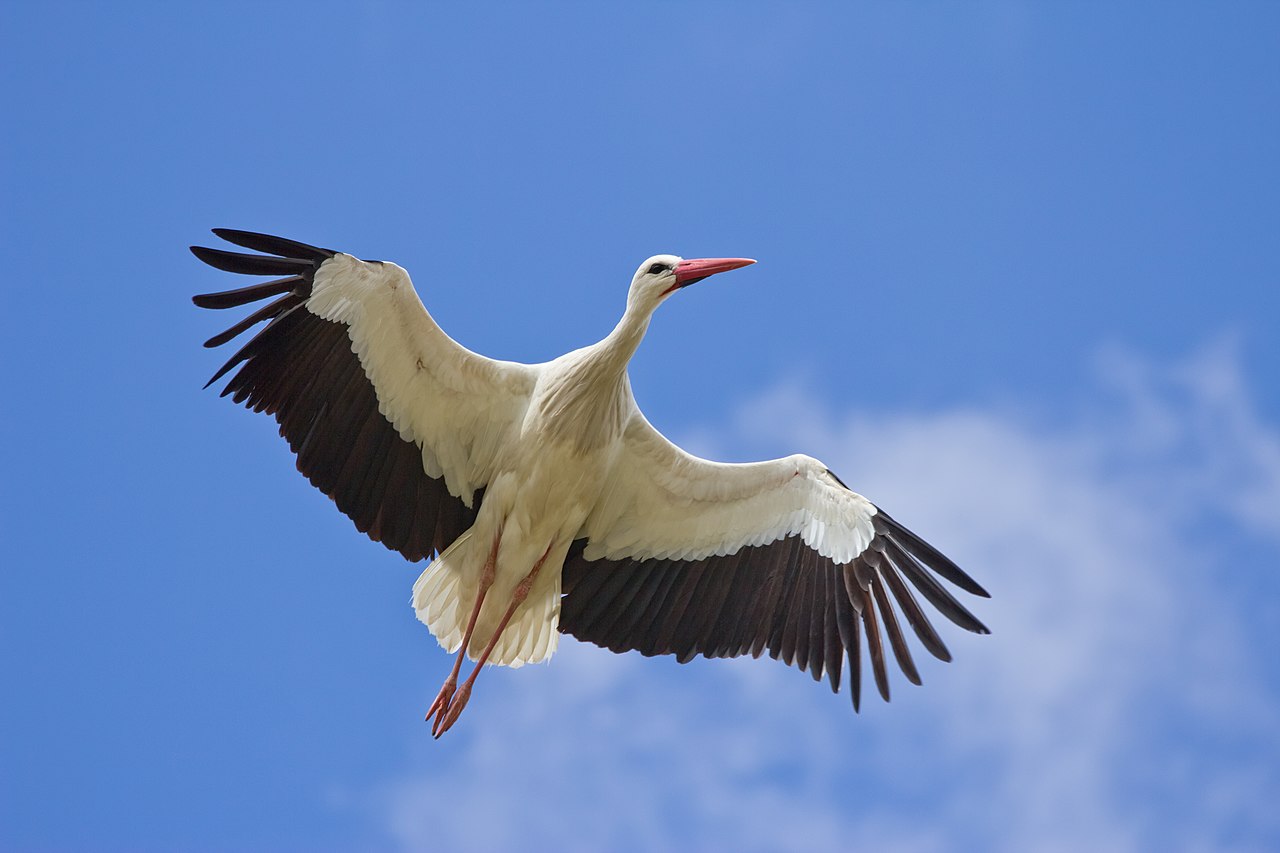
White Stork
The white stork is a large black-and-white wading bird with a red bill that likes to nest on roofs and poles. It is seen as a bringer of luck and a symbol of the birth of children.
💡 Did you know? The white stork migrates as far as Africa in winter, covering thousands of kilometres.
Foto: Charles J. Sharp · CC BY-SA 4.0 · Wikimedia Commons
Show answer
Mute Swan
The mute swan is a large white waterbird with an orange bill and a black knob above it. It is found on almost all calm waters.
💡 Did you know? The mute swan is one of the heaviest flying birds in Europe.
Foto: Richard Bartz · CC BY-SA 2.5 · Wikimedia Commons
Show answer
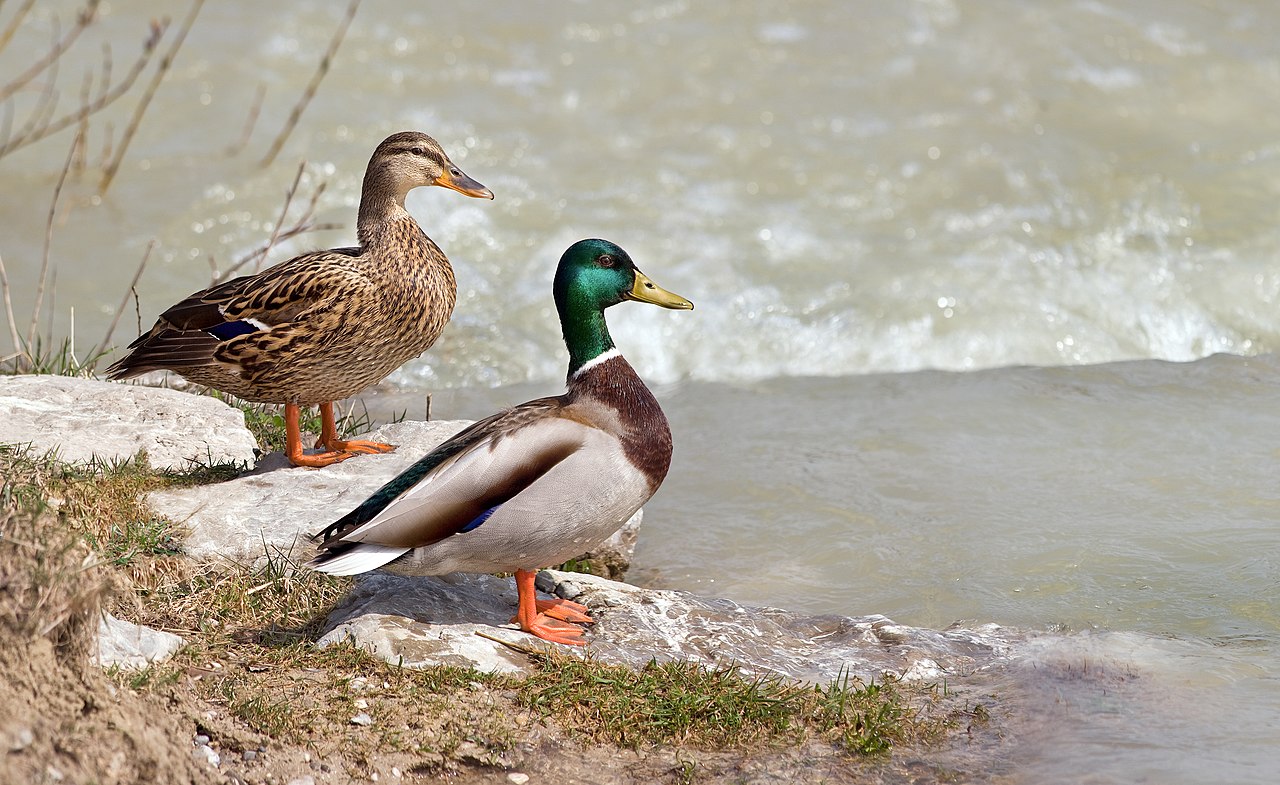
Mallard
The mallard is the commonest and best-known wild duck. The drake has a glossy green head, while the female is plain brown for camouflage.
💡 Did you know? The mallard is the ancestor of almost all domestic ducks.