PurFact

Charlotte Brontë

12 questions · Literature

Charlotte Brontë, born in Yorkshire in 1816, grew up as a country parson's daughter in the windswept moorland village of Haworth: in a house full of books, right next to the graveyard. After the early deaths of their mother and two elder sisters, the remaining siblings (Charlotte, Branwell, Emily and Anne) created entire fantasy worlds for consolation: tiny, self-written miniature books about the invented realms of Angria and Gondal filled their childhood. The playing children became writing women: but the literary world was a men's business. So in 1846 the three sisters published their joint volume of poems under masculine-sounding pen names: Currer, Ellis and Acton Bell. A year later, 'Jane Eyre' by 'Currer Bell' struck like lightning: the story of the plain but unbending governess who falls in love with her employer Mr Rochester and learns at the altar that his first wife lives locked away as the 'madwoman in the attic' of Thornfield Hall. The novel, told in the radical first person of a woman demanding equality of souls, became both a scandal and a worldwide success. The same year saw Emily's 'Wuthering Heights' and Anne's 'Agnes Grey': three debuts from one parsonage, unique to this day. Then fate struck: within nine months, Branwell, Emily and Anne died of tuberculosis. Charlotte remained alone with her father, wrote 'Shirley' and 'Villette' and died in 1855, shortly after her late marriage, at only 38. Did you know that Charlotte revealed her identity even to her own publisher only in 1848? When she appeared in London, hardly anyone would believe that behind 'Currer Bell' stood a diminutive parson's daughter.

Practise for free

PurFact brings every card back right before you would forget it. That's how knowledge sticks.

All questions with answers

What is Charlotte Brontë's famous novel about an unbending governess called?

Show answer

Jane Eyre

Published in 1847: the radical first-person narrative of a woman demanding equality of souls.

💡 Did you know? „Jane Eyre“ was revolutionary: a poor, „plain“ heroine tells in the first person, with self-assurance, of her right to love and dignity.

Under which masculine-sounding pseudonym did Charlotte Brontë publish?

Show answer

Currer Bell

Her sisters chose 'Ellis' and 'Acton Bell': the initials matched their real names.

💡 Did you know? Like her sisters, Charlotte published under a male pseudonym (Currer Bell): fearing she would not be taken seriously as a woman.

What is Jane Eyre's employer and great love called?

Show answer

Rochester

At the altar the secret bursts: he is already married.

💡 Did you know? The dark, mysterious Mr Rochester became an archetype of the „Byronic hero“ in romantic fiction.

What secret does Thornfield Hall hide in 'Jane Eyre'?

Show answer

the woman in the attic

Bertha Mason became the most famous supporting character of Victorian fiction: Jean Rhys told her backstory in 'Wide Sargasso Sea'.

💡 Did you know? The „madwoman in the attic“ from „Jane Eyre“ became a scholarly symbol of the repressed woman.

In which Yorkshire moorland village did the Brontë siblings grow up?

Show answer

Haworth

The parsonage right by the graveyard is now the Brontë Parsonage Museum.

💡 Did you know? The three Brontë sisters grew up in the remote moorland village of Haworth: rugged Yorkshire shapes their dark, passionate novels.

What were Charlotte's likewise-writing sisters called?

Show answer

Emily and Anne

Emily's 'Wuthering Heights' and Anne's 'Agnes Grey' appeared the same year as 'Jane Eyre': three debuts from one parsonage.

💡 Did you know? Her sisters Emily („Wuthering Heights“) and Anne were also important authors: three geniuses in one parsonage.

What did the Brontë children create in tiny self-written miniature books?

Show answer

invented fantasy worlds

Some of the mini-books were smaller than a matchbox: priceless collectors' items today.

💡 Did you know? As children the Brontës invented whole fantasy realms and wrote them into tiny, home-made books: barely legible in their smallness.

Which tragedy struck Charlotte within nine months in 1848 to 1849?

Show answer

the deaths of her three siblings

Tuberculosis carried off the siblings: Charlotte remained alone with her father.

💡 Did you know? Within just nine months Charlotte lost her brother and both sisters Emily and Anne: she survived as the last.

In which typical women's profession of her day did Charlotte work (like her heroine Jane)?

Show answer

governess

Her time at a Brussels boarding school also flowed into the novels 'The Professor' and 'Villette'.

💡 Did you know? Like her heroine Jane, Charlotte worked as a governess: one of the few careers open to an educated woman.

What is Charlotte's last completed novel about a teacher in a foreign city called?

Show answer

Villette

Published in 1853, inspired by her Brussels years, for many her most mature work.

💡 Did you know? „Villette“, her last novel, draws on Charlotte's unhappy love for a married teacher in Brussels.

At what age did Charlotte Brontë die in 1855?

Show answer

at 38

Shortly after her late marriage to Arthur Bell Nicholls: probably from complications of pregnancy.

💡 Did you know? Charlotte died at just 38, pregnant, shortly after her late marriage: the last of the gifted siblings.

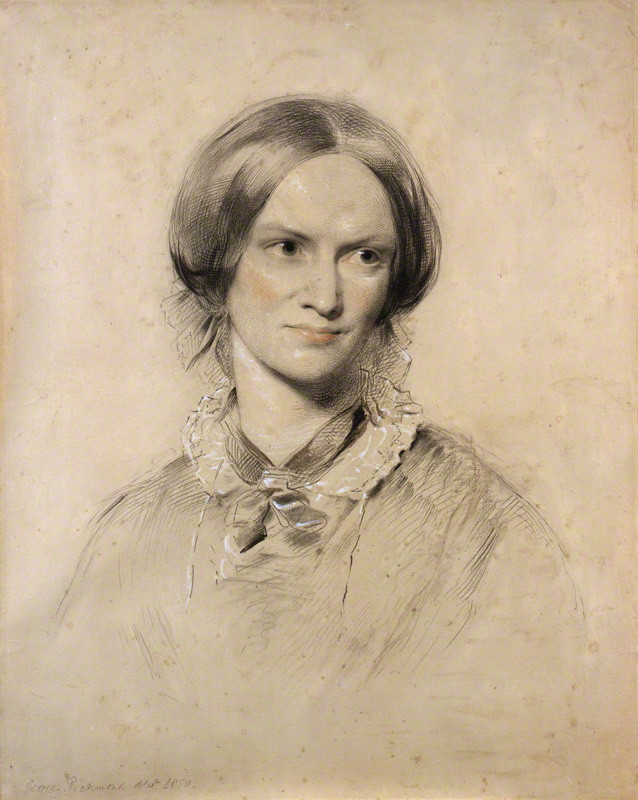
Charlotte Brontë

Foto: George Richmond · Public domain · Wikimedia Commons

Which writer is shown here?

Show answer

Charlotte Brontë

Charlotte Brontë was an English writer whose novel „Jane Eyre“, with its self-assured heroine, changed literature.

💡 Did you know? Like her writing sisters Emily and Anne, she first published under a male pseudonym.

How PurFact works

Practise for free

More on this topic

Literature: all topics →