PurFact

Claude Debussy

13 questions · Music

Claude Debussy, born in 1862 in Saint-Germain-en-Laye near Paris, the son of a shopkeeper, entered the Paris Conservatoire at ten and was soon ruffling feathers: the headstrong student questioned rules of harmony that had stood for centuries. 'Pleasure is the law,' he would later say. In 1884 he nevertheless won the coveted Prix de Rome, but the career it mapped out held little interest for him. Other impressions cut deeper: the sounds of a Javanese gamelan orchestra at the 1889 Paris World's Fair, the poetry of Mallarmé, the painting of his day. From all this Debussy forged a new musical language that was dubbed: against his will: 'Impressionism': music of colours, moods and floating harmonies rather than fixed forms. His orchestral piece 'Prélude à l'après-midi d'un faune' (1894) is widely regarded as the birth of modern music; Pierre Boulez said its opening flute melody marks the beginning of 'the music of our time'. There followed the sea sketches 'La Mer', the opera 'Pelléas et Mélisande' and piano music of enchanting poetry: above all the world-famous 'Clair de lune' ('Moonlight') and the playful 'Children's Corner' for his little daughter Chouchou. In private, Debussy lived the life of a Parisian bohemian, with tangled love affairs and chronic money troubles; the scandals surrounding his separations kept society talking. His break with the German musical tradition was deliberate, too: late in life he proudly signed his scores 'musicien français'. Did you know that 'Clair de lune' is named after a poem by Paul Verlaine? Debussy died in 1918 while German guns were shelling Paris: amid the chaos of war, hardly anyone noticed the passing of the man who had opened the door to 20th-century music.

Practise for free

PurFact brings every card back right before you would forget it. That's how knowledge sticks.

All questions with answers

By which stylistic label is Debussy's music known (against his will)?

Show answer

Impressionism

Music of tone colours and moods rather than fixed forms: the term comes from painting.

💡 Did you know? Debussy hated the label „Impressionism“, borrowed from painting for his music: he called it a „stupid term“.

Which country was Claude Debussy from?

Show answer

France

Born in 1862 in Saint-Germain-en-Laye near Paris; late in life he proudly signed as 'musicien français'.

💡 Did you know? Debussy dissolved traditional harmony and paved the way for the modern music of the 20th century.

What is Debussy's world-famous piano piece about moonlight called?

Show answer

Clair de lune

The third movement of the 'Suite bergamasque': named after a poem by Paul Verlaine.

💡 Did you know? „Clair de lune“ (Moonlight) is Debussy's best-known piece and still scores countless films and commercials.

Which 1894 Debussy orchestral piece is regarded as the birth of modern music?

Show answer

Prélude à l'après-midi d'un faune

After a poem by Mallarmé; Pierre Boulez said its flute melody begins 'the music of our time'.

💡 Did you know? The conductor Pierre Boulez called the „Faune“ the „birth of modern music“, with it the 20th century begins.

What is Debussy's orchestral work about the sea called?

Show answer

La Mer

Three symphonic sketches (1905); the first edition's cover featured Hokusai's 'Great Wave off Kanagawa'.

💡 Did you know? „La Mer“ paints the sea in sound: Debussy, who felt called to be a sailor, wrote most of it far from the coast.

What is Debussy's only completed opera called?

Show answer

Pelléas et Mélisande

Based on Maeterlinck's Symbolist drama: an opera of hushed tones and suggestion.

💡 Did you know? In „Pelléas et Mélisande“ Debussy dispensed almost entirely with classical arias: the singers declaim almost in speech.

Which exotic music left its mark on Debussy at the 1889 Paris World's Fair?

Show answer

gamelan

The floating sounds of the Indonesian ensemble opened new harmonic worlds to him.

💡 Did you know? The exotic sound of the Indonesian gamelan orchestra at the 1889 World's Fair fascinated Debussy and deeply influenced his harmony.

Which coveted composition prize did Debussy win in 1884?

Show answer

Prix de Rome

The stay at the Villa Medici in Rome rather bored the headstrong young man, though.

💡 Did you know? Debussy too won the Prix de Rome: though the free spirit found the mandated study years in Rome an ordeal.

For whom did Debussy write the piano suite 'Children's Corner'?

Show answer

his daughter Chouchou

Claude-Emma, nicknamed Chouchou, was his only child: the suite ends with the famous 'Golliwogg's Cakewalk'.

💡 Did you know? Debussy wrote the playful suite „Children's Corner“ for his beloved daughter „Chouchou“, who outlived him by only a few years.

With which phrase did Debussy justify breaking the rules of harmony?

Show answer

Pleasure is the law

Already at the Conservatoire he questioned rules that had stood for centuries.

💡 Did you know? His floating whole-tone scales became a hallmark of Impressionism.

Under what circumstances did Debussy die in Paris in 1918?

Show answer

during the First World War

He died of cancer; amid the chaos of war his death went almost unnoticed.

💡 Did you know? Debussy died in 1918 while German guns shelled Paris; there was no time for a grand funeral in the midst of war.

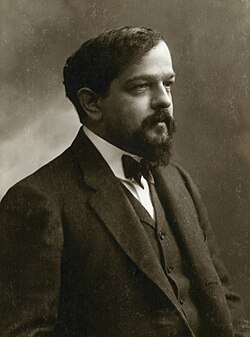
Claude Debussy

Foto: Nadar · Public domain · Wikimedia Commons

Which composer is shown here?

Show answer

Claude Debussy

Claude Debussy was a French composer whose floating, colourful sound world led music into the 20th century.

💡 Did you know? He rejected the term „Impressionism“ for his music all his life and called it „stupid“.

Claude Debussy

Foto: Nadar · Public domain · Wikimedia Commons

Which piece is playing?

Show answer

Clair de lune

‘Moonlight’: Debussy's floating, impressionist piano piece, delicate as a watercolour.

💡 Did you know? The title comes from a poem by Paul Verlaine.

How PurFact works

Practise for free

More on this topic

Music: all topics →