
Which movement did Monet give its name?
Show answer
Impressionism
A critic coined the name mockingly: the painters proudly adopted it.
💡 Did you know? The name „Impressionism“ arose as a critic's jibe at Monet's painting „Impression, Sunrise.“
18 questions · Art
Claude Monet is born in 1840 in Paris and grows up by the sea in Le Havre. As a young man he first attracts attention with caricatures, but an older painter teaches him to paint outdoors, directly from nature. This painting in the open air, "en plein air", becomes the foundation of his life's work. Monet does not want to depict objects but to capture the fleeting light and atmosphere of a moment. His picture "Impression, Sunrise" gives a whole movement its name: Impressionism. A mocking critic seized on the word "impression" derisively and the young painters proudly took it up as their programme. Monet becomes its most persistent representative: he paints stations wreathed in steam, seascapes, the shimmering light on water, always with loose, luminous dabs of colour. Obsessed with how light changes things, Monet paints whole series of the same subject at different times of day and year: haystacks, Rouen Cathedral, the same façade in dozens of moods. In his garden at Giverny he creates a water-lily pond that becomes his most important subject for the rest of his life. Monet dies in 1926, at a great age and famous. His huge late "Water Lilies", almost abstract fields of colour, are regarded as pioneers of modern painting. Did you know that in old age Monet developed cataracts and saw colours differently: which is why some of his late works look unusually reddish or bluish? Monet’s work is one long celebration of light: his ‘Impression, Sunrise’ gave Impressionism its name, while his ‘Water Lilies’, the ‘Rouen Cathedral Series’ and the shimmering ‘Haystacks’ grew into whole series. Alongside them are sun-drenched garden scenes like ‘Women in the Garden’, ‘Woman in the Garden’, ‘Garden at Sainte-Adresse’ and ‘Woman with a Parasol’, the leisure scenes ‘La Grenouillère’ and ‘Le Déjeuner sur l’herbe’, and the ‘Regatta at Sainte-Adresse’.
Practise for freePurFact brings every card back right before you would forget it. That's how knowledge sticks.
Impressionism
A critic coined the name mockingly: the painters proudly adopted it.
💡 Did you know? The name „Impressionism“ arose as a critic's jibe at Monet's painting „Impression, Sunrise.“
outdoor painting (en plein air)
Monet painted almost entirely outdoors, to capture light and weather right in front of the motif.
💡 Did you know? For his huge water-lily pictures he even had a floating studio boat built.
light / atmosphere
Monet cared less about objects themselves than about the light and atmosphere of a moment.
💡 Did you know? „For me a subject exists only in its surrounding of light and air,“ said Monet.
series of the same subject
Monet painted the same subject (haystacks, cathedral, water lilies) often dozens of times at different times of day and year.
💡 Did you know? He wanted to see how light changes a subject hour by hour.
water lilies
The huge water-lily pictures are regarded as pioneers of modern painting.
💡 Did you know? At Giverny Monet laid out a vast water garden with a Japanese bridge: expressly to paint it again and again.
1926
Monet died in 1926 at 86 in Giverny, nearly blind from cataracts, yet painting his water lilies to the last.
💡 Did you know? In old age he saw colours differently because of cataracts.

Foto: Claude Monet · Public domain · Wikimedia Commons
Impression, Sunrise
Around 1872: this picture gave Impressionism its name.
💡 Did you know? This picture of a misty harbour gave the whole movement its name in 1874.

Foto: Rufus46 · CC BY-SA 3.0 · Wikimedia Commons
Water Lilies
His most important late subject, from the garden at Giverny.
💡 Did you know? Monet made over 250 water-lily paintings: the largest today adorn purpose-built oval rooms in Paris.

Foto: Claude Monet · Public domain · Wikimedia Commons
Rouen Cathedral Series
A series of the same façade in countless lighting moods.
💡 Did you know? Monet painted the same façade over 30 times: each in different light, from dawn grey to sunset.

Foto: Claude Monet · Public domain · Wikimedia Commons
Garden at Sainte-Adresse
Painted around 1867.
💡 Did you know? A luminous early work by the sea, showing Monet's father and relatives.
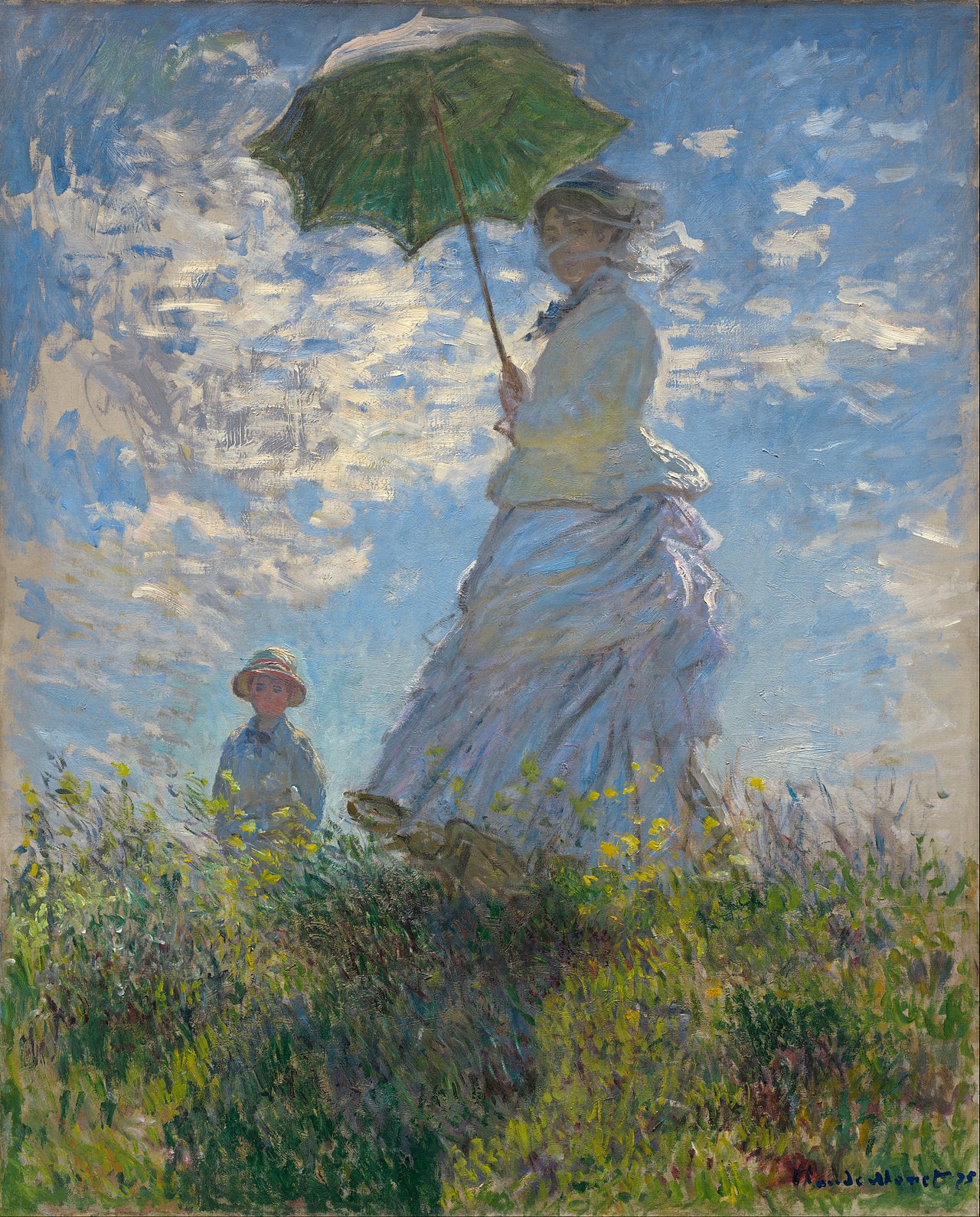
Foto: Claude Monet · Public domain · Wikimedia Commons
Woman with a Parasol
Painted around 1886.
💡 Did you know? Monet's wife Camille stands against the sky: painted in a few hours like a snapshot.

Foto: Claude Monet · Public domain · Wikimedia Commons
Women in the Garden
Painted around 1866.
💡 Did you know? For the large open-air picture Monet dug a trench to lower the huge canvas and paint it outdoors.

Foto: Claude Monet · Public domain · Wikimedia Commons
Haystacks
Monet's series of haystacks shows the same ricks in dozens of lighting moods.
💡 Did you know? A haystack picture sold in 2019 for 110 million dollars: a record for Monet.
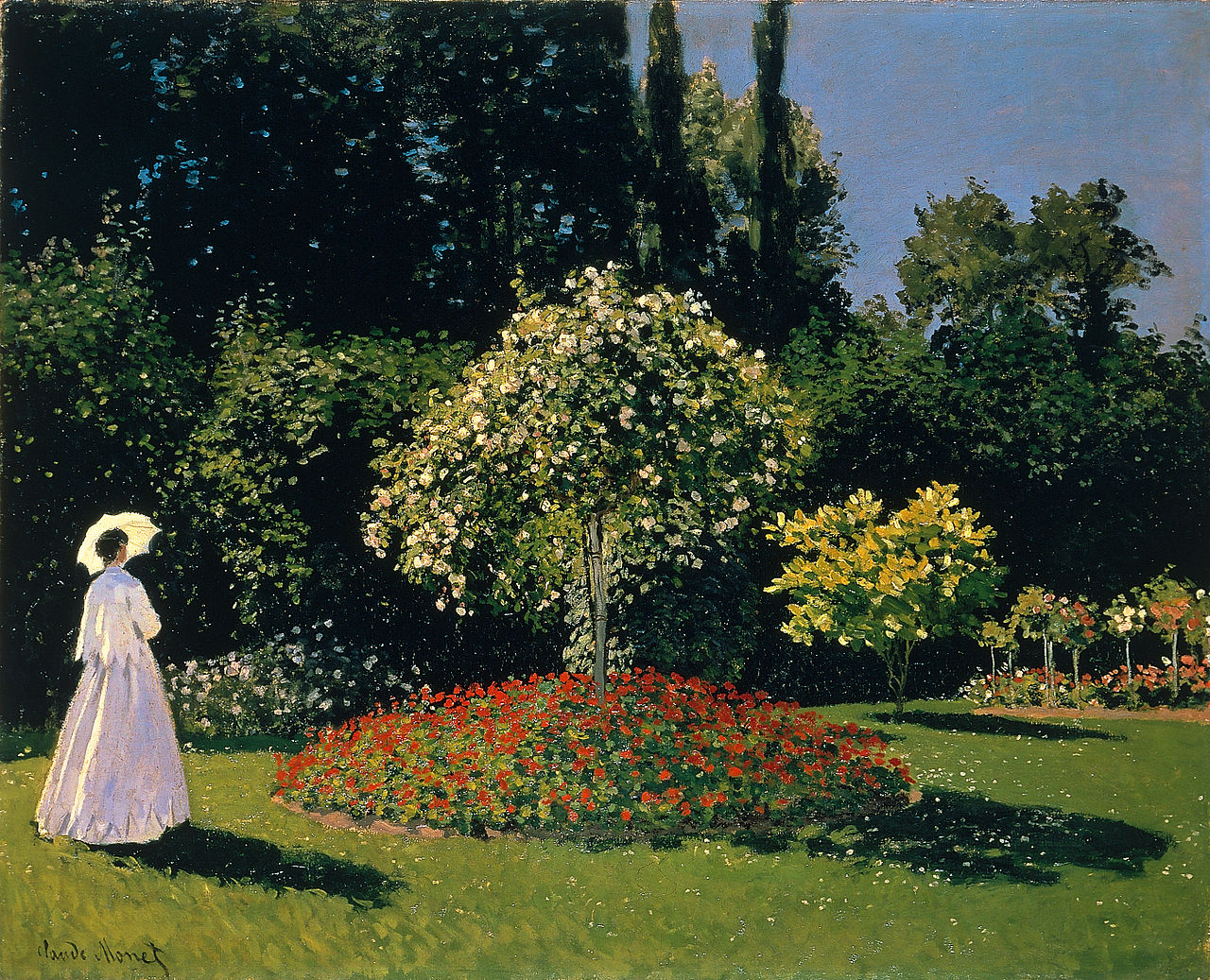
Foto: Claude Monet · Public domain · Wikimedia Commons
Woman in the Garden
Painted around 1867.
💡 Did you know? An early open-air picture full of dappled sunlight and blooming beds.
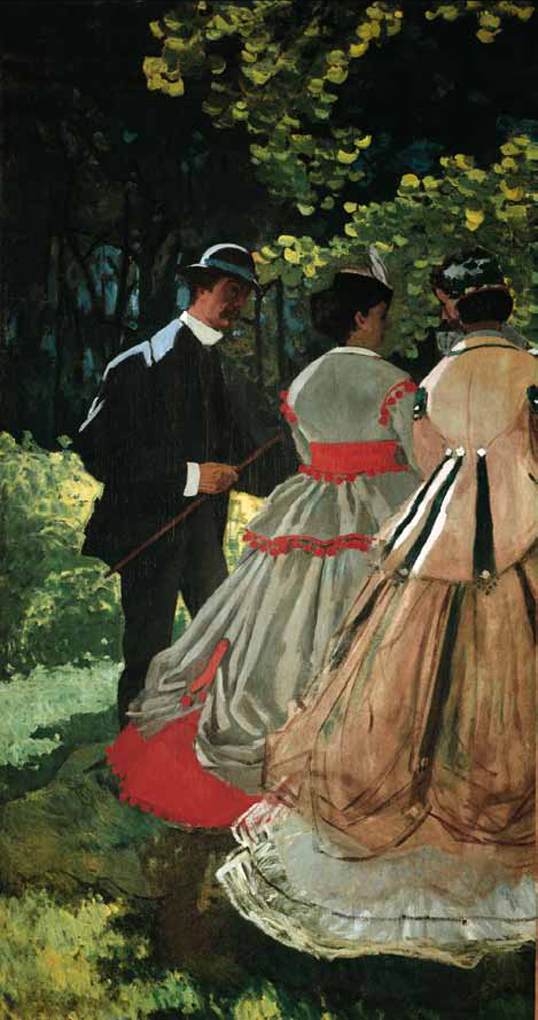
Foto: Claude Monet · Public domain · Wikimedia Commons
Le Déjeuner sur l'herbe
Painted around 1865.
💡 Did you know? Monet's huge early work: a homage to Manet that he never quite finished.

Foto: Claude Monet · Public domain · Wikimedia Commons
La Grenouillère
Painted around 1869.
💡 Did you know? At this bathing spot Monet and Renoir painted side by side: the birth hour of Impressionism.

Foto: Claude Monet · Public domain · Wikimedia Commons
Regatta at Sainte-Adresse
Painted around 1867.
💡 Did you know? Sailboats and glittering water: here Monet practised early on capturing moving light.

Foto: Nadar · Public domain · Wikimedia Commons
Claude Monet
Claude Monet (1840 to 1926) was a French painter and the leading figure of Impressionism, whose picture „Impression, Sunrise“ gave the movement its name.
💡 Did you know? Monet painted into old age even as cataracts clouded his sight: making the last water-lily pictures look almost abstract.
Home · All topics · Legal notice · Privacy · Terms · Contact