Foto: Wolf170278 · CC0 · Wikimedia Commons
What is the typical white fair-weather cloud with a cauliflower shape called?
Show answer
cumulus
Cumulus clouds form when warm air rises from the ground and its water vapour condenses.
💡 Did you know? Their flat base sits exactly where the rising air reaches its dew point.
Foto: Uli Feuermeister · CC BY-SA 3.0 · Wikimedia Commons
Which cloud brings thunderstorms, hail and heavy rain?
Show answer
cumulonimbus
The cumulonimbus is the only cloud that reaches through all three levels.
💡 Did you know? It can grow over 12 kilometres tall: far higher than Mount Everest.
Foto: PiccoloNamek · CC BY-SA 3.0 · Wikimedia Commons
What are the high, feathery ice clouds called?
Show answer
cirrus
Cirrus clouds consist purely of ice crystals and never produce rain.
💡 Did you know? Their name comes from the Latin „cirrus“, meaning a lock of hair.
Foto: Simon A. Eugster · CC BY-SA 3.0 · Wikimedia Commons
Which cloud genus forms the grey, unbroken blanket of high fog?
Show answer
stratus
Stratus sits low and produces at most drizzle.
💡 Did you know? When a stratus cloud touches the ground, we simply call it fog.
Foto: LivingShadow · CC BY-SA 3.0 · Wikimedia Commons
Which cloud produces hours of steady, uniform rain?
Show answer
nimbostratus
Nimbostratus is a thick, dark layer without any visible structure.
💡 Did you know? It is so dense that you cannot even guess where the sun is behind it.
Foto: LivingShadow · CC BY-SA 3.0 · Wikimedia Commons
What are the cloud fields known as „mackerel sky“ in the middle level called?
Show answer
altocumulus
Altocumulus forms regular rolls or patches at roughly 2 to 7 kilometres.
💡 Did you know? An old weather saying holds that a mackerel sky means rain by evening.
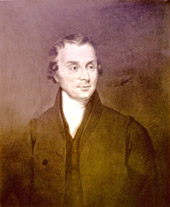
Public domain · Wikimedia Commons
Who devised the cloud classification still used today, back in 1802?
Show answer
Luke Howard
The London pharmacist Luke Howard gave the clouds their Latin names.
💡 Did you know? Goethe was so taken with Howard's system that he dedicated several poems to him.
Foto: John Fowler · CC BY 2.0 · Wikimedia Commons
Which language are all cloud genus names taken from?
Show answer
Latin
Cumulus means heap, stratus layer, cirrus lock of hair and nimbus rain cloud.
💡 Did you know? Because the names are Latin, clouds share the same scientific names worldwide.
Foto: LivingShadow · CC BY-SA 3.0 · Wikimedia Commons
What does the syllable „nimbus“ in a cloud name tell you?
Show answer
rain
Only nimbostratus and cumulonimbus carry it: both precipitation clouds.
💡 Did you know? In Latin, „nimbus“ also meant the halo around a saint's head.
Foto: John Fowler · CC BY 2.0 · Wikimedia Commons
What does the prefix „alto-“ say about a cloud?
Show answer
middle level
Alto clouds float roughly between 2 and 7 kilometres up.
💡 Did you know? Although the prefix comes from the Latin „altus“ (high), alto clouds are only the middle ones.
Foto: John Fowler · CC BY 2.0 · Wikimedia Commons
Into how many height levels does meteorology divide the clouds?
Show answer
three
There are low, middle and high clouds.
💡 Did you know? The cumulonimbus breaks the system: it reaches through all three levels.
Foto: John Fowler · CC BY 2.0 · Wikimedia Commons
How many cloud genera does the World Meteorological Organization distinguish?
Show answer
ten
The ten genera are further divided into species and varieties.
💡 Did you know? Altogether the International Cloud Atlas lists over a hundred cloud forms.
Foto: Uli Feuermeister · CC BY-SA 3.0 · Wikimedia Commons
What is the flat, spreading top of a mature thundercloud called?
Show answer
anvil
The anvil forms where rising air can go no higher at the tropopause.
💡 Did you know? The anvil shape shows from far away which way a storm is heading.
Foto: Sunfly 14:20, 1 September 2007 (UTC) · CC BY-SA 3.0 · Wikimedia Commons
What is the lens-shaped formation that hangs almost motionless over mountains called?
Show answer
lenticular cloud
It forms in the crest of the air wave downwind of a mountain range.
💡 Did you know? Its sharp lens shape has caused plenty of UFO reports.
Foto: Agathman · CC BY 3.0 · Wikimedia Commons
Which wave-like cloud form was newly added to the cloud atlas in 2017?
Show answer
asperitas
Asperitas looks like a churning sea surface viewed from below.
💡 Did you know? It was the first new cloud form added in over fifty years.
Foto: Martin Koitmäe [1] · CC BY-SA 4.0 · Wikimedia Commons
What are the silvery clouds that glow at about 80 km altitude after sunset called?
Show answer
noctilucent clouds
They consist of ice crystals in the mesosphere: the highest clouds of all.
💡 Did you know? They glow because they are so high that sunlight still reaches them long after dark on the ground.
Foto: NASA / Jim Ross · Public domain · Wikimedia Commons
What are the artificial clouds left behind by aircraft called?
Show answer
contrails
Water vapour from the exhaust freezes instantly into ice crystals in the cold air.
💡 Did you know? If they linger, the upper air is humid: often a sign of an approaching low.