
Which country was Velázquez from?
Show answer
Spain
Diego Velázquez was the foremost Spanish painter of the Golden Age.
💡 Did you know? Van Gogh, Manet and Picasso revered him: Manet called Velázquez „the painter of painters.“
19 questions · Art
Diego Velázquez is born in 1599 in Seville, Spain, then a rich port city and gateway to the New World. Even as a young man his exceptional talent stands out: he paints ordinary people, water sellers and kitchen scenes with a seriousness and precision unusual for everyday subjects. At just 24 he is called to the court of the powerful Spanish King Philip IV. At the royal court in Madrid, Velázquez spends the rest of his life as court painter and confidant of the king. He portrays the royal family, princes, court jesters and dwarfs: the latter with a dignity and humanity astonishing for the time. His manner of painting grows ever freer: up close his pictures look like loosely thrown patches, but from a distance they resolve into astonishingly living reality. His masterpiece is "Las Meninas" (The Maids of Honour), one of the most enigmatic pictures in art history: Velázquez paints himself in the studio before a huge canvas, surrounded by the little Infanta and her retinue, while the royal couple appear only as a reflection on the wall. Who is looking at whom here? Viewers still puzzle over this question. Velázquez dies in 1660, a highly honoured man. Two centuries later painters such as Manet see in him a forerunner of modern art. Did you know that the Spanish master Pablo Picasso found "Las Meninas" so fascinating that he repainted it in over fifty variations of his own? Velázquez, Spain’s great court painter, created in ‘Las Meninas’ one of the most enigmatic pictures in art history. His histories and myths include ‘The Surrender of Breda’, ‘The Triumph of Bacchus’, ‘Apollo in the Forge of Vulcan’ and ‘Las Hilanderas’. Add to them the sensuous ‘Rokeby Venus’, the piercing ‘Portrait of Innocent X’, the ‘Christ Crucified’ and early everyday scenes like ‘Old Woman Cooking Eggs’, ‘The Lunch’, ‘The Waterseller of Seville’ and ‘The Farmers’ Lunch’.
Practise for freePurFact brings every card back right before you would forget it. That's how knowledge sticks.
Spain
Diego Velázquez was the foremost Spanish painter of the Golden Age.
💡 Did you know? Van Gogh, Manet and Picasso revered him: Manet called Velázquez „the painter of painters.“
Baroque
Velázquez was a master of the Baroque, famous for his uncompromising realism.
💡 Did you know? He painted court dwarfs and jesters with the same dignity as kings: unusual for his time.
Philip IV (King of Spain)
He was court painter and confidant of the king.
💡 Did you know? Almost all his life Velázquez served at the court of King Philip IV, whom he portrayed again and again over decades.
Las Meninas
„Las Meninas“ shows the little Infanta, her ladies-in-waiting and Velázquez himself at the easel; the royal couple appears in the mirror.
💡 Did you know? Picasso repainted it in over fifty variations of his own.
free, loose brushwork
Painters like Manet saw in him a forerunner of modern art.
💡 Did you know? Up close Velázquez's pictures look like flung-down blotches: only from a distance do they cohere into astonishingly living reality.
1660
Velázquez died in 1660, shortly after arranging a royal wedding as a court official.
💡 Did you know? Only shortly before his death was Velázquez admitted to a noble order of knights: he painted its red cross onto his chest in „Las Meninas.“

Foto: Diego Velázquez · Public domain · Wikimedia Commons
Las Meninas
Around 1656: one of the most enigmatic pictures in art history.
💡 Did you know? The enigmatic picture plays so cleverly with gaze and mirror that philosophers and painters still puzzle over it.
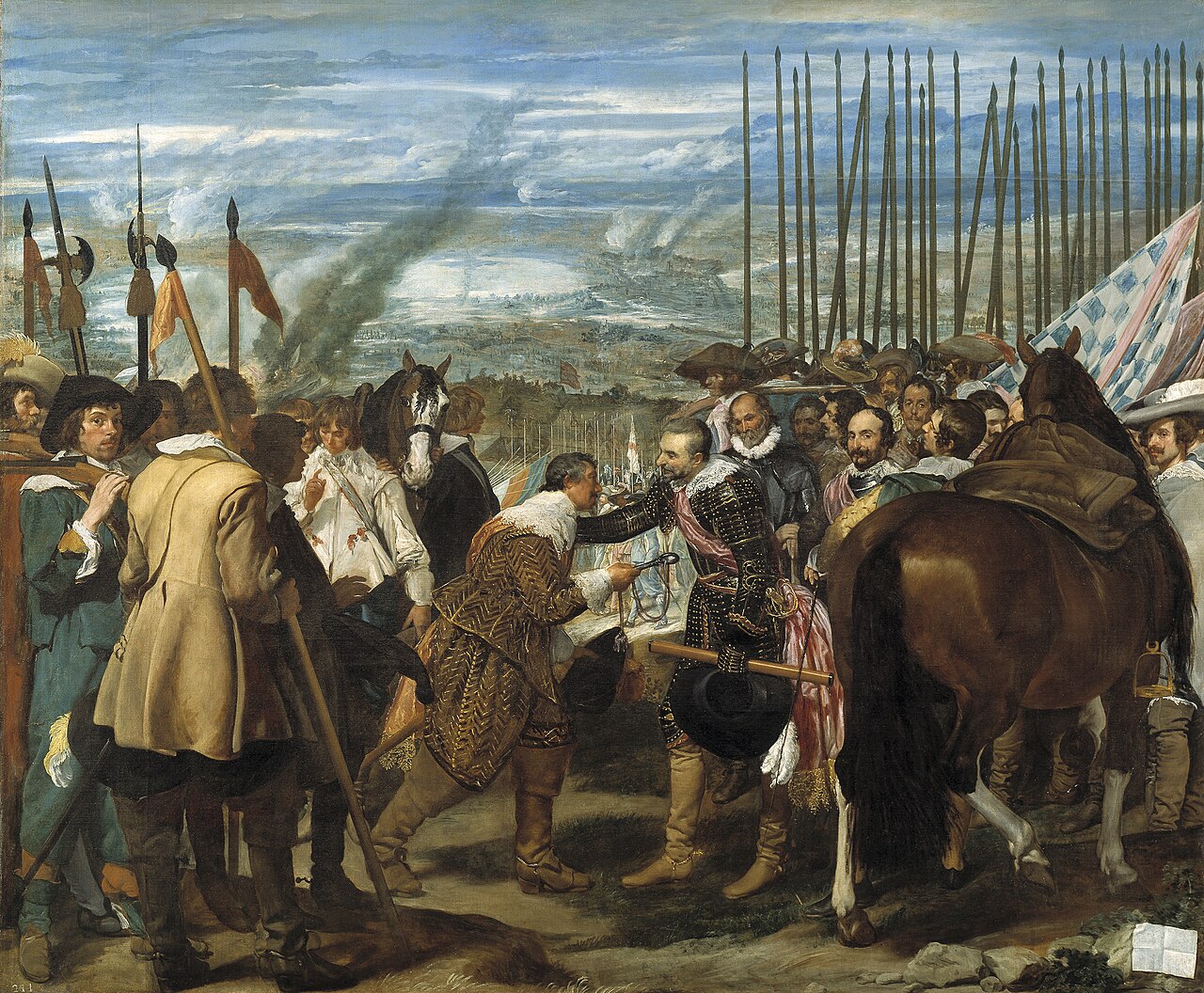
Foto: Diego Velázquez · Public domain · Wikimedia Commons
The Surrender of Breda
Painted around 1634.
💡 Did you know? The victor magnanimously offers his hand to the vanquished; an unusually humane war picture.

Foto: Diego Velázquez · Public domain · Wikimedia Commons
Rokeby Venus
Painted around 1644.
💡 Did you know? Velázquez's only surviving female nude; in 1914 a suffragette slashed it in the London museum.

Foto: Diego Velázquez · Public domain · Wikimedia Commons
Las Hilanderas
Painted around 1655.
💡 Did you know? What looks like a workshop scene hides in the background an ancient myth of a contest with the gods.

Foto: Diego Velázquez · Public domain · Wikimedia Commons
Old Woman Cooking Eggs
Painted around 1618.
💡 Did you know? An early work from Seville: Velázquez painted the humble kitchen scene with almost tangible realism.

Foto: Diego Velázquez · Public domain · Wikimedia Commons
The Lunch
Painted around 1617.
💡 Did you know? An early „bodegón“: a plain tavern scene of the kind the young Velázquez loved.

Foto: Matthieu.lett.ube · Public domain · Wikimedia Commons
Portrait of Innocent X
A famous, unsparingly honest portrait of a pope.
💡 Did you know? The pope is said to have murmured it was „too true“: Francis Bacon later painted disturbing variations of it.

Foto: Diego Velázquez · Public domain · Wikimedia Commons
The Triumph of Bacchus
Painted around 1628.
💡 Did you know? Velázquez shows the wine god among grinning, very earthly Spanish revellers.

Foto: Diego Velázquez · Public domain · Wikimedia Commons
Apollo in the Forge of Vulcan
Painted around 1630.
💡 Did you know? In the workshop scene the god Apollo brings the smith Vulcan the embarrassing news of Venus's infidelity.

Foto: Diego Velázquez · Public domain · Wikimedia Commons
Christ Crucified
Painted around 1632.
💡 Did you know? The calm, solitary Christ against a black ground is considered one of the most moving crucifixions ever painted.

Foto: Diego Velázquez · Public domain · Wikimedia Commons
The Waterseller of Seville
Painted around 1620.
💡 Did you know? An early masterpiece: the drops of water on the clay jug look real enough to touch.

Foto: Diego Velázquez · Public domain · Wikimedia Commons
The Farmers' Lunch
Painted around 1618.
💡 Did you know? An early „bodegón“ with ordinary people at a table: everyday life as a worthy subject.
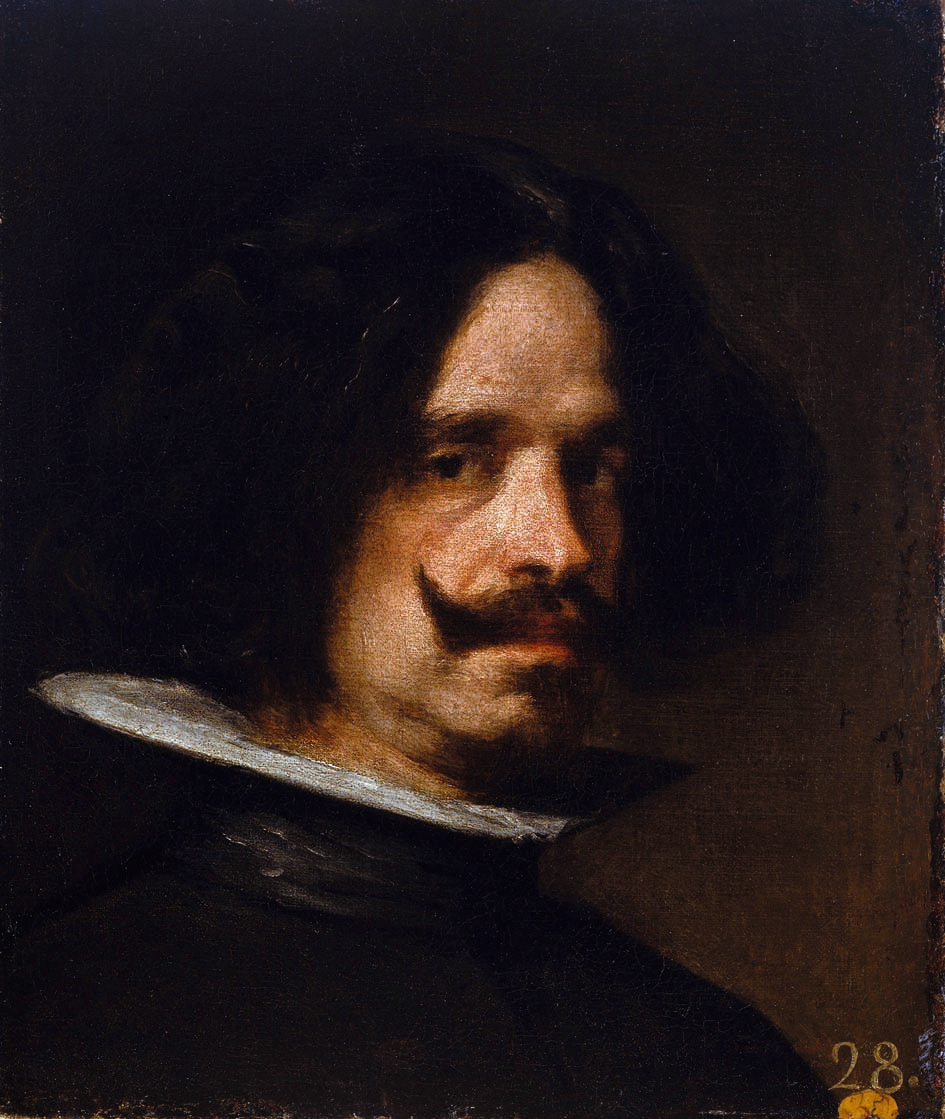
Foto: Diego Velázquez · Public domain · Wikimedia Commons
Diego Velázquez
Diego Velázquez (1599 to 1660) was the foremost Spanish Baroque painter and court painter to Philip IV, famous for his uncompromising realism.
💡 Did you know? Later masters from Manet to Picasso revered Velázquez as the „painter of painters“: few ever rendered reality so vividly.
Home · All topics · Legal notice · Privacy · Terms · Contact