🎨
Edgar Degas
19 questions · Art
Edgar Degas is born in 1834 in Paris into a wealthy banking family. He can afford to study art and at first admires the old masters, whose strict draughtsmanship he values all his life. Although he is counted among the Impressionists and takes part in their exhibitions, Degas is a loner who prefers to call himself a "Realist".
Unlike Monet or Renoir, Degas hardly paints landscapes in the open air. What fascinates him is the movement of the human body, above all that of dancers. Again and again he shows ballet girls at rehearsal, dressing, in exhaustion after a performance: from unusual angles, often cut off as if in a snapshot. He also captures horse races, laundresses and café scenes with this sharp, modern eye.
Degas is a tireless experimenter. He works with pastel, with photography and with sculpture. His "Little Dancer of Fourteen Years", a bronze figure he dressed with a real tulle skirt and a hair ribbon, caused bewilderment at its first showing: no sculpture had ever been so realistic.
In old age Degas's eyesight fails more and more, and he turns increasingly to pastel and to sculpture, which he can feel with his hands. He dies in 1917 in Paris, lonely and almost blind. Did you know that around half of his works show dancers; he was less interested in the glamour of the stage than in the hard, disciplined work behind it?
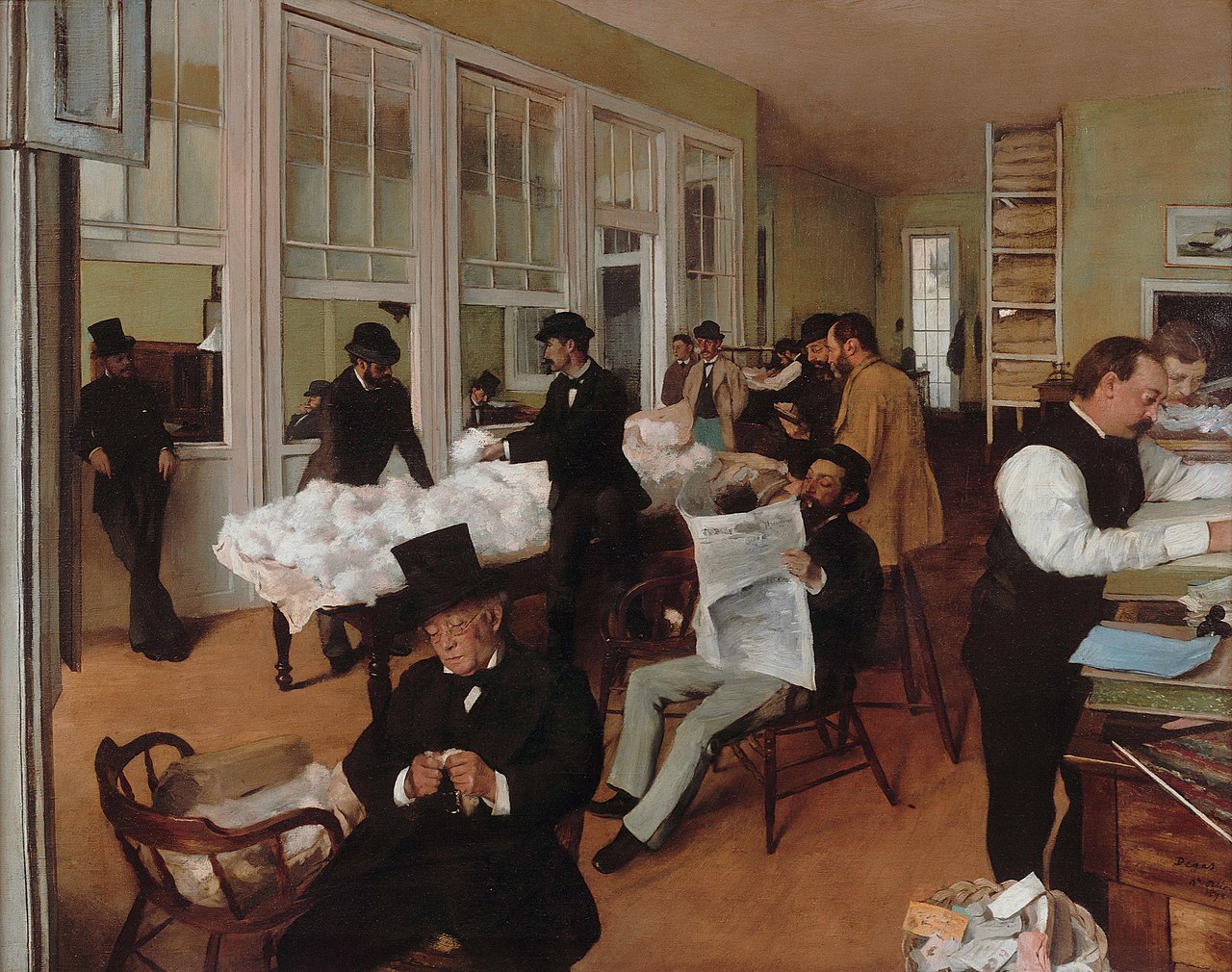
Like almost no other, Degas captured the world of ballet: in ‘The Ballet Class’, ‘Blue Dancers’, simply ‘Dancers’ and the famous sculpture ‘Little Dancer of Fourteen Years’. Beside them stand the melancholy ‘L’Absinthe’, ‘The Millinery Shop’, ‘The Tub’, ‘Miss La La at the Cirque Fernando’, the enigmatic ‘Interior’, the early portraits ‘The Bellelli Family’ and ‘Mr and Mrs Édouard Manet’, and ‘A Cotton Office in New Orleans’.
Practise for free
PurFact brings every card back right before you would forget it. That's how knowledge sticks.