
Which city was Manet from?
Show answer
Paris
Manet came from the well-to-do Paris bourgeoisie and was a central figure of modern art.
💡 Did you know? His father wanted him to be a lawyer: instead Manet went to sea before becoming a painter.
19 questions · Art
Édouard Manet is born in 1832 in Paris into a wealthy, respected family. His father wants a bourgeois career for him, but Manet wants to be a painter. Unlike many rebels, he seeks the recognition of the official art establishment all his life and yet becomes, almost against his will, the great pioneer of modern art. Manet paints the life of his own time: Parisian cafés, bars, people of the big city, elegant ladies and ordinary folk. His way of painting is new and provocative: flat, with hard contrasts and broad, visible brushstrokes, without the soft modelling of the academy. Two of his pictures cause outright scandals: "Luncheon on the Grass", in which a nude woman sits quite matter-of-factly beside two clothed gentlemen in a park, and "Olympia", which breaks the conventional view of the nude. This outrage makes Manet, involuntarily, the figurehead of a young generation of painters. The later Impressionists (Monet, Renoir, Degas) revere him and seek his company, even though Manet himself never takes part in their exhibitions, preferring to succeed in the official "Salon". Manet dies in 1883 at just 51 after a serious illness. He is regarded as the bridge between the Realism of Courbet and Impressionism. Did you know that one of his last great works, "A Bar at the Folies-Bergère", still poses a riddle: the mirror behind the barmaid shows a scene that cannot really add up? Manet scandalised the Paris of his day with ‘Luncheon on the Grass’ and the boldly staring ‘Olympia’. His late masterpiece is ‘A Bar at the Folies-Bergère’. Modern life he caught in ‘Music in the Tuileries’, ‘The Balcony’, ‘The Railway’, ‘Nana’, ‘The Old Musician’ and ‘The Plum’; add to them ‘The Fifer’, the political ‘The Execution of Emperor Maximilian’ and the tender ‘Berthe Morisot with a Bouquet of Violets’.
Practise for freePurFact brings every card back right before you would forget it. That's how knowledge sticks.
Paris
Manet came from the well-to-do Paris bourgeoisie and was a central figure of modern art.
💡 Did you know? His father wanted him to be a lawyer: instead Manet went to sea before becoming a painter.
pioneer of Impressionism
Manet is seen as the bridge between Realism and Impressionism, though he never took part in the Impressionist exhibitions.
💡 Did you know? The younger Impressionists revered him as a model, yet Manet preferred to seek the official recognition of the Salon.
Luncheon on the Grass and Olympia
„The Luncheon on the Grass“ and „Olympia“ showed nude women in a modern setting: a scandal that made Manet notorious.
💡 Did you know? They broke the conventions of the Salon and outraged the public.
modern Parisian life
Manet painted cafés, bars, railway stations and the fashionable life of Paris: motifs of his own present.
💡 Did you know? With this he broke the tradition of holding only historical or mythological subjects worthy of art.
recognition in the Salon
He never took part in the Impressionist exhibitions.
💡 Did you know? Despite all the scandals, Manet longed all his life for the official Salon; he was honoured only shortly before his death.
at 51 (1883)
Manet died in 1883 aged just 51 from an illness that finally cost him a leg.
💡 Did you know? Shortly before his death he was awarded the Legion of Honour; the late recognition he had craved.
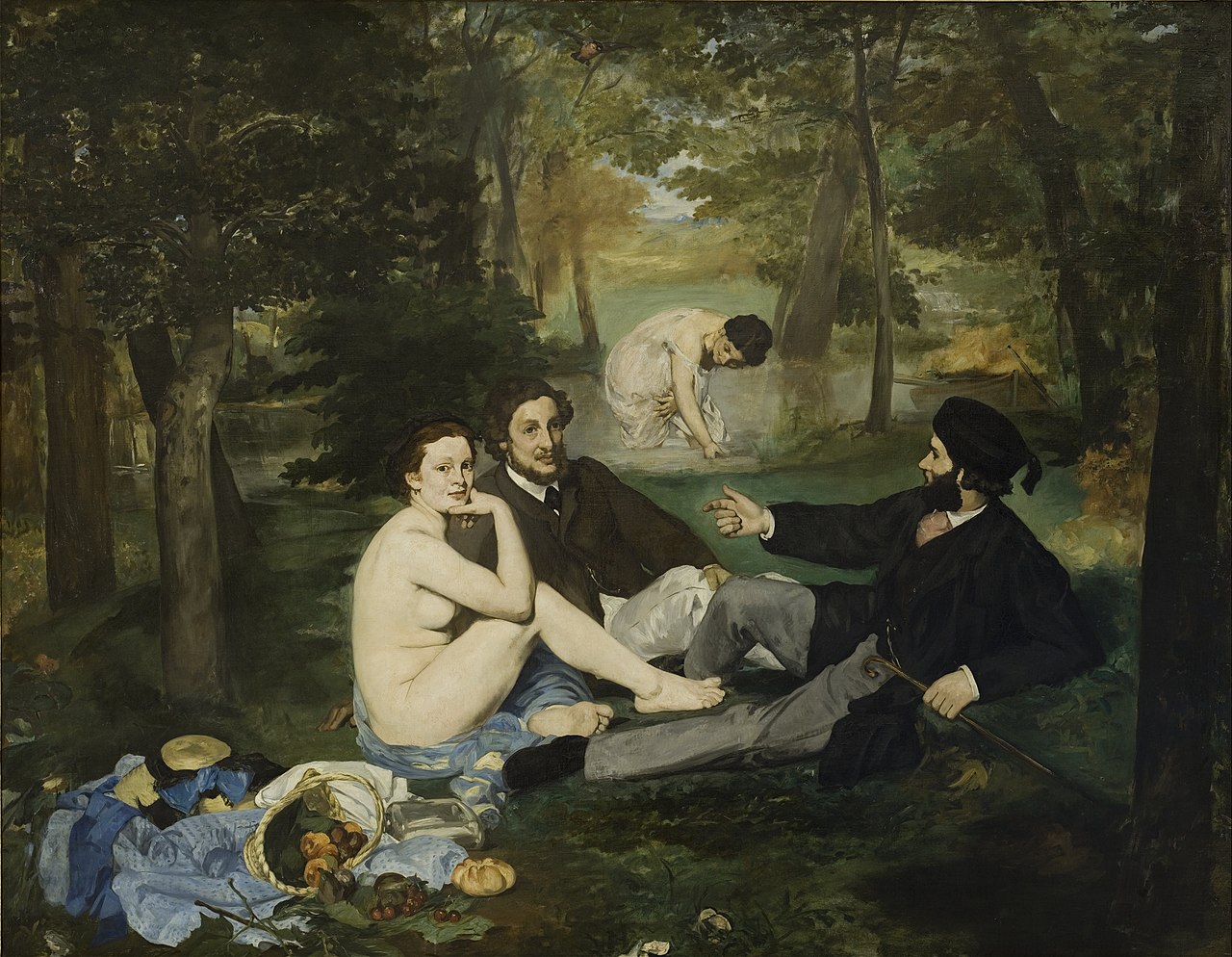
Foto: Édouard Manet · Public domain · Wikimedia Commons
Luncheon on the Grass
Around 1863: the nude woman beside clothed men was a scandal.
💡 Did you know? A nude woman picnics unabashed beside clothed gentlemen: in 1863 this deeply outraged Parisians.

Foto: Édouard Manet · Public domain · Wikimedia Commons
Olympia
Painted around 1863.
💡 Did you know? The bold gaze of the nude „Olympia“ was thought so provocative that guards had to protect the picture from angry visitors.
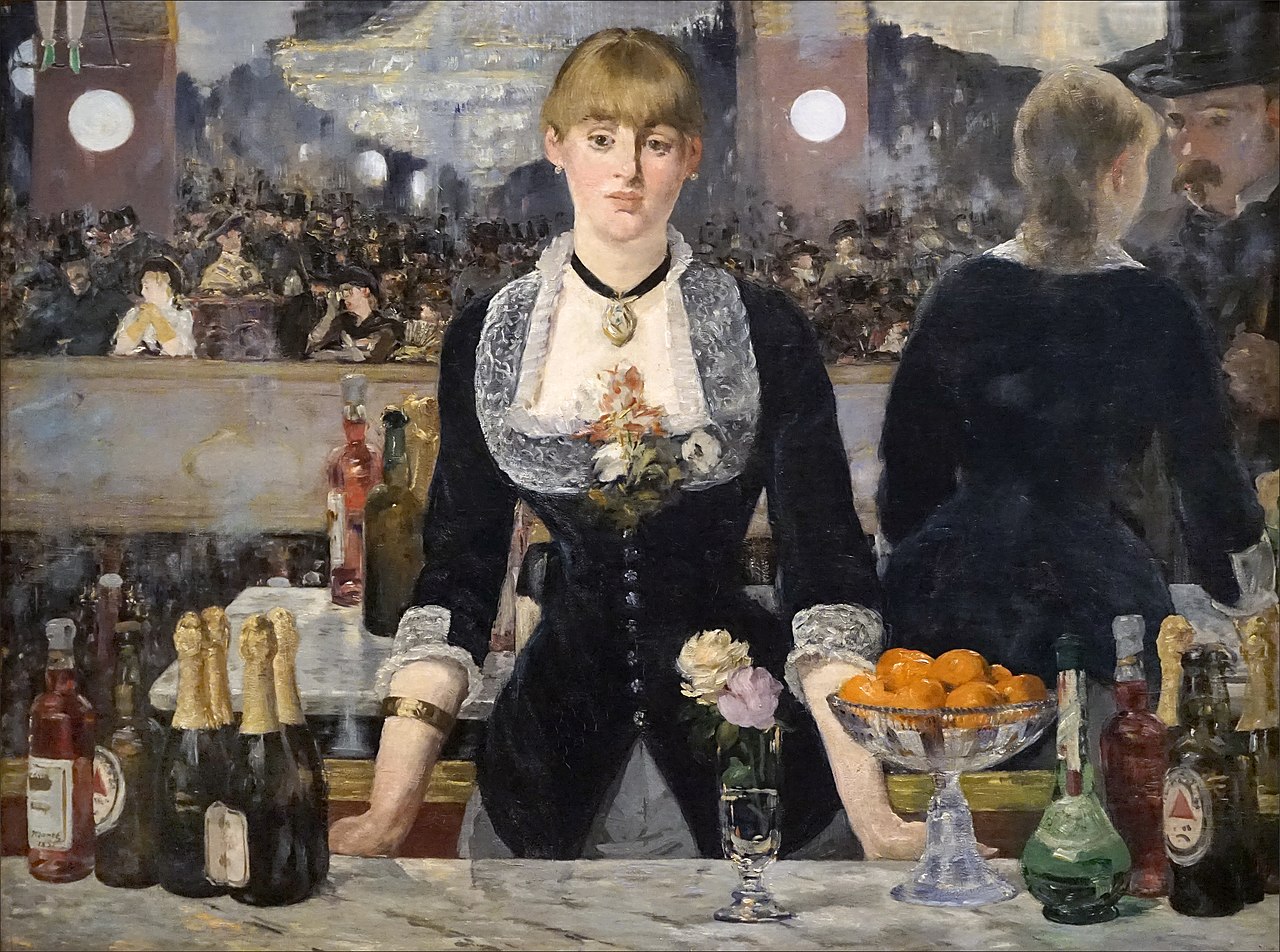
Foto: Édouard Manet · CC BY 2.0 · Wikimedia Commons
A Bar at the Folies-Bergère
Around 1882: the puzzling mirror behind the barmaid.
💡 Did you know? Manet's last great work: the mirror behind the barmaid is „wrong,“ a puzzle still debated today.

Foto: Édouard Manet · Public domain · Wikimedia Commons
The Balcony
Painted around 1868.
💡 Did you know? At far left sits the painter Berthe Morisot, Manet's muse and later sister-in-law.

Foto: Édouard Manet · Public domain · Wikimedia Commons
Music in the Tuileries
Painted around 1862.
💡 Did you know? Manet painted himself and friends like Baudelaire into the elegant crowd: a snapshot of Parisian bohemia.

Foto: Édouard Manet · Public domain · Wikimedia Commons
The Fifer
Painted around 1866.
💡 Did you know? The young military musician stands against an almost empty background: the Salon jury rejected the flat picture.

Foto: Édouard Manet · Public domain · Wikimedia Commons
The Railway
Painted around 1873.
💡 Did you know? Instead of the locomotive Manet shows only steam: modernity stays mysteriously veiled.

Foto: Édouard Manet · Public domain · Wikimedia Commons
The Execution of Emperor Maximilian
Painted around 1867.
💡 Did you know? Manet deliberately modelled the composition on Goya's „Third of May“: a political picture about a current event.

Foto: Édouard Manet · Public domain · Wikimedia Commons
Nana
Painted around 1877.
💡 Did you know? The coquettish young woman at her dressing table was too risqué for the morals of the day and was rejected by the Salon.

Foto: Édouard Manet · Public domain · Wikimedia Commons
The Old Musician
Painted around 1862.
💡 Did you know? A large early work that gathers the marginal figures of Parisian society with dignity.

Foto: Édouard Manet · Public domain · Wikimedia Commons
Berthe Morisot with a Bouquet of Violets
Painted around 1872.
💡 Did you know? Manet portrayed Morisot several times; this dark likeness is considered especially haunting.

Foto: Édouard Manet · Public domain · Wikimedia Commons
The Plum
Painted around 1878.
💡 Did you know? A young woman sits lost in thought with a cigarette in a café: an image of modern loneliness.

Foto: Nadar · Public domain · Wikimedia Commons
Édouard Manet
Édouard Manet (1832 to 1883) was a French painter who, as a pioneer of Impressionism, made modern life the subject of art.
💡 Did you know? Manet repeatedly provoked scandal with his pictures, yet at the same time longed for the official recognition of the Salon.
Home · All topics · Legal notice · Privacy · Terms · Contact