🎨
El Greco
19 questions · Art
El Greco ("the Greek") is born in 1541 on the island of Crete, then belonging to Venice. His real name is Doménikos Theotokópoulos. He first learns Byzantine icon painting, then goes to Italy, where he studies the great masters of the Renaissance in Venice and Rome. But he finally finds his home in Spain, in the city of Toledo, where he spends the rest of his life.
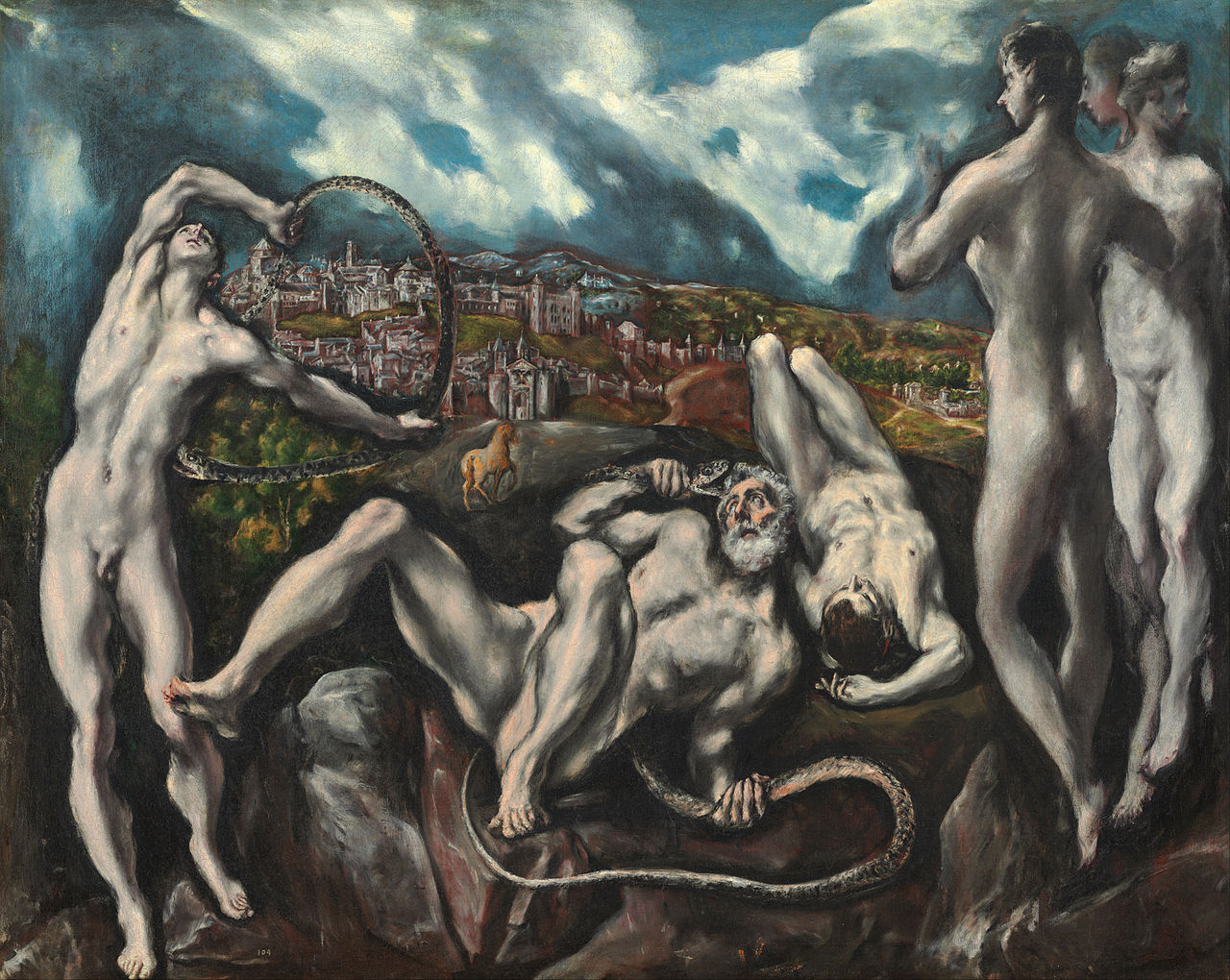
El Greco's art is so idiosyncratic that it fits no category. His figures are unnaturally elongated, almost flame-like distorted, his colours cool and flickering, his compositions charged with a visionary, otherworldly tension. In his work heaven and earth seem to merge into a single spiritual sphere. In his time some considered this strange, even a sign of poor eyesight.
His principal work is "The Burial of the Count of Orgaz", a vast picture in which the earthly mourners below face the heavenly reception of the soul above. His "View of Toledo", too, with its dramatically storm-laden sky, is among the first great landscape paintings ever.
El Greco dies in 1614 and afterwards falls into long obscurity. Only around 1900 is he rediscovered and the modern artists are enthralled. Did you know that painters such as Picasso and the Expressionists saw in the old Greek a kindred spirit and celebrated him as a pioneer of modern art?
El Greco’s elongated figures and ghostly light are unmistakable. His masterpiece is ‘The Burial of the Count of Orgaz’; the glowing ‘View of Toledo’ counts among the first pure landscapes. Add to them ‘The Disrobing of Christ’, the ‘Opening of the Fifth Seal’, ‘Laocoön’, ‘Saint Martin and the Beggar’, ‘Adoration of the Shepherds’, ‘The Resurrection’, ‘The Concert of the Angels’ and portraits like ‘The Nobleman with his Hand on his Chest’, ‘Fray Hortensio Félix Paravicino’ and ‘Portrait of Jorge Manuel’.
Practise for free
PurFact brings every card back right before you would forget it. That's how knowledge sticks.