PurFact

Eugène Delacroix

19 questions · Art

Eugène Delacroix is born in 1798 near Paris, into an educated, upper-middle-class family. He grows up in the turbulent time after the French Revolution and becomes the leader of a new artistic movement, Romanticism: against the cool, clear lines of Neoclassical painting he sets passion, movement and blazing colour. Delacroix's pictures are dramatic, often violent and emotionally charged. He chooses themes of war, passion, freedom and death, and paints them with a force meant to sweep the viewer along. His most famous work is "Liberty Leading the People", in which a fighting female figure (Liberty personified) strides over the barricades with the tricolour in her hand. The picture became the very emblem of revolution and freedom. In 1832 Delacroix travels to North Africa. The colours, the light and the unfamiliar world of Morocco and Algeria strike him like a revelation and supply him with subjects for the rest of his life. His colour studies, in which he observes how colours intensify one another, later become an inspiration for the Impressionists and for painters such as Van Gogh. Delacroix dies in 1863 in Paris. He is regarded as the great master of French Romanticism and a pioneer of modern colour painting. Did you know that he was a close friend of the composer Frédéric Chopin and also portrayed him: two great Romantics, one with the brush, the other at the piano? Delacroix, the firebrand of Romanticism, created in ‘Liberty Leading the People’ one of the most famous political icons of all. His passion for drama and the Orient shows in ‘Death of Sardanapalus’, ‘The Massacre at Chios’, ‘Greece on the Ruins of Missolonghi’, ‘The Women of Algiers’ and ‘Jewish Wedding in Morocco’. Add to them ‘The Barque of Dante’, ‘Entry of the Crusaders into Constantinople’, ‘Orphan Girl at the Cemetery’, ‘Woman with a Parrot’, the ‘Portrait of Chopin and George Sand’ and the ‘Last Words of the Emperor Marcus Aurelius’.

Practise for free

PurFact brings every card back right before you would forget it. That's how knowledge sticks.

All questions with answers

Of which artistic movement is Delacroix the leader?

Show answer

Romanticism

He favoured passion, movement and colour over cool lines.

💡 Did you know? Delacroix led Romanticism against the strict Classicism of his rival Ingres: a famous artistic feud.

Which country was Delacroix from?

Show answer

France

Delacroix was the leading painter of French Romanticism in Paris.

💡 Did you know? Rumours made the diplomat Talleyrand his real father: but it was never proven.

Which of Delacroix's pictures became an emblem of revolution?

Show answer

Liberty Leading the People

„Liberty Leading the People“ shows a woman with the tricolour on the barricade: still an emblem of revolution today.

💡 Did you know? The fighting female figure holds the French tricolour.

Which journey became a revelation for Delacroix?

Show answer

journey to North Africa

The colours and light there supplied him with subjects for life.

💡 Did you know? His journey to North Africa in 1832 gave Delacroix motifs for decades: the colours and light of the Orient thrilled him.

What did Delacroix's colour studies become important for?

Show answer

a model for the Impressionists

Delacroix used pure colours set side by side that merge when seen from afar.

💡 Did you know? His theories of colour later directly inspired the Impressionists like Monet and Renoir.

When did Delacroix die?

Show answer

1863

Delacroix died in Paris in 1863; his home and studio is a museum today.

💡 Did you know? He was a close friend of the composer Chopin.

Liberty Leading the People

Foto: Eugène Delacroix · Public domain · Wikimedia Commons

Which famous work is shown here?

Show answer

Liberty Leading the People

Around 1830: Liberty personified with the tricolour on the barricades.

💡 Did you know? The painting still appears on stamps and once featured on the 100-franc note.

Death of Sardanapalus

Foto: Eugène Delacroix · Public domain · Wikimedia Commons

What is this work called?

Show answer

Death of Sardanapalus

Painted around 1827.

💡 Did you know? The orgiastic slaughter around the dying king outraged the 1827 public as „too wild.“

The Massacre at Chios

Foto: Eugène Delacroix · Public domain · Wikimedia Commons

What is this painting called?

Show answer

The Massacre at Chios

Painted around 1824.

💡 Did you know? Delacroix showed the suffering of the Greeks in their fight for freedom against the Ottomans: political painting.

The Barque of Dante

Foto: Eugène Delacroix · Public domain · Wikimedia Commons

Which famous work is shown here?

Show answer

The Barque of Dante

Painted around 1822.

💡 Did you know? Delacroix's first major work shows Dante and Virgil in Hell: an opening salvo of Romanticism.

The Women of Algiers

Foto: Eugène Delacroix · Public domain · Wikimedia Commons

What is this work called?

Show answer

The Women of Algiers

Painted around 1834.

💡 Did you know? The glimpse into a harem fascinated Europe: Picasso later made a whole series after this painting.

Greece on the Ruins of Missolonghi

Foto: Eugène Delacroix · Public domain · Wikimedia Commons

What is this painting called?

Show answer

Greece on the Ruins of Missolonghi

Painted around 1826.

💡 Did you know? Delacroix personified suffering Greece as a mourning woman upon the ruins.

Orphan Girl at the Cemetery

Foto: Eugène Delacroix · Public domain · Wikimedia Commons

Which famous work is shown here?

Show answer

Orphan Girl at the Cemetery

Painted around 1824.

💡 Did you know? A study for the „Massacre at Chios“ that became famous as a painting in its own right.

Entry of the Crusaders into Constantinople

Foto: Eugène Delacroix · Public domain · Wikimedia Commons

What is this work called?

Show answer

Entry of the Crusaders into Constantinople

Painted around 1840.

💡 Did you know? Despite the theme of victory, Delacroix stresses suffering and pillage: not triumph but melancholy.

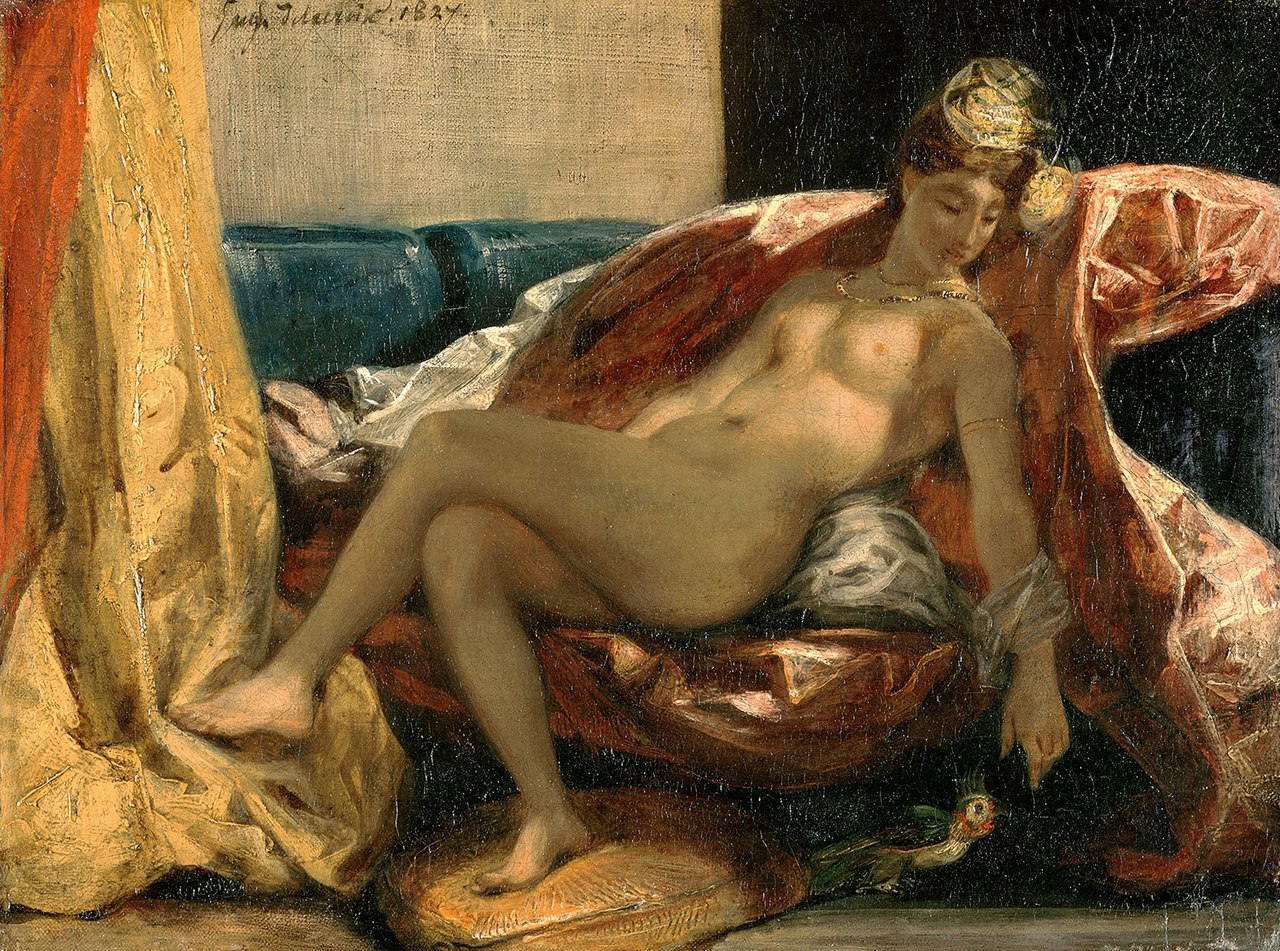
Woman with a Parrot

Foto: Eugène Delacroix · Public domain · Wikimedia Commons

What is this painting called?

Show answer

Woman with a Parrot

Painted around 1827.

💡 Did you know? A sensual female nude that Delacroix painted early in his career.

Portrait of Chopin and George Sand

Foto: Eugène Delacroix · Public domain · Wikimedia Commons

Which famous work is shown here?

Show answer

Portrait of Chopin and George Sand

Painted around 1837.

💡 Did you know? The double portrait of the friends was later cut in two: the halves now hang in different museums.

Jewish Wedding in Morocco

Foto: Eugène Delacroix · Public domain · Wikimedia Commons

What is this work called?

Show answer

Jewish Wedding in Morocco

Painted around 1839.

💡 Did you know? Delacroix recorded a ceremony he had witnessed himself on his North African journey.

Last Words of the Emperor Marcus Aurelius

Foto: Romainbehar · CC0 · Wikimedia Commons

What is this painting called?

Show answer

Last Words of the Emperor Marcus Aurelius

Painted around 1844.

💡 Did you know? The dying philosopher-emperor hands his realm to an indifferent son: a painting about responsibility.

Eugène Delacroix (self-portrait)

Foto: Nadar · Public domain · Wikimedia Commons

Which artist is shown here?

Show answer

Eugène Delacroix

Eugène Delacroix (1798 to 1863) was the leading painter of French Romanticism, famous for his dramatic, richly coloured history and freedom paintings.

💡 Did you know? Delacroix's experiments with colour so influenced the Impressionists that many revered him as their forerunner.

How PurFact works

Practise for free

More on this topic

Art: all topics →