📰
Frederick Douglass
10 questions · Society & Everyday
He did not know his own birthday. Frederick Bailey was born into slavery in Maryland around 1818, and birth dates were not recorded for enslaved children: later he picked 14 February himself, because his mother had called him „my little valentine“. He saw her perhaps half a dozen times; she worked on another plantation and walked over at night to sit with him until she had to be back before sunrise.
The decisive hint came when he was eight. The wife of his new owner in Baltimore secretly taught him his letters until her husband found out and forbade it: reading would make a slave useless and unhappy. Douglass understood the lesson better than the man who gave it: if reading was that dangerous, it was exactly what he needed. He went on learning from white street boys, paying them in pieces of bread. At twenty he escaped, disguised as a sailor and carrying a Black seaman's borrowed papers; the journey to New York took less than twenty-four hours. He chose the surname Douglass himself afterwards, from a character in Walter Scott.
What followed was a career without precedent. He spoke at abolitionist meetings so well that opponents claimed he had never been a slave: no slave could talk like that. So in 1845 he wrote his life down, with names and places, which exposed him to his former owner. He spent two years in Britain and Ireland, where friends raised the money to buy his freedom outright. Back in America he founded the newspaper The North Star. Four years later, in his most famous speech, he asked what the Fourth of July was supposed to mean to a slave.
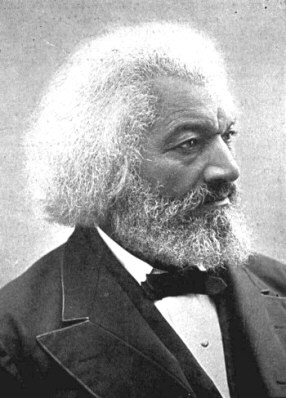
During the Civil War he pressed Lincoln to let Black men enlist and then recruited them himself; two of his sons signed up. He campaigned for women's suffrage, was the most prominent male supporter at Seneca Falls in 1848, and later became the first Black American confirmed to a senior federal post. He also had himself photographed more often than any other American of his century: deliberately, seriously, with dignity, against the caricatures of the age.
Practise for free
PurFact brings every card back right before you would forget it. That's how knowledge sticks.