🎼
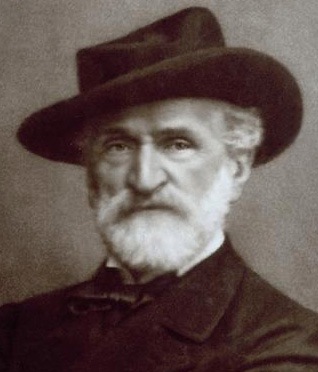
Giuseppe Verdi
14 questions · Music
Giuseppe Verdi was born in 1813 in Le Roncole, a village near Busseto in northern Italy, the son of an innkeeper: the Milan Conservatory rejected him as a student. Tragedy shadowed his early career: within a few years he lost both his children and his young wife, and his second opera flopped. Verdi was ready to give up: until his eye fell on a libretto featuring a chorus of Hebrew captives. 'Nabucco' (1842) triumphed, and its chorus 'Va, pensiero' soon became the Italians' unofficial anthem.
Verdi's rise coincided with the Risorgimento, Italy's struggle for unification and his music became its soundtrack. Patriots shouted 'Viva Verdi!', also a hidden acronym for 'Vittorio Emanuele Re D'Italia'. After unification, the composer even sat briefly in Italy's first parliament. In the early 1850s he produced three worldwide successes in quick succession: 'Rigoletto' with the aria 'La donna è mobile', 'Il trovatore' and 'La traviata'. Later came 'A Masked Ball', 'The Force of Destiny', 'Don Carlos' and 'Aida', written in 1871 for the new opera house in Cairo.
When the poet Alessandro Manzoni died, Verdi honoured him with his mighty Messa da Requiem. And in old age the innkeeper's son surprised everyone twice more with Shakespeare: at nearly 74 he brought out the dark tragedy 'Otello', at 79 the sparkling comedy 'Falstaff'.
Did you know that Verdi shared his fortune generously? In Milan he founded the 'Casa di Riposo', a retirement home for musicians, which he called his 'finest work'. When he died in 1901, hundreds of thousands lined the streets of Milan: singing 'Va, pensiero'.
Practise for free
PurFact brings every card back right before you would forget it. That's how knowledge sticks.