

Foto: Webster & Stevens · Public domain · Wikimedia Commons
Show answer
Bob
The bob ends at about chin level and is usually worn straight.
💡 Did you know? The name comes from ‘to bob’, to cut short.
12 questions · Fashion & Design
A haircut is a decision you carry around for half a year: no wonder almost every one of them has a name. The bob ends at about chin level, its name coming from ‘to bob’, to cut short. Shorter still is the pixie cut with longer hair on top, which Audrey Hepburn made famous worldwide in 1953 with ‘Roman Holiday’. With the undercut the sides are shaved short while the top stays long: a shape from the 1910s that came back strongly from 2010. Some cuts carry their story in their name. The mullet is short at the front and long at the back, the bowl cut owes its name to the bowl once placed on the head as a template, and the buzz cut to the buzzing of the clippers. In the crew cut the short top hair stands upright; the name came from the rowing crews of American universities. The Mohawk became a sign of the punk movement in the 1970s, the same decade in which the tousled shag defined the look of everyone from Jane Fonda to Mick Jagger. The afro had already become a visible sign of self-confidence in the 1960s. Karl Nessler presented the perm in 1906, and the shaved head, long seen as a flaw, became a deliberate choice from the 1990s.
Practise for freePurFact brings every card back right before you would forget it. That's how knowledge sticks.
Which hairstyle is this?
Foto: Webster & Stevens · Public domain · Wikimedia Commons
Bob
The bob ends at about chin level and is usually worn straight.
💡 Did you know? The name comes from ‘to bob’, to cut short.

Foto: Janko Ferlič · CC0 · Wikimedia Commons
Pixie cut
The pixie is a very short cut with longer hair on top.
💡 Did you know? Audrey Hepburn made it famous worldwide in 1953 with ‘Roman Holiday’.

Foto: Pmjn · CC0 · Wikimedia Commons
Undercut
With the undercut the sides are shaved short while the top stays long.
💡 Did you know? The shape dates from the 1910s and came back strongly from 2010.

Foto: Preddc2 · Public domain · Wikimedia Commons
Mullet
Short at the front and sides, long at the back.
💡 Did you know? The German name ‘Vokuhila’ abbreviates ‘short in front, long at the back’.

Foto: photo self-taken by Rainer Theuer (de:Benutzer:Calzinide) · Public domain · Wikimedia Commons
Mohawk
In the mohawk only a strip of hair down the middle is left standing.
💡 Did you know? It became a symbol of the punk movement only in the 1970s.

Foto: National Library of Ireland on The Commons · No restrictions · Wikimedia Commons
Bowl cut
In the bowl cut the hair runs all round at the same height, as if along an edge.
💡 Did you know? The name comes from actually placing a bowl on the head as a template.

Foto: Absock · CC0 · Wikimedia Commons
Buzz cut
For the buzz cut the hair is clipped to one short length all over.
💡 Did you know? The name comes from the buzzing of the clippers.

Foto: Diaper · CC BY 2.0 · Wikimedia Commons
Perm
In a perm the curls are chemically set into the hair for good.
💡 Did you know? Karl Nessler presented the method in 1906: burning his wife’s scalp twice in the process.

Foto: Est2121 · CC BY-SA 4.0 · Wikimedia Commons
Shaved head
For the shaved head the hair is removed completely.
💡 Did you know? What was long seen as a flaw became a deliberate choice from the 1990s.

Foto: User HighInBC on en.wikipedia · Public domain · Wikimedia Commons
Crew cut
In the crew cut the short top hair stands upright.
💡 Did you know? The English name came from the rowing crews of US universities.
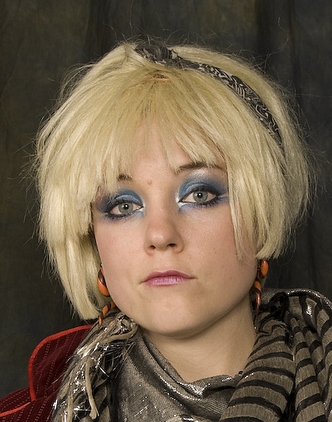
Foto: Georg Lester · CC BY-SA 2.0 · Wikimedia Commons
Shag
The shag is a heavily layered, deliberately tousled cut.
💡 Did you know? It defined the 1970s look: from Jane Fonda to Mick Jagger.

Foto: Amuzujoe · CC BY-SA 4.0 · Wikimedia Commons
Afro
The afro is a round, voluminous style of dense natural curly hair.
💡 Did you know? In the 1960s it became a visible symbol of self-confidence.
Fashion & Design: all topics →
Home · All topics · Legal notice · Privacy · Terms · Contact