

Foto: Fice · CC BY-SA 3.0 · Wikimedia Commons
Show answer
Mugwort
Mugwort is a tall wild plant with silvery-haired undersides to its leaves: a classic seasoning for rich roasts.
💡 Did you know? Mugwort is a classic seasoning for roast goose.
22 questions · Nature
Herbs (Advanced): Mugwort (Artemisia vulgaris). Wormwood (Artemisia absinthium). Hyssop (Hyssopus officinalis). Borage (Borago officinalis). Vervain (Verbena officinalis). St John's wort (Hypericum perforatum). Yarrow (Achillea millefolium). Ribwort plantain (Plantago lanceolata). Valerian (Valeriana officinalis). Good to know: Mugwort is a classic seasoning for roast goose. Wormwood gives vermouth and absinthe their bitterness. Hyssop is an old monastery-garden herb with a spicy-bitter aroma. Borage tastes freshly of cucumber. Vervain is traditionally used for calming teas. St John's wort is used for low mood. Yarrow was long valued as a wound-healing herb. Ribwort plantain is used for coughs and insect bites. Valerian is known as a natural calming and sleep aid. Dewdrops gather like pearls on lady's mantle leaves in the morning. Comfrey was once called 'knitbone' and used for bruises. Coltsfoot flowers very early, often before its leaves appear. Ground ivy was used to flavour beer before hops.
Practise for freePurFact brings every card back right before you would forget it. That's how knowledge sticks.
Which herb is this?
Foto: Fice · CC BY-SA 3.0 · Wikimedia Commons
Mugwort
Mugwort is a tall wild plant with silvery-haired undersides to its leaves: a classic seasoning for rich roasts.
💡 Did you know? Mugwort is a classic seasoning for roast goose.

Foto: Agnieszka Kwiecień, Nova · CC BY-SA 4.0 · Wikimedia Commons
Wormwood
Wormwood has silvery-grey foliage and tastes intensely bitter; its very name is a byword for bitterness.
💡 Did you know? Wormwood gives vermouth and absinthe their bitterness.

Foto: Isidre blanc · CC BY-SA 4.0 · Wikimedia Commons
Hyssop
Hyssop is a small shrub with narrow leaves and blue flowers: a favourite monastery-garden herb since the Middle Ages.
💡 Did you know? Hyssop is an old monastery-garden herb with a spicy-bitter aroma.

Foto: Christian Orlandi · CC BY-SA 4.0 · Wikimedia Commons
Borage
Borage has rough, hairy leaves and bright blue star-shaped flowers: both leaves and flowers are edible.
💡 Did you know? Borage tastes freshly of cucumber.
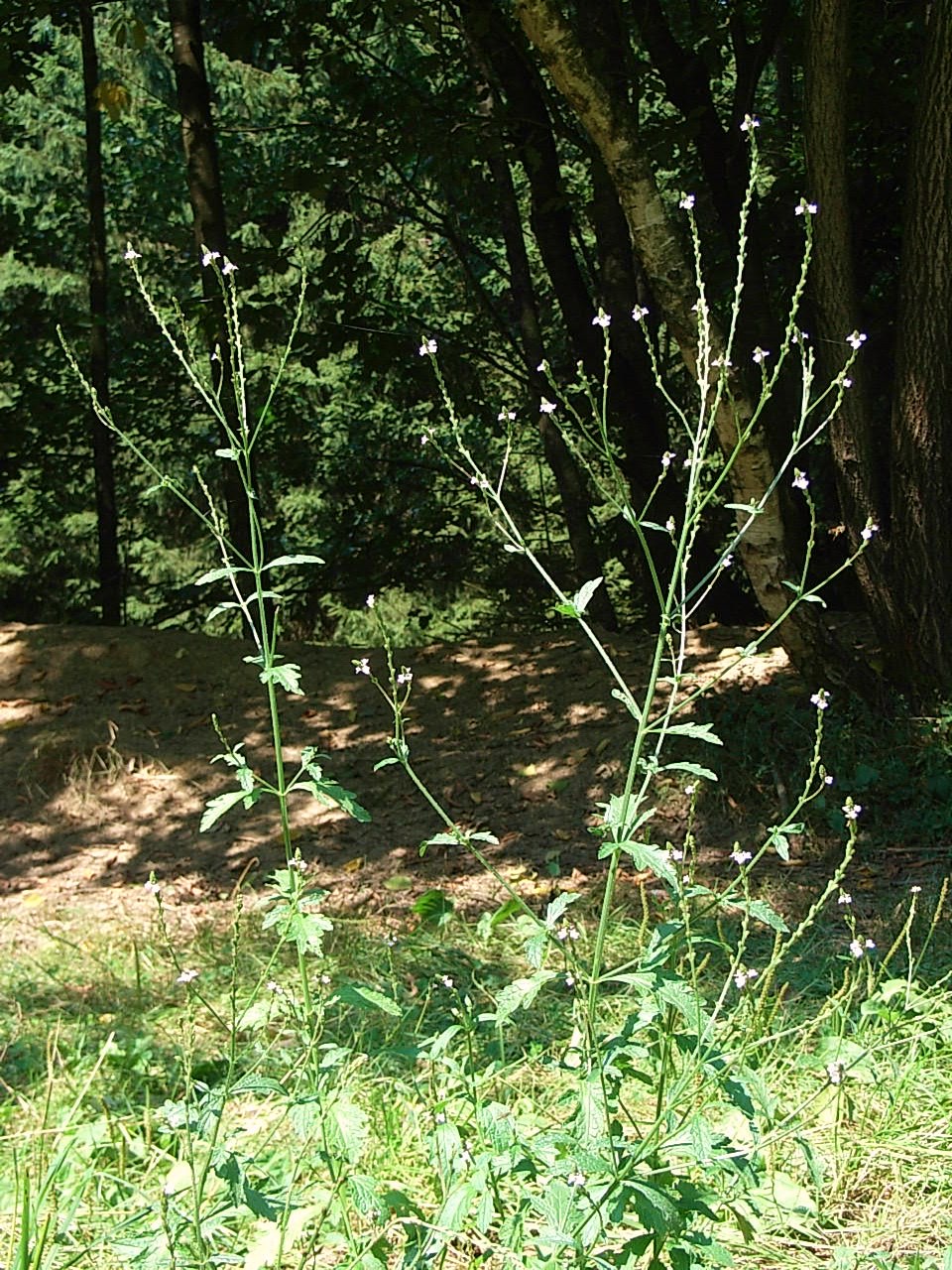
Foto: Konrad Lackerbeck · CC BY-SA 2.5 · Wikimedia Commons
Vervain
Vervain is an unassuming wild plant with tiny pale-violet flowers and a long tradition as a medicinal herb.
💡 Did you know? Vervain is traditionally used for calming teas.

Foto: Agnieszka Kwiecień, Nova · CC BY-SA 4.0 · Wikimedia Commons
St John's wort
St John's wort blooms bright yellow around Midsummer (24 June): crushing the flowers stains the fingers red.
💡 Did you know? St John's wort is used for low mood.

Foto: Benjamin Zwittnig · CC BY 2.5 si · Wikimedia Commons
Yarrow
Yarrow has finely feathered leaves and white flower clusters: it grows on almost any roadside.
💡 Did you know? Yarrow was long valued as a wound-healing herb.

Foto: Hans Hillewaert · CC BY-SA 3.0 · Wikimedia Commons
Ribwort plantain
Ribwort plantain has narrow, ribbed leaves and grows commonly in meadows and along paths.
💡 Did you know? Ribwort plantain is used for coughs and insect bites.

Foto: Ivar Leidus · CC BY-SA 4.0 · Wikimedia Commons
Valerian
Valerian grows over a metre tall with delicate pink-white flower clusters; its root has a pungent smell.
💡 Did you know? Valerian is known as a natural calming and sleep aid.

Foto: Roman Eisele · CC BY-SA 4.0 · Wikimedia Commons
Lady's mantle
Lady's mantle has distinctive fan-folded leaves that hold glistening water droplets in the morning.
💡 Did you know? Dewdrops gather like pearls on lady's mantle leaves in the morning.

Foto: Agnieszka Kwiecień (Nova) · CC BY 2.5 · Wikimedia Commons
Comfrey
Comfrey is a robust plant with rough leaves and bell-shaped violet flowers, often on damp banks.
💡 Did you know? Comfrey was once called 'knitbone' and used for bruises.

Foto: Andreas Trepte · CC BY-SA 2.5 · Wikimedia Commons
Coltsfoot
Coltsfoot shows its yellow, dandelion-like flowers very early in the year: the large leaves appear only afterwards.
💡 Did you know? Coltsfoot flowers very early, often before its leaves appear.

Foto: Ivar Leidus · CC BY-SA 4.0 · Wikimedia Commons
Ground-ivy
Ground ivy is a low creeper with small violet lipped flowers and rounded leaves.
💡 Did you know? Ground ivy was used to flavour beer before hops.

Foto: Avjoska · CC BY 3.0 · Wikimedia Commons
Ground elder
Ground elder spreads rapidly via runners: its three-part leaves are known by the triangular leaf stalk.
💡 Did you know? Ground elder is a stubborn weed: but edible.

Foto: Krzysztof Ziarnek, Kenraiz · CC BY-SA 4.0 · Wikimedia Commons
Watercress
Watercress grows in and by clear running water and tastes pleasantly sharp, like radish.
💡 Did you know? Watercress grows by clean streams and tastes peppery.

Foto: Hajotthu 09:32, 21. Mai 2009 (CEST) · CC BY-SA 3.0 · Wikimedia Commons
Common sorrel
Sorrel has arrow-shaped leaves and a refreshingly sour taste: popular in wild-herb soups.
💡 Did you know? The sour taste comes from oxalic acid.

Foto: Jerzy Opioła · CC BY-SA 4.0 · Wikimedia Commons
Sweet woodruff
Woodruff grows in shady beech woods and releases its typical sweet aroma only as it wilts.
💡 Did you know? Sweet woodruff gives May punch its typical aroma.

Foto: Wouter Hagens · Public domain · Wikimedia Commons
Nasturtium
Nasturtium trails with round leaves and bright orange-red flowers: a pretty, edible garden ornament.
💡 Did you know? Nasturtium flowers and leaves are edible and peppery.

Foto: Fornax · CC BY-SA 3.0 · Wikimedia Commons
Salad burnet
Salad burnet has finely feathered leaves and tastes faintly of cucumber.
💡 Did you know? Salad burnet is part of Frankfurt's 'green sauce'.

Foto: Christian Fischer · CC BY-SA 3.0 · Wikimedia Commons
Garden angelica
Angelica grows head-high with large globe-shaped flower clusters; its aromatic stems are candied.
💡 Did you know? Candied angelica stems are used as a sweet.

Foto: Christian Fischer · CC BY-SA 3.0 · Wikimedia Commons
Meadowsweet
Meadowsweet grows in damp meadows and by streams, its cream-white plumes giving off a honey-sweet scent.
💡 Did you know? Meadowsweet smells of honey and once yielded a forerunner of aspirin.

Foto: Ericsteinert at German Wikipedia · CC BY-SA 3.0 · Wikimedia Commons
Curry plant
Curry plant has silvery needle-like leaves and gives off an intense curry scent, for seasoning it is usually just cooked along.
💡 Did you know? Curry plant smells of curry but is unrelated to the spice.
Home · All topics · Legal notice · Privacy · Terms · Contact