Foto: H. Zell · CC BY-SA 3.0 · Wikimedia Commons
Show answer
Basil
Basil is a fragrant culinary herb with a sweet, spicy aroma, indispensable in Italian cooking. It is used to make pesto.
💡 Did you know? It is sensitive to cold: even in the fridge the leaves quickly turn black.
Foto: H. Zell · CC BY-SA 3.0 · Wikimedia Commons
Show answer
Parsley
Parsley is one of the best-known culinary herbs, with flat or curly leaves. It seasons and garnishes countless dishes.
💡 Did you know? It is high in vitamin C and works as a natural breath freshener after a meal.
Foto: User:Tigerente · CC BY 2.5 · Wikimedia Commons
Show answer
Chives
Chives form tubular green stalks with a mild onion taste. They are sprinkled fresh and finely cut over food.
💡 Did you know? Its pretty purple pom-pom flowers are also edible.
Foto: Forest & Kim Starr · CC BY 3.0 · Wikimedia Commons
Show answer
Dill
Dill is a delicate herb with an aromatic, slightly aniseed taste. It goes especially well with fish, cucumber and quark.
💡 Did you know? Not only the leaves but also the dill flowers and seeds are used for pickling cucumbers.
Foto: Photo by David J. Stang · CC BY-SA 4.0 · Wikimedia Commons
Show answer
Peppermint
Peppermint has an intensely fresh, cooling taste thanks to its essential oil (menthol). It is used for tea, desserts and drinks.
💡 Did you know? Menthol stimulates the skin's cold receptors: which is why it feels 'cool' without actually being cold.
Foto: T137 · CC BY-SA 3.0 · Wikimedia Commons
Show answer
Rosemary
Rosemary is an evergreen shrub with needle-shaped leaves and a resinous, spicy scent. It suits meat, potatoes and Mediterranean dishes.
💡 Did you know? In the Mediterranean it grows wild over whole hillsides and scents the very air.
Foto: Fontema · CC BY-SA 3.0 · Wikimedia Commons
Show answer
Thyme
Thyme is a small, aromatic herb with tiny leaves and an intense flavour. It seasons braised dishes, soups and Mediterranean cooking.
💡 Did you know? Its essential oil (thymol) is antibacterial and is also found in some mouthwashes.
Foto: Isidre blanc · CC BY-SA 4.0 · Wikimedia Commons
Show answer
Oregano
Oregano is an aromatic Mediterranean herb that becomes even more flavourful when dried. It is the classic seasoning for pizza and tomato sauce.
💡 Did you know? It is closely related to marjoram but tastes stronger and more pungent.
Foto: Krzysztof Golik · CC BY-SA 4.0 · Wikimedia Commons
Show answer
Sage
Sage has velvety, grey-green leaves with a strong, spicy, slightly bitter aroma. It suits meat and pasta and is used as a medicinal tea.
💡 Did you know? Its Latin name comes from 'salvare' (to heal): a hint at its long use as a remedy.
Foto: Stefan.lefnaer · CC BY-SA 4.0 · Wikimedia Commons
Show answer
Coriander
Coriander (cilantro) has fresh green leaves with an unmistakable, intense aroma, popular in Asian and Latin American cooking. Its seeds are a spice too.
💡 Did you know? Some people find the taste soapy: this is due to a genetic predisposition.
Foto: H. Zell · CC BY-SA 3.0 · Wikimedia Commons
Show answer
Marjoram
Marjoram is a mild, aromatic herb that goes especially well with hearty dishes like sausage and potato soup. It is closely related to oregano.
💡 Did you know? In German it is also called 'sausage herb' because it is in many kinds of sausage.
Foto: 4028mdk09 · CC BY-SA 3.0 · Wikimedia Commons
Show answer
Chervil
Chervil is a delicate herb with a fine, slightly aniseed taste. It is added fresh to soups, sauces and egg dishes.
💡 Did you know? It is a defining ingredient of the classic Frankfurt 'green sauce'.
Foto: Cillas · CC BY-SA 4.0 · Wikimedia Commons
Show answer
Tarragon
Tarragon has narrow leaves with a spicy-sweet, slightly aniseed aroma. It is an important herb of French cooking, for example in sauce béarnaise.
💡 Did you know? It is also used to make the aromatic tarragon vinegar.
Foto: Sten Porse · CC BY-SA 3.0 · Wikimedia Commons
Show answer
Savory
Savory is an aromatic, slightly peppery herb that traditionally goes with bean dishes. It makes heavy foods easier to digest.
💡 Did you know? It is said to prevent flatulence: which is why it is often used to season pulses.
Foto: Photo by David J. Stang · CC BY-SA 4.0 · Wikimedia Commons
Show answer
Lovage
Lovage tastes strongly savoury and is strongly reminiscent of Maggi seasoning. It flavours soups and stews.
💡 Did you know? Because of its taste it is popularly called 'Maggi herb' in German: even though Maggi seasoning is not actually made from it.
Foto: H. Zell · CC BY-SA 3.0 · Wikimedia Commons
Show answer
Caraway
Caraway provides aromatic seeds with an intense flavour that enhance bread, cabbage and hearty dishes. It is said to aid digestion.
💡 Did you know? It is often confused with the similar-looking but quite different-tasting cumin.
Foto: Agnieszka Kwiecień, Nova · CC BY-SA 4.0 · Wikimedia Commons
Show answer
Bay laurel
The bay laurel provides firm, aromatic leaves that are simmered in soups and braises and removed before serving. It comes from the Mediterranean.
💡 Did you know? The ancient Greeks and Romans wove victors' wreaths from laurel branches.
Foto: H. Zell · CC BY-SA 3.0 · Wikimedia Commons
Show answer
Chamomile
Chamomile is a well-known medicinal herb with small white-and-yellow flowers. It is used to make a soothing tea.
💡 Did you know? Chamomile tea is regarded as a gentle remedy for stomach ache and for relaxation.
Foto: Simplicius · CC BY-SA 3.0 · Wikimedia Commons
Show answer
Stinging nettle
The stinging nettle is a widespread wild herb whose leaves sting on contact. Cooked, it loses its sting and becomes a vitamin-rich vegetable.
💡 Did you know? The fine stinging hairs work like tiny syringes that inject an irritating fluid into the skin.
Foto: Lisa Carter · CC BY-SA 3.0 · Wikimedia Commons
Show answer
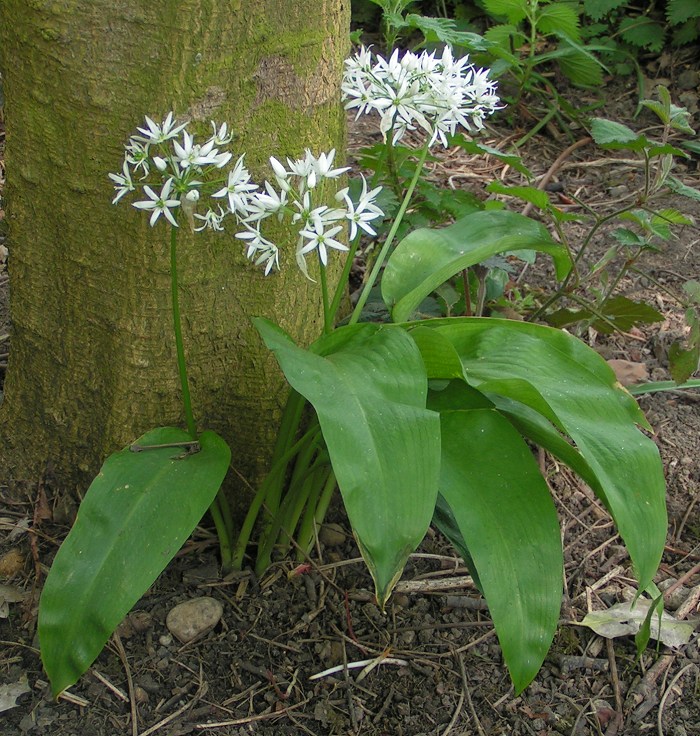
Wild garlic
Wild garlic (ramsons) is a wild herb with an intense garlic taste that grows in shady woods in spring. It is made into pesto and soup.
💡 Did you know? It is easily confused with the poisonous leaves of lily of the valley and autumn crocus; the garlic smell is the safe way to tell it apart.
Foto: Schlaghecken Josef · CC BY-SA 4.0 · Wikimedia Commons
Show answer
Lemon balm
Lemon balm smells and tastes freshly of lemon. It is used for tea, desserts and summer drinks.
💡 Did you know? It belongs to the mint family and is calming: it was once used against nervousness.
Foto: Eugene Zelenko · CC BY-SA 4.0 · Wikimedia Commons
Show answer
Fennel
Fennel has a sweet, aniseed-like taste. The bulb is eaten as a vegetable, the seeds are used as a spice and for tea.
💡 Did you know? Fennel tea is a classic, gentle remedy for wind in babies and children.