

Foto: Jerry Cone · Public domain · Wikimedia Commons
Show answer
Diamond
The diamond is pure carbon and the hardest natural material.
💡 Did you know? When cut it sparkles in all rainbow colours.
12 questions · Nature
For millennia a symbol of wealth and power, cut until they split light into a thousand sparks: recognise the gemstones diamond, ruby, emerald, sapphire, amethyst, topaz, opal, turquoise, garnet, amber, aquamarine and citrine by their colour and shine. Good to know: The diamond is pure carbon and the hardest natural material. When cut it sparkles in all rainbow colours. The ruby is the red variety of the mineral corundum. Its colour reaches the prized ‘pigeon-blood red’. The emerald is the green gemstone of the beryl family. Small inclusions are typical and are called the ‘jardin’. The sapphire is usually deep blue: also a variety of corundum. It also comes in yellow, pink or green. The violet amethyst is a variety of quartz and often grows in geodes. It was once as valuable as a diamond. Topaz occurs in many colours, often golden-yellow or sky-blue. Large, clear crystals are highly sought after. The opal shimmers in shifting rainbow colours (‘play of colour’). Australia supplies most precious opals.
Practise for freePurFact brings every card back right before you would forget it. That's how knowledge sticks.
Which gemstone is this?
Foto: Jerry Cone · Public domain · Wikimedia Commons
Diamond
The diamond is pure carbon and the hardest natural material.
💡 Did you know? When cut it sparkles in all rainbow colours.

Foto: Robert M. Lavinsky · CC BY-SA 3.0 · Wikimedia Commons
Ruby
The ruby is the red variety of the mineral corundum.
💡 Did you know? Its colour reaches the prized ‘pigeon-blood red’.

Foto: Géry PARENT · CC BY-SA 4.0 · Wikimedia Commons
Emerald
The emerald is the green gemstone of the beryl family.
💡 Did you know? Small inclusions are typical and are called the ‘jardin’.

Foto: Robert M. Lavinsky · CC BY-SA 3.0 · Wikimedia Commons
Sapphire
The sapphire is usually deep blue: also a variety of corundum.
💡 Did you know? It also comes in yellow, pink or green.

Foto: Ra'ike (see also: de:Benutzer:Ra'ike) · CC BY 2.5 · Wikimedia Commons
Amethyst
The violet amethyst is a variety of quartz and often grows in geodes.
💡 Did you know? It was once as valuable as a diamond.
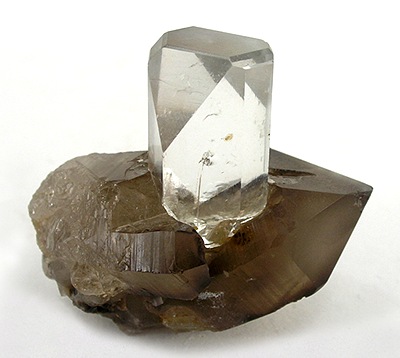
Foto: Robert M. Lavinsky · CC BY-SA 3.0 · Wikimedia Commons
Topaz
Topaz occurs in many colours, often golden-yellow or sky-blue.
💡 Did you know? Large, clear crystals are highly sought after.

Public domain · Wikimedia Commons
Opal
The opal shimmers in shifting rainbow colours (‘play of colour’).
💡 Did you know? Australia supplies most precious opals.

Foto: Robert M. Lavinsky · CC BY-SA 3.0 · Wikimedia Commons
Turquoise
Turquoise is an opaque, blue-green ornamental stone.
💡 Did you know? It was worked already by the ancient Egyptians.

Foto: James St. John · CC BY 2.0 · Wikimedia Commons
Garnet
The garnet is usually deep red, but also occurs green or orange.
💡 Did you know? Its name derives from the pomegranate.

Foto: Lämpel · CC BY 3.0 · Wikimedia Commons
Amber
Amber is fossilised tree resin, not a mineral.
💡 Did you know? Sometimes insects are trapped inside.

Foto: Tuxyso · CC BY-SA 4.0 · Wikimedia Commons
Aquamarine
The aquamarine is the sea-blue relative of the emerald.
💡 Did you know? Its name means ‘sea water’.

Foto: Géry PARENT · Public domain · Wikimedia Commons
Citrine
Citrine is a yellow to golden-brown quartz.
💡 Did you know? Its name comes from the lemon.
Home · All topics · Legal notice · Privacy · Terms · Contact