
Which country was Turner from?
Show answer
England
Turner was the foremost English landscape painter and a forerunner of Impressionism.
💡 Did you know? The son of a London barber, he was exhibiting at the Royal Academy by the age of 14.
19 questions · Art
Joseph Mallord William Turner is born in London in 1775, the son of a barber. Even as a child his father displays the boy's drawings in the window of his shop. At just fourteen Turner is admitted to the Royal Academy and quickly rises to become a celebrated landscape painter. He travels tirelessly through England and across the Continent, filling sketchbook after sketchbook. Turner is the great painter of light and the forces of nature. No one else captures storms, fog, sunrises and the churning sea so intensely. Over the years the solid forms in his pictures dissolve more and more: ships, mountains and houses blur into swirling vortices of colour and light. What looks almost abstract would only be understood and carried further decades later by the Impressionists. Among his most famous works are "The Fighting Temeraire", in which an old sailing ship is towed into the sunset by a sooty steam tug (a farewell to the old age) and "Rain, Steam and Speed", in which a steam locomotive races through a glowing storm. Turner is mocked by some for his late, wild pictures, but the influential critic John Ruskin defends him passionately. When Turner dies in 1851 he leaves behind thousands of works. Did you know that, according to legend, he once had himself lashed to the mast of a ship in a storm to experience the fury of nature with his own eyes and then to paint it? Turner, the great painter of light, dissolved the world into colour and atmosphere. Famous are ‘Rain, Steam and Speed’, the nostalgic ‘The Fighting Temeraire’ and the accusing ‘The Slave Ship’. His forces of nature rage in ‘Snow Storm: Hannibal Crossing the Alps’ and ‘Snow Storm: Steam-Boat off a Harbour’s Mouth’, his histories in ‘Dido building Carthage’, ‘The Battle of Trafalgar’ and ‘Ulysses deriding Polyphemus’; add to them ‘Sunrise with Sea Monsters’, ‘Fishermen at Sea’, ‘Dolbadarn Castle’ and ‘Light and Colour (Goethe’s Theory)’.
Practise for freePurFact brings every card back right before you would forget it. That's how knowledge sticks.
England
Turner was the foremost English landscape painter and a forerunner of Impressionism.
💡 Did you know? The son of a London barber, he was exhibiting at the Royal Academy by the age of 14.
light and the forces of nature
Turner painted light, storms, mist and the unleashed forces of sea and sky.
💡 Did you know? According to legend he had himself lashed to a ship's mast in a storm.
dissolution of forms
In this he anticipated the Impressionists.
💡 Did you know? In Turner's late pictures ships and land dissolve almost into pure light and colour: an early step toward abstraction.
The Fighting Temeraire
A sooty steam tug tows it into the sunset: a farewell to the old age.
💡 Did you know? „The Fighting Temeraire“ (a proud sailing ship towed away to be broken up) was voted Britain's best-loved painting.
John Ruskin
Some mocked Turner's wild late works.
💡 Did you know? The critic John Ruskin passionately defended Turner against all mockers in his book „Modern Painters.“
1851
Turner died in London in 1851 and left the nation hundreds of paintings and thousands of watercolours and drawings.
💡 Did you know? Turner reportedly had himself lashed to a mast to experience and paint a snowstorm at sea firsthand.

Foto: J. M. W. Turner · Public domain · Wikimedia Commons
Rain, Steam and Speed
Around 1844: a steam locomotive races through a glowing storm.
💡 Did you know? A steam engine races through rain across a bridge: one of the first great pictures of the railway age.

Foto: J. M. W. Turner · Public domain · Wikimedia Commons
The Fighting Temeraire
Around 1839: a sailing ship towed into the sunset by a steam tug.
💡 Did you know? The contrast of old sailing ship and sooty steamer tells of an era's end: Turner's favourite picture, which he never sold.

Foto: J. M. W. Turner · Public domain · Wikimedia Commons
The Slave Ship
Painted around 1840.
💡 Did you know? Turner shows slaves being thrown overboard: a blazing indictment of the slave trade.

Foto: J. M. W. Turner · Public domain · Wikimedia Commons
Dido building Carthage
Painted around 1815.
💡 Did you know? Turner admired Claude Lorrain so much that he wished this picture hung beside a Claude in the museum.

Foto: J. M. W. Turner · Public domain · Wikimedia Commons
The Battle of Trafalgar
Painted around 1823.
💡 Did you know? Turner's largest painting: a royal commission on England's most famous naval battle.
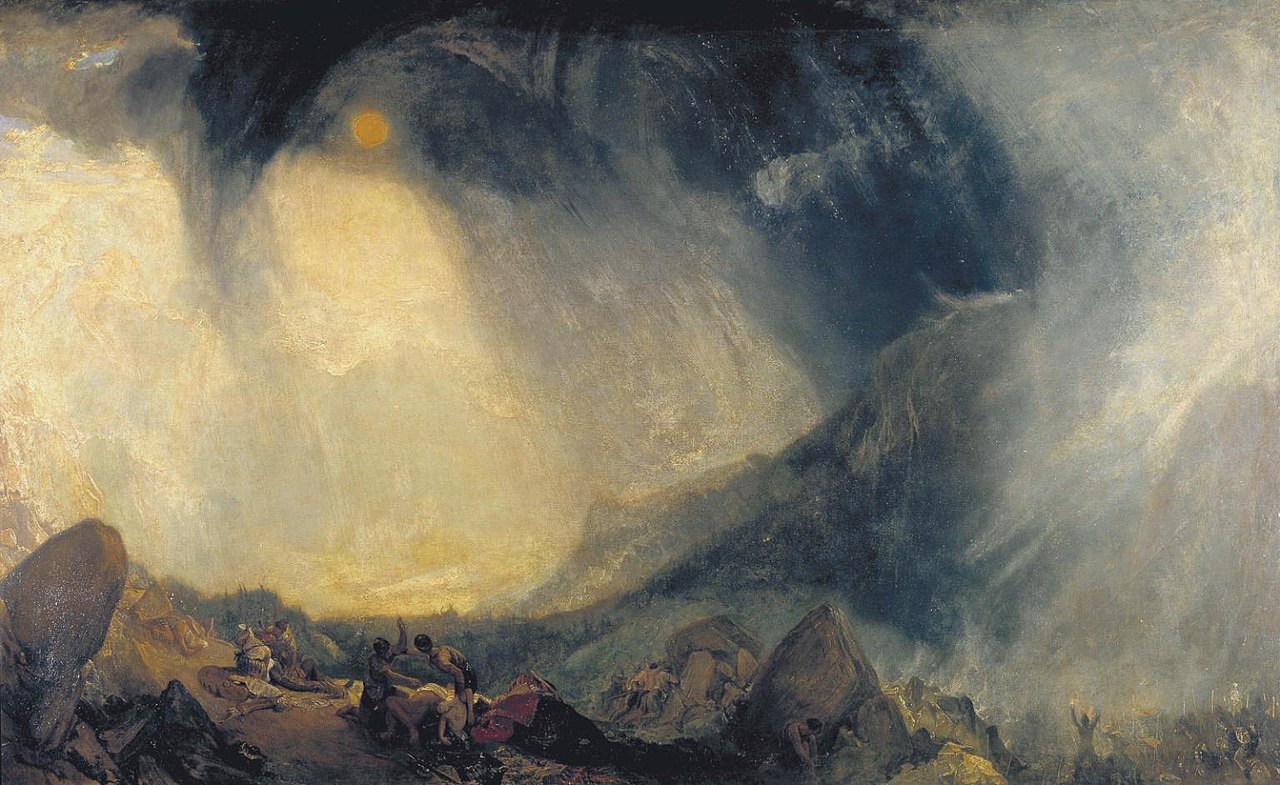
Foto: J. M. W. Turner · Public domain · Wikimedia Commons
Snow Storm: Hannibal Crossing the Alps
Painted around 1812.
💡 Did you know? Not the soldiers but the raging snowstorm is the real hero of the picture.
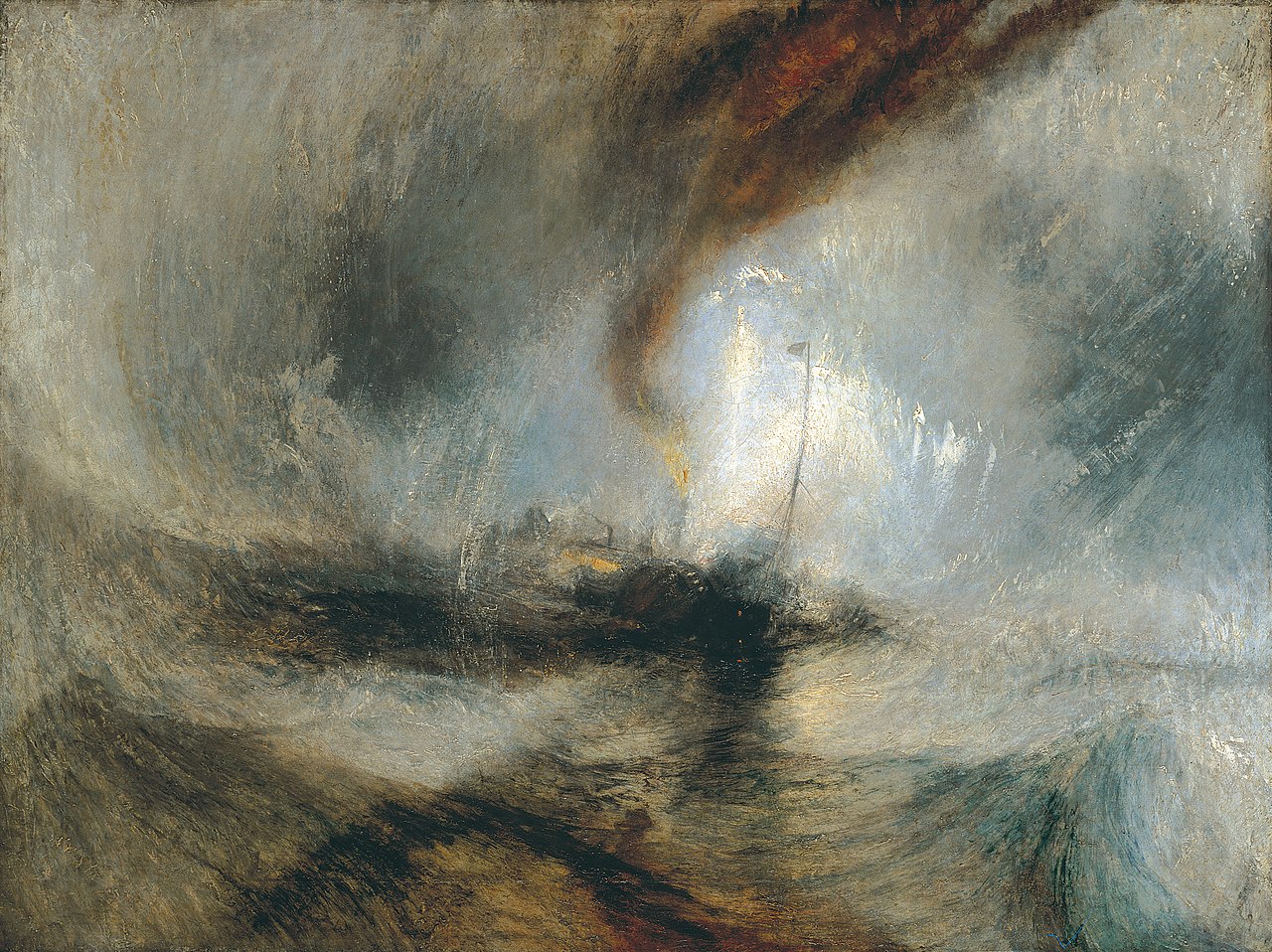
Foto: J. M. W. Turner · Public domain · Wikimedia Commons
Snow Storm: Steam-Boat off a Harbour's Mouth
Painted around 1842.
💡 Did you know? Turner claimed he had himself tied to a ship's mast for four hours in the storm to paint this.

Foto: J. M. W. Turner · Public domain · Wikimedia Commons
Sunrise with Sea Monsters
Painted around 1845.
💡 Did you know? A late, almost abstract work in which everything dissolves into golden haze.

Foto: J. M. W. Turner · Public domain · Wikimedia Commons
Fishermen at Sea
Painted around 1796.
💡 Did you know? Turner's first oil exhibited at the Academy: moonlight over a heaving sea.

Foto: J. M. W. Turner · Public domain · Wikimedia Commons
Ulysses deriding Polyphemus
Painted around 1829.
💡 Did you know? A firework of colour: the ancient myth becomes an excuse for a glowing spectacle of light.

Foto: J. M. W. Turner · Public domain · Wikimedia Commons
Dolbadarn Castle
Painted around 1800.
💡 Did you know? A darkly romantic Welsh castle ruin from Turner's early years.
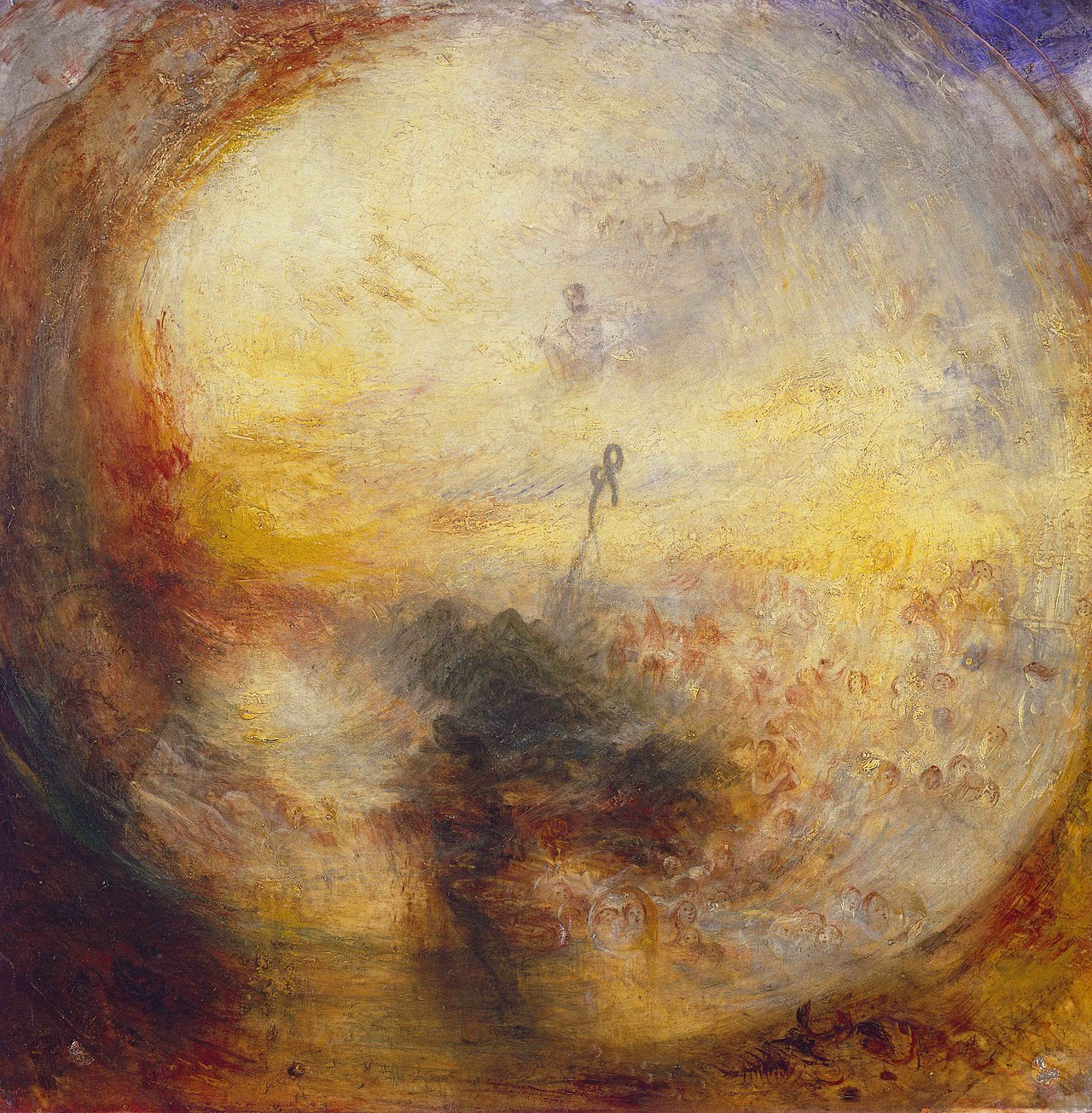
Foto: J. M. W. Turner · Public domain · Wikimedia Commons
Light and Colour (Goethe's Theory)
Painted around 1843.
💡 Did you know? Turner engaged with Goethe's theory of colour: here light swirls in pure hues.

Foto: J. M. W. Turner · Public domain · Wikimedia Commons
J. M. W. Turner
William Turner (1775 to 1851) was the foremost English landscape painter of Romanticism, famous for his radiant pictures of light and nature.
💡 Did you know? Turner's late, almost abstract pictures were so far ahead of their time that many contemporaries thought them unfinished.
Home · All topics · Legal notice · Privacy · Terms · Contact