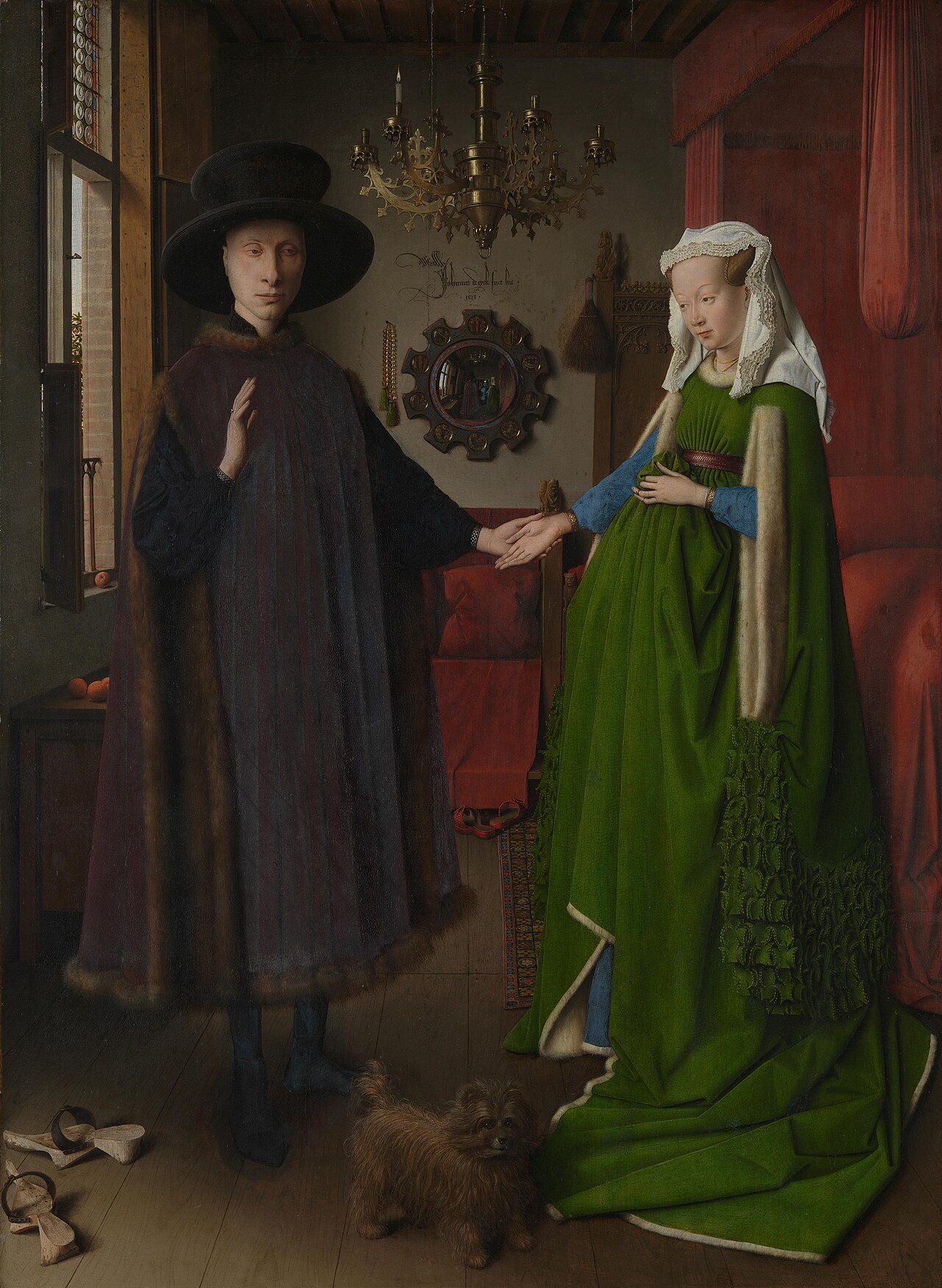
Which region was Jan van Eyck from?
Show answer
Netherlands (Flanders)
Jan van Eyck was the foremost master of early Netherlandish painting in the 15th century.
💡 Did you know? Almost nothing is known of his birth year or origins: he steps into history only as a mature artist.
Of which art is van Eyck the most important early master?
Show answer
early Netherlandish painting
Van Eyck stands at the start of early Netherlandish painting, which captured the visible world with unprecedented precision.
💡 Did you know? He was long even held to be the „inventor“ of oil painting: in fact he brought it to undreamed-of perfection.
Which painting technique did van Eyck perfect?
Show answer
oil painting
Van Eyck built his pictures from wafer-thin, transparent layers of oil, achieving a glow like precious stones.
💡 Did you know? A legend falsely claims he invented oil painting.
What especially distinguishes van Eyck's painting?
Show answer
extreme detail
Every hair and every reflection is precisely captured.
💡 Did you know? Van Eyck painted every hair, thread and reflection: details some of which are only visible under a magnifying glass.
For which powerful ruler did van Eyck work?
Show answer
Duke of Burgundy
Van Eyck was court painter to the mighty Duke Philip the Good of Burgundy, who also sent him abroad as an envoy.
💡 Did you know? The duke even sent him on secret diplomatic missions.
With which motto did van Eyck sign many pictures?
Show answer
As I can
A self-confident declaration of his skill; he died in 1441.
💡 Did you know? His motto „Als ich can“ (as best I can) sounds modest but was also a confident pun on his own name.
Foto: Jan van Eyck · Public domain · Wikimedia Commons
Which famous work is shown here?
Show answer
Arnolfini Portrait
Around 1434: full of hidden symbols and with a famous convex mirror.
💡 Did you know? In the round mirror on the wall the whole room is reflected, including two witnesses, perhaps the painter himself.
Public domain · Wikimedia Commons
What is this work called?
Show answer
Ghent Altarpiece
Around 1432: a vast multi-panelled folding altarpiece.
💡 Did you know? The huge folding altarpiece has been stolen several times: one panel is still missing without trace.
Foto: Jan van Eyck · Public domain · Wikimedia Commons
What is this painting called?
Show answer
Madonna of Chancellor Rolin
Painted around 1500.
💡 Did you know? The kneeling Chancellor Rolin faces the Madonna as an equal: a bold sign of worldly pride for the time.
Foto: Jan van Eyck · Public domain · Wikimedia Commons
Which famous work is shown here?
Show answer
The Madonna in the Church
Painted around 1430.
💡 Did you know? Van Eyck painted the light so precisely that art historians have even determined the time of day.
Foto: Jan van Eyck · Public domain · Wikimedia Commons
What is this work called?
Show answer
Madonna with Canon van der Paele
Painted around 1436.
💡 Did you know? The aged, ailing donor is painted so realistically that physicians have claimed to diagnose his diseases.
Foto: Jan van Eyck · Public domain · Wikimedia Commons
What is this painting called?
Show answer
Portrait of a Man (possible self-portrait)
Painted around 1433.
💡 Did you know? The red turban and direct gaze suggest van Eyck depicted himself here.
Foto: Jan van Eyck · Public domain · Wikimedia Commons
Which famous work is shown here?
Show answer
Annunciation
Painted around 1435.
💡 Did you know? Even the floor tiles and book pages are painted in such detail that individual words can be read.
Foto: Jan van Eyck · Public domain · Wikimedia Commons
What is this work called?
Show answer
Dresden Triptych
Painted around 1437.
💡 Did you know? Van Eyck's only signed and dated little folding altar: a devotional image for private use.
Foto: Jan van Eyck · Public domain · Wikimedia Commons
What is this painting called?
Show answer
Léal Souvenir
Painted around 1432.
💡 Did you know? An early bourgeois portrait: van Eyck painted a stone parapet with deceptively real „carved“ inscriptions.
Foto: Jan van Eyck · Public domain · Wikimedia Commons
Which famous work is shown here?
Show answer
Crucifixion and Last Judgement diptych
Painted around 1437.
💡 Did you know? On two narrow panels van Eyck crowds whole multitudes: from the Crucifixion down into hell.
Foto: Jan van Eyck · Public domain · Wikimedia Commons
Which artist is shown here?
Show answer
Jan van Eyck
Jan van Eyck (c. 1390 to 1441) was the foremost master of early Netherlandish painting, famous for his incredible precision of detail and the perfection of oil painting.
💡 Did you know? Van Eyck was one of the first artists to proudly sign and date his pictures: a new self-confidence of the painter.