🎨
Käthe Kollwitz
10 questions · Society & Everyday
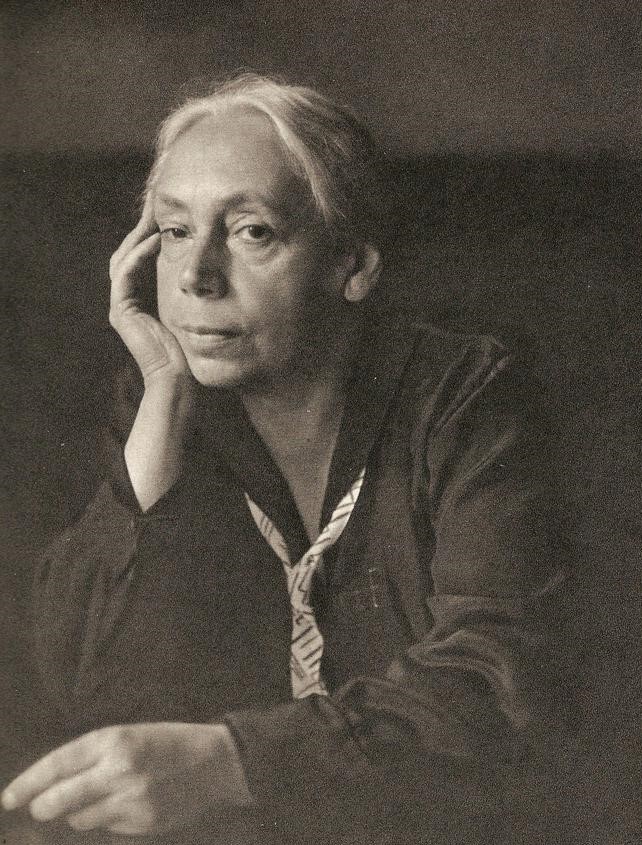
Käthe Kollwitz is born in Königsberg in 1867 and is able (unusually for the time) to train as an artist, since women are still barred from the state academies and private art schools are the only way in. She marries the doctor for the poor Karl Kollwitz and moves with him to a working-class district of Berlin. What she sees there every day (hunger, illness, hardship) becomes the heartbeat of her art: she depicts not beauty but the lives of ordinary, suffering people.
Instead of colourful paintings she chooses the black and white of the graphic arts: etchings, lithographs, woodcuts and later sculpture. Her early cycles 'A Weavers' Revolt' and 'Peasants' War' make her famous; for the Weavers' Revolt she was to receive a gold medal, but Kaiser Wilhelm II refused it to a woman who chose such "gutter" subjects.
Then war strikes her own life to the core: in 1914 her younger son Peter is killed in the very first weeks of the First World War. The loss shapes her entire work from then on. For years she works on a memorial to the fallen soldiers, standing as the pair of sculptures 'The Grieving Parents' in a war cemetery in Flanders. Mourning mothers, sheltering hands, Pietà motifs recur again and again.
In 1919 she becomes the first woman ever appointed to the Prussian Academy of Arts. But in 1933 the Nazis force her to resign and ban her from exhibiting. Her small sculpture of a mother enfolding her child sums up her lifelong theme. Käthe Kollwitz dies in 1945, shortly before the end of the war: an artist who gave the suffering of the nameless an unforgettable face.
Practise for free
PurFact brings every card back right before you would forget it. That's how knowledge sticks.