What is Hokusai's most famous work called?
Show answer
The Great Wave off Kanagawa
It belongs to the series "Thirty-six Views of Mount Fuji".
💡 Did you know? „The Great Wave“ is today one of the most famous images in the world: it even features on an emoji and the Japanese passport.
In which art was Hokusai the great master?
Show answer
colour woodblock print
Hokusai was a master of the Japanese colour woodblock print (ukiyo-e), in which a separate block is cut for each colour.
💡 Did you know? A single ukiyo-e print was a team effort: the artist drew, a carver cut the blocks, a printer printed.
Which country was Hokusai from?
Show answer
Japan
Hokusai worked in the city of Edo (today Tokyo) during the secluded Edo period.
💡 Did you know? Over his life Hokusai moved house more than 90 times and used over 30 different artist names.
What effect did Hokusai's art have on Western painting?
Show answer
Japonism (influence on the Impressionists)
When Japan opened up in the 19th century, Hokusai's prints set off a wave of enthusiasm in Europe: „Japonisme.“
💡 Did you know? Monet, Van Gogh and Degas collected Japanese prints and adopted their bold framing and flat colours.
Where does the name of Japanese comics derive from?
Show answer
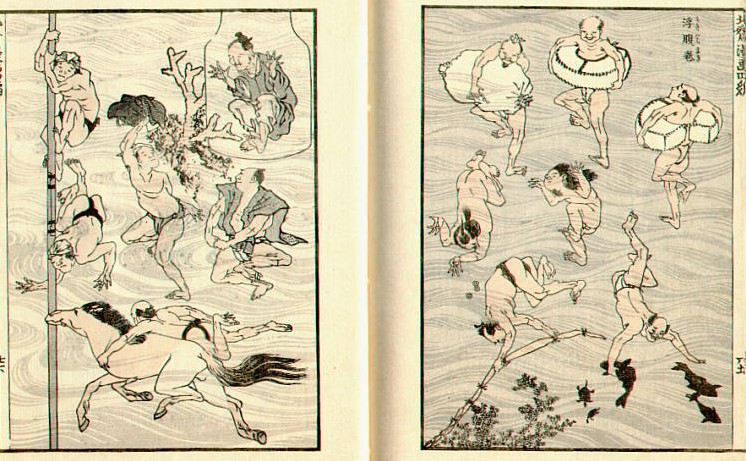
from the "Hokusai Manga"
Hokusai published sketchbooks full of figures, animals and everyday scenes that he called „manga“ (casual pictures).
💡 Did you know? Over his life he changed his artist's name more than 30 times.
How old did Hokusai live to be?
Show answer
almost 90 (1849)
He worked tirelessly at his art to the very end.
💡 Did you know? On his deathbed at nearly 90, Hokusai is said to have declared that with another ten years he would have become a „true painter.“
Foto: Katsushika, Hokusai, 1760-1849, artist · Public domain · Wikimedia Commons
Which famous work is shown here?
Show answer
The Great Wave off Kanagawa
Around 1830: one of the best-known images in the world.
💡 Did you know? Tiny boats battle the giant wave while Fuji rests small in the background: nature against humankind.
Abbildung: Katsushika Hokusai · gemeinfrei · Wikimedia Commons
What is this work called?
Show answer
Thirty-six Views of Mount Fuji
Painted around 1830.
💡 Did you know? The series shows sacred Fuji from 36 (ultimately 46) viewpoints: Hokusai made it aged over 70.
Foto: Katsushika Hokusai · Public domain · Wikimedia Commons
What is this painting called?
Show answer
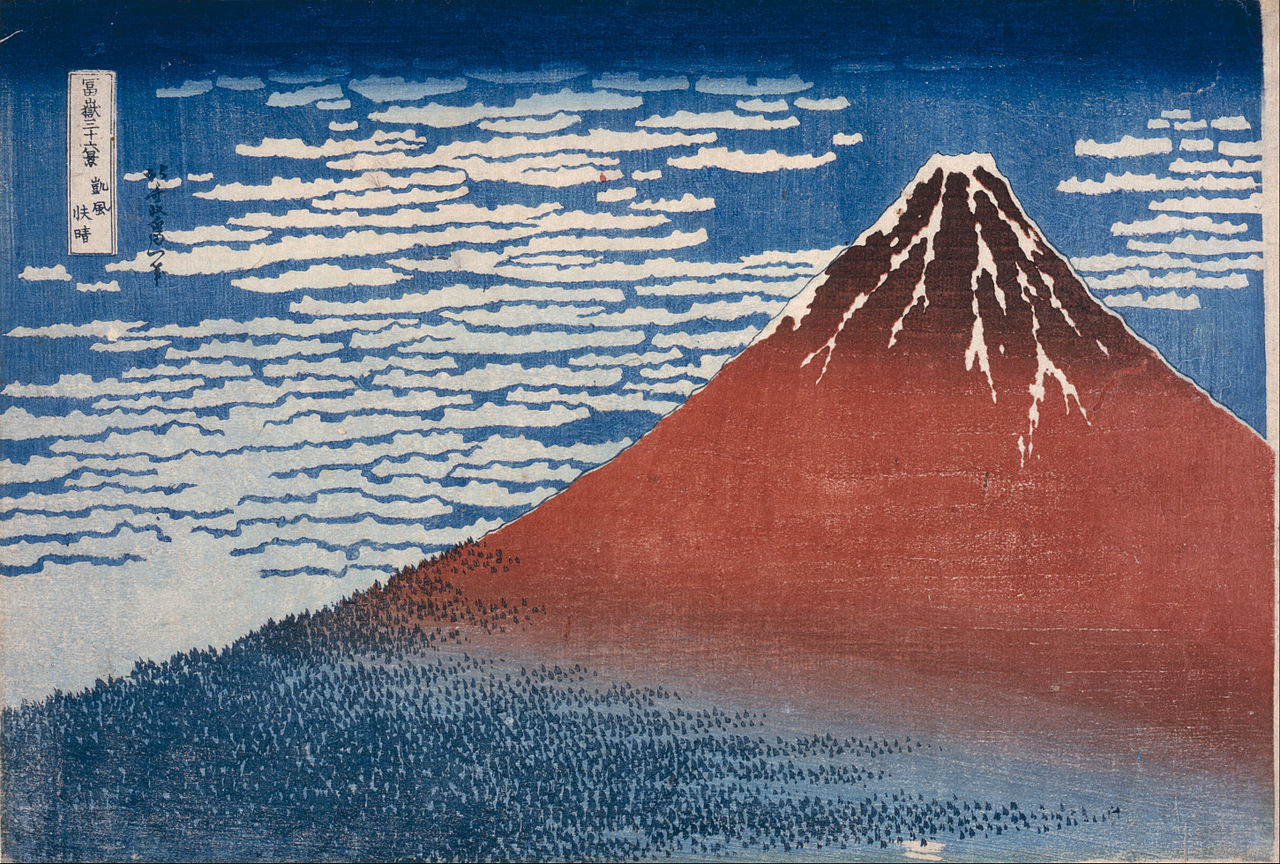
Fine Wind, Clear Morning (Red Fuji)
Around 1830: the "Red Fuji" from the Mount Fuji series.
💡 Did you know? The mountain glows reddish in the morning light: a rare natural sight the Japanese call „Aka-Fuji.“
Foto: Katsushika Hokusai · Public domain · Wikimedia Commons
Which famous work is shown here?
Show answer
Hokusai Manga (sketchbooks)
Painted around 1814.
💡 Did you know? These sketchbooks are regarded as the source of the name for today's Japanese comics.
Foto: Katsushika Hokusai · Public domain · Wikimedia Commons
What is this work called?
Show answer
Lightnings below the Summit
Painted around 1831.
💡 Did you know? From the Fuji series: lightning flashes below the calm summit.
Foto: Katsushika Hokusai · CC0 · Wikimedia Commons
What is this painting called?
Show answer
One Hundred Views of Mount Fuji
A three-volume book in which Hokusai worked Fuji into more than a hundred everyday scenes.
💡 Did you know? Here Hokusai set down his famous wish to grow very old so as to paint ever better.
Foto: Katsushika Hokusai · Public domain · Wikimedia Commons
Which famous work is shown here?
Show answer
Kajikazawa in Kai Province
Painted around 1831.
💡 Did you know? A fisherman casts his line in the mist: Fuji is woven firmly into the composition.
Foto: Katsushika Hokusai · Public domain · Wikimedia Commons
What is this work called?
Show answer
Sundai in Edo
Painted around 1831.
💡 Did you know? From the Fuji series: bustling city life with the distant mountain on the horizon.
Foto: Katsushika Hokusai · Public domain · Wikimedia Commons
What is this painting called?
Show answer
Lake Suwa in Shinano Province
Painted around 1831.
💡 Did you know? A tranquil lake scene from the Fuji series, in cool shades of blue.
Foto: Katsushika Hokusai · Public domain · Wikimedia Commons
Which famous work is shown here?
Show answer
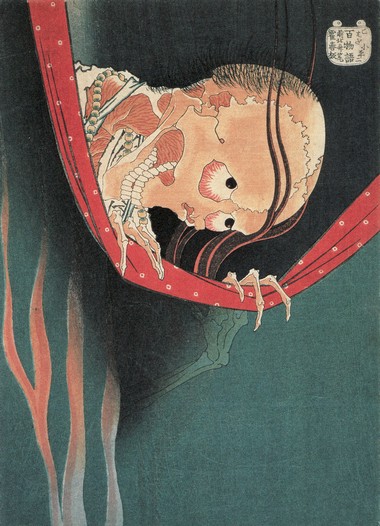
One Hundred Ghost Stories
A series of colour woodblock prints of Japanese ghost and horror tales.
💡 Did you know? Hokusai completed only five of the planned hundred ghost pictures; they are among the earliest „horror“ prints.
Foto: missing name · CC0 · Wikimedia Commons
Which artist is shown here?
Show answer
Katsushika Hokusai
Katsushika Hokusai (1760 to 1849) was a Japanese master of the colour woodblock print, whose „Great Wave“ is one of the best-known images in the world.
💡 Did you know? Hokusai worked tirelessly into old age: he believed his best works still lay ahead of him the older he grew.