
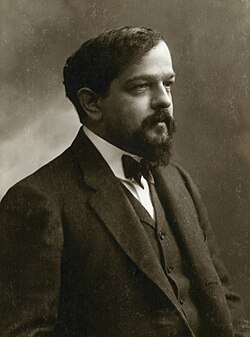
Foto: Nadar · Public domain · Wikimedia Commons
Show answer
Clair de lune
‘Moonlight’: Debussy's floating, impressionist piano piece, delicate as a watercolour.
💡 Did you know? The title comes from a poem by Paul Verlaine.
6 questions · Music
Around 1900 music struck out for new shores: the Impressionism of Debussy and Ravel dissolved firm contours into floating colours, while Gershwin brought jazz into the concert hall and Richard Strauss and Mahler pushed the late-Romantic orchestra to its limits. This pack gathers iconic works of the modern era: from the ‘moonlight’ of Clair de lune to the hypnotic Boléro to the mighty sunrise of ‘Also sprach Zarathustra’. A short excerpt plays and you name the work. So you don't have to sit through a long, nondescript introduction, each piece starts at its most recognisable moment; playback stops on its own after the excerpt, and the replay button lets you hear it as often as you like. Every work also comes with background, so that mere recognition turns into real knowledge. All recordings are public domain or freely licensed (Wikimedia Commons). You'll learn to recognise the shimmering, often startling sounds of this age of upheaval: music that pushed open the door to the 20th century.
Practise for freePurFact brings every card back right before you would forget it. That's how knowledge sticks.
Which piece is playing?
Foto: Nadar · Public domain · Wikimedia Commons
Clair de lune
‘Moonlight’: Debussy's floating, impressionist piano piece, delicate as a watercolour.
💡 Did you know? The title comes from a poem by Paul Verlaine.

Foto: Unknown author The image holder, the Bibliothèque nationale de France has not identified a photographer. (Follow link and click on "Detailed information".) · Public domain · Wikimedia Commons
Boléro
A single theme, endlessly repeated over a hypnotic drum rhythm, building for fifteen minutes.
💡 Did you know? Ravel himself half-jokingly called the Boléro ‘a piece with no music in it at all’.
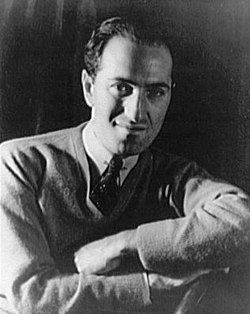
Foto: Carl Van Vechten · Public domain · Wikimedia Commons
Rhapsody in Blue
The wailing clarinet glissando opening fuses jazz and symphony into the sound of 1920s New York.
💡 Did you know? At the 1924 premiere Gershwin partly kept the piano solo in his head and improvised.
🔒 The other 3 questions are part of PurFact Pro.
Open in PurFactHome · All topics · Legal notice · Privacy · Terms · Contact