
Which region was Cézanne from?
Show answer
Provence (France)
Cézanne came from Aix-en-Provence, whose light and landscape he painted all his life.
💡 Did you know? His schoolfriend was the writer Émile Zola: the friendship later broke over a novel.
19 questions · Art
Paul Cézanne is born in 1839 in Aix-en-Provence in the south of France, the son of a wealthy banker. His father wants to make a lawyer of him, but Cézanne is drawn to painting in Paris. There he finds little recognition at first: his pictures are rejected by the Salons, his manner is considered coarse and uncouth. Hurt, he finally withdraws to his sunny native Provence, where he works doggedly and alone at his art. Cézanne begins among the Impressionists but wants more: the fleeting light is not enough for him, and he seeks the solid, eternal structure behind things. He builds his pictures from clear, geometric forms ("the cone, the sphere and the cylinder", as he puts it) and breaks reality down into small, carefully placed patches of colour. A simple apple, a jug, a mountain become in his work studies of form, colour and space. His favourite subject is Mont Sainte-Victoire near his home town, which he paints over sixty times, wrestling anew each time with its structure. His still lifes with fruit and his "Card Players" are also among the icons of modern art. Cézanne dies in 1906. Only late, and above all after his death, do the young painters recognise his importance. For Picasso and Matisse he becomes the "father of modern art", because his breaking-down of the world into forms leads directly to Cubism. Did you know that he died as he had lived: caught in a storm, he went on painting in the rain and caught the pneumonia from which he died soon after? Cézanne, the forerunner of modern art, circled the mountain ‘Mont Sainte-Victoire’ all his life: also in ‘Mont Sainte-Victoire seen from Bellevue’. His rigorous structure shapes ‘The Card Players’, ‘Les Grandes Baigneuses’, ‘Curtain, Jug and Fruit Bowl’ and ‘The Basket of Apples’. Add to them ‘The Boy in the Red Vest’, ‘Lady in Blue’, ‘Girl at the Piano’, ‘Mardi Gras’, ‘The House of the Hanged Man’ and ‘House in Provence’.
Practise for freePurFact brings every card back right before you would forget it. That's how knowledge sticks.
Provence (France)
Cézanne came from Aix-en-Provence, whose light and landscape he painted all his life.
💡 Did you know? His schoolfriend was the writer Émile Zola: the friendship later broke over a novel.
the structure of things
Cézanne sought to reduce nature to basic forms like the sphere, cone and cylinder.
💡 Did you know? He wanted to grasp nature "through the cone, the sphere and the cylinder".
father of modern art
Picasso and Matisse revered him.
💡 Did you know? Both Picasso and Matisse reverently called Cézanne „the father of us all.“
Mont Sainte-Victoire
The mountain lay near his home town of Aix.
💡 Did you know? Cézanne painted Mont Sainte-Victoire over 60 times: ever more abstract, almost to pure planes of colour.
still lifes (apples, fruit)
With apples and jugs Cézanne studied form and colour for years: „With an apple I will astonish Paris.“
💡 Did you know? A simple apple became for him a study of form and space.
1906
Cézanne painted outdoors to the last; in 1906 a storm caught him at work, and he died soon after of pneumonia.
💡 Did you know? He kept painting in a storm and died of the resulting pneumonia.

Foto: Paul Cézanne · Public domain · Wikimedia Commons
The Card Players
From the 1890s: an icon of modern art.
💡 Did you know? A version of „The Card Players“ sold in 2011 for over 250 million dollars: long the most expensive painting sale ever.

Foto: Paul Cézanne · Public domain · Wikimedia Commons
Les Grandes Baigneuses
Painted around 1906.
💡 Did you know? The monumental „Bathers,“ with their pyramidally built bodies, paved the way to Cubism.

Foto: Paul Cézanne · Public domain · Wikimedia Commons
Mont Sainte-Victoire
Cézanne painted this mountain over sixty times.
💡 Did you know? The mountain near Aix became Cézanne's lifelong motif: a laboratory for his search for the structure of nature.

Foto: Paul Cézanne · Public domain · Wikimedia Commons
Mardi Gras
Painted around 1888.
💡 Did you know? Cézanne's own son modelled for the harlequin in this carnival scene.

Foto: Paul Cézanne · Public domain · Wikimedia Commons
The Boy in the Red Vest
Painted around 1889.
💡 Did you know? In 2008 a version of this painting was stolen from a Zurich museum and recovered only years later.

Foto: Paul Cézanne · Public domain · Wikimedia Commons
The Basket of Apples
Painted around 1893.
💡 Did you know? Table and bottle appear slightly „tilted“: Cézanne shows objects from several viewpoints at once.

Foto: Paul Cézanne · Public domain · Wikimedia Commons
Lady in Blue
Painted around 1904.
💡 Did you know? The picture in the Hermitage shows Cézanne's late, almost architectural conception of the human figure.

Foto: Paul Cézanne · Public domain · Wikimedia Commons
Girl at the Piano
Painted around 1869.
💡 Did you know? The subtitle refers to Wagner's „Tannhäuser“: Cézanne was an admirer of his music.

Foto: Paul Cézanne · Public domain · Wikimedia Commons
Curtain, Jug and Fruit Bowl
Painted around 1893.
💡 Did you know? The richly draped curtain shows Cézanne's delight in colour and folds: this still life too fetched record prices.

Foto: Paul Cézanne · Public domain · Wikimedia Commons
Mont Sainte-Victoire seen from Bellevue
Painted around 1892.
💡 Did you know? A railway viaduct in the valley anchors the view in the modern age: nature and technology together.

Foto: Paul Cézanne · Public domain · Wikimedia Commons
The House of the Hanged Man
Painted around 1874.
💡 Did you know? With this early work Cézanne took part in the very first Impressionist exhibition of 1874.

Foto: Paul Cézanne · Public domain · Wikimedia Commons
House in Provence
Painted around 1885.
💡 Did you know? Cézanne built the bare houses of Provence out of geometric planes of colour.
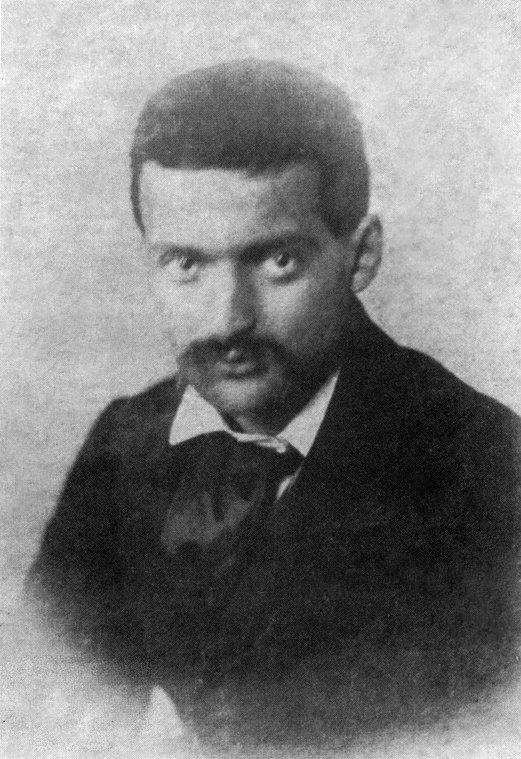
Foto: Unknown author · Public domain · Wikimedia Commons
Paul Cézanne
Paul Cézanne (1839 to 1906) was a French painter whose search for the structure behind things bridged Impressionism and modern art.
💡 Did you know? Often mocked in his lifetime, Cézanne became the idol of Picasso and Matisse after his death: the „father of modern art.“
Home · All topics · Legal notice · Privacy · Terms · Contact