
Which profession did Gauguin give up for art?
Show answer
stockbroker
Gauguin worked successfully as a stockbroker before giving it all up at over 30 to become a painter.
💡 Did you know? At almost 40 he gave up his secure profession.
17 questions · Art
Paul Gauguin is born in 1848 in Paris but spends part of his childhood in Peru: the foreign and far-off attracts him all his life. At first he follows a thoroughly bourgeois path: he becomes a successful stockbroker, marries and starts a family. But painting will not let him go. At almost forty he gives up his secure profession to become an artist entirely: a radical break that costs him family and prosperity. Gauguin wants to escape a civilisation he finds cold and artificial. He seeks the "primal", the simple, the paradisiacal. This longing finally leads him to Tahiti and the South Seas, where he creates most of his famous works. His South Seas pictures show glowing, often unreal colours, flat forms and a mysterious, dreamlike mood. Artistically, Gauguin becomes a pioneer of a new freedom. He breaks away from Impressionism and uses colour no longer true to nature but according to feeling and symbol: large, strong areas in bold combinations. He thus becomes a key figure of "Symbolism" and paves the way for the modern art of the 20th century. Gauguin lives in poor circumstances and dies in 1903, alone on an island in the South Seas. Only after his death is his work highly valued. Did you know that he and Vincent van Gogh lived and painted together for a time in Arles: until the quarrel of the two hot-heads ended in that dramatic crisis in which van Gogh injured his ear? In search of the primordial, Gauguin went to Tahiti: there he created his philosophical masterpiece ‘Where Do We Come From? What Are We? Where Are We Going?’. The South Seas shape ‘When Will You Marry?’, ‘Tahitian Women on the Beach’, ‘Two Tahitian Women’, ‘Ia Orana Maria’ and the sculpture ‘Oviri’. From his Breton years come ‘The Yellow Christ’, ‘The Green Christ’ and ‘Vision After the Sermon’, and of his friend he painted ‘Van Gogh Painting Sunflowers’.
Practise for freePurFact brings every card back right before you would forget it. That's how knowledge sticks.
stockbroker
Gauguin worked successfully as a stockbroker before giving it all up at over 30 to become a painter.
💡 Did you know? At almost 40 he gave up his secure profession.
Tahiti / South Seas
Most of his famous works were made there.
💡 Did you know? Gauguin sought a paradise far from civilisation in the South Seas: but found a reality shaped by colonialism.
colour by feeling (Symbolism)
In this he became a pioneer of modern art.
💡 Did you know? „How do you see these trees? Yellow? Then paint them yellow,“ Gauguin advised: colour should express feeling, not copy nature.
Vincent van Gogh
In 1888 Gauguin lived nine weeks with Van Gogh in Arles: the friendship ended in a quarrel, when Van Gogh cut off part of his ear.
💡 Did you know? Their quarrel ended in van Gogh's dramatic ear crisis.
Peru
He was born in Paris in 1848.
💡 Did you know? Gauguin spent part of his childhood in Peru: the exotic impressions shaped his later longing for distant lands.
1903 in the South Seas
Only after his death was his work highly valued.
💡 Did you know? Gauguin died in 1903 impoverished and ill in the Marquesas Islands; only afterwards did his paintings soar to fortunes.

Foto: Paul Gauguin · Public domain · Wikimedia Commons
Where Do We Come From? What Are We? Where Are We Going?
Around 1897: his great allegorical masterpiece from the South Seas.
💡 Did you know? Gauguin painted the monumental late work as a kind of testament: shortly before he had attempted suicide.

Foto: Paul Gauguin · Public domain · Wikimedia Commons
The Yellow Christ
Around 1889: bold colour fields, a key work of Symbolism.
💡 Did you know? Gauguin set the Crucifixion in the Breton countryside among peasant women: religion as a simple folk image.

Foto: Paul Gauguin · Public domain · Wikimedia Commons
When Will You Marry?
Painted around 1892.
💡 Did you know? In 2015 the picture reportedly sold for around 210 million dollars, for a time the highest price ever paid for a painting.
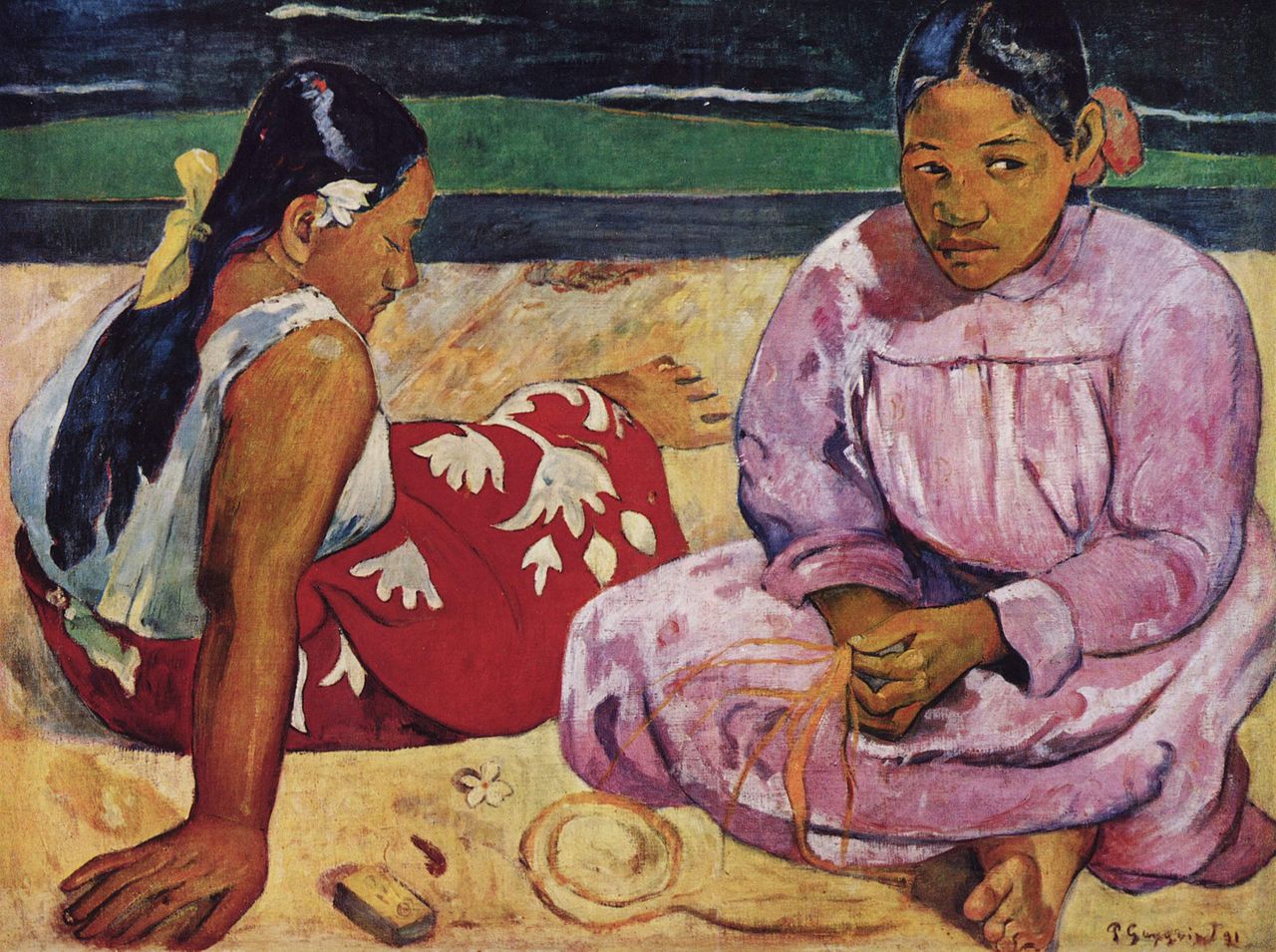
Foto: Paul Gauguin · Public domain · Wikimedia Commons
Tahitian Women on the Beach
Painted around 1890.
💡 Did you know? In flat forms and glowing colours Gauguin celebrated the life of Tahitian women.
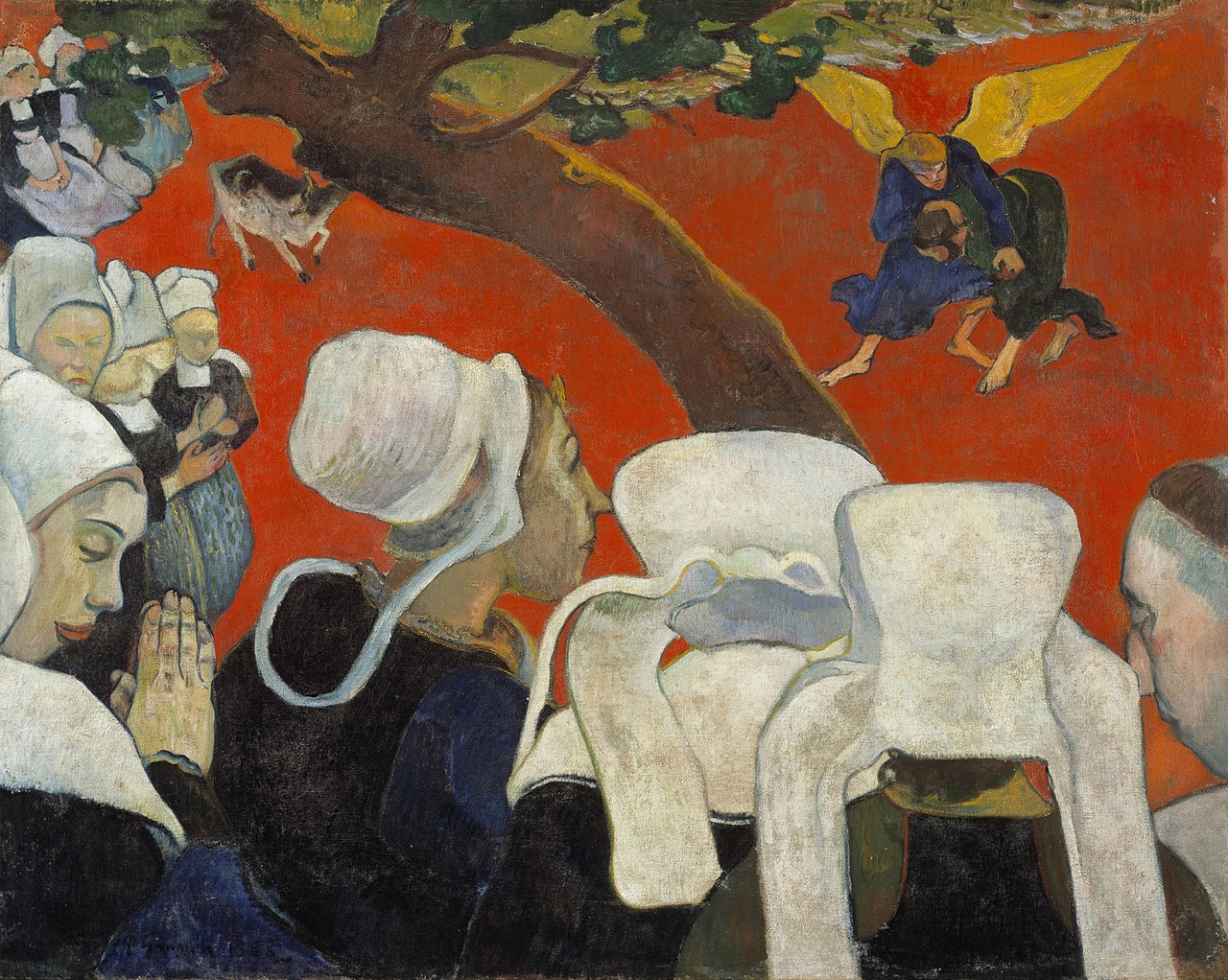
Foto: Paul Gauguin · Public domain · Wikimedia Commons
Vision After the Sermon
Painted around 1888.
💡 Did you know? The vivid red ground on which Jacob wrestles the angel broke radically with true-to-life painting.

Foto: Paul Gauguin · Public domain · Wikimedia Commons
The Green Christ
Painted around 1889.
💡 Did you know? A Breton stone cross (calvary) inspired Gauguin to paint this picture.

Foto: Paul Gauguin · Public domain · Wikimedia Commons
Van Gogh Painting Sunflowers
Painted around 1888.
💡 Did you know? Gauguin painted his friend at work: Van Gogh said it made him look „mad.“

Foto: Paul Gauguin · Public domain · Wikimedia Commons
Ia Orana Maria
Painted around 1891.
💡 Did you know? Gauguin turned Mary and the angels into Tahitians: a Christian scene in South Seas dress.

Foto: Paul Gauguin · Public domain · Wikimedia Commons
Two Tahitian Women
Painted around 1899.
💡 Did you know? The dignified depiction deliberately recalls ancient statues and temple reliefs.

Foto: Alex Mittelmann, aka, Coldcreation · Public domain · Wikimedia Commons
Oviri
Painted around 1894.
💡 Did you know? „Oviri“ (the Savage) is a ceramic figure so important to Gauguin that he wished it placed on his grave.

Foto: Paul Gauguin · Public domain · Wikimedia Commons
Paul Gauguin
Paul Gauguin (1848 to 1903) was a French Post-Impressionist painter, famous for his glowing, flat-patterned pictures from the South Seas.
💡 Did you know? Gauguin gave up a comfortable life as a stockbroker, and his family, to seek a „primitive“ life and a new kind of painting in the South Seas.
Home · All topics · Legal notice · Privacy · Terms · Contact