
Which art epoch does Rubens represent?
Show answer
Baroque
He is regarded as the supreme painter of the Flemish Baroque.
💡 Did you know? Rubens was the most celebrated painter of the Baroque: courts across Europe competed for his works.
18 questions · Art
Peter Paul Rubens is born in 1577 and grows up in Antwerp, the centre of Flemish art. He is an exceptionally educated man: he speaks several languages, works as a diplomat for princely courts and is knighted by several kings. He combines art and politics effortlessly: Rubens is the great man of the world among Baroque painters. As a painter, Rubens stands for the exuberant power of the Baroque. His huge canvases are full of movement, colour and passion: writhing bodies, flying draperies, dramatic diagonals. Whether religious scenes, ancient mythology or portraits: everything pulses with life. His full, sensual female figures even shaped an ideal of beauty of their own; to this day ample forms are called "Rubenesque". Rubens runs a huge workshop in Antwerp with many assistants, almost like a picture factory. This lets him handle the countless commissions from churches, princes and kings all over Europe. Among his pupils is Anthony van Dyck, later famous in his own right. Rubens dies in 1640 a rich, highly honoured man. His influence on Baroque painting is overwhelming. Did you know that as a diplomat he played a key part in negotiating peace between Spain and England and was knighted by both kings for it? For him, brush and negotiating table were two sides of the same art. Rubens was the great Baroque painter of sensuous abundance. His Antwerp altarpieces ‘The Elevation of the Cross’ and ‘The Descent from the Cross’ stand beside mythological splendour like ‘The Rape of the Daughters of Leucippus’, ‘The Three Graces’, ‘The Judgement of Paris’, ‘Head of Medusa’ and ‘Romulus and Remus’. Personal and tender are the portrait ‘Rubens and Isabella Brant in the honeysuckle bower’ and ‘Helena Fourment in a Fur Robe’; add to them ‘Samson and Delilah’ and the ‘Massacre of the Innocents’.
Practise for freePurFact brings every card back right before you would forget it. That's how knowledge sticks.
Baroque
He is regarded as the supreme painter of the Flemish Baroque.
💡 Did you know? Rubens was the most celebrated painter of the Baroque: courts across Europe competed for his works.
Antwerp
In Antwerp Rubens ran one of the largest painting workshops in Europe.
💡 Did you know? His house and studio in Antwerp is today a much-visited museum.
movement and sensuality
Rubens's pictures burst with movement, strong colour and sensual, full-bodied figures: the very image of Baroque exuberance.
💡 Did you know? Ample female figures are still called "Rubenesque" today.
diplomat
Rubens also served European princes as diplomat and secret envoy: disguising his missions as artistic visits.
💡 Did you know? He helped negotiate peace between Spain and England and was knighted.
a large workshop
His most famous pupil was Anthony van Dyck.
💡 Did you know? Rubens designed and his assistants executed: so thousands of works arose; those painted entirely by his own hand are especially prized.
1640
Rubens died in Antwerp in 1640 a rich, ennobled and internationally celebrated man.
💡 Did you know? Knighted by two kings, Rubens was one of the few artists to gain wealth and nobility in his own lifetime.

Foto: Peter Paul Rubens · Public domain · Wikimedia Commons
The Elevation of the Cross
Painted around 1610.
💡 Did you know? Muscular men heave the cross upright: Rubens's dramatic breakthrough in Antwerp.

Foto: Peter Paul Rubens / Jan Wildens · Public domain · Wikimedia Commons
The Rape of the Daughters of Leucippus
Painted around 1618.
💡 Did you know? A whirl of horses, men and women's bodies: Baroque movement perfected.

Foto: Peter Paul Rubens · Public domain · Wikimedia Commons
Rubens and Isabella Brant in the honeysuckle bower
Painted around 1609.
💡 Did you know? A tender self-portrait with his first wife, painted shortly after their wedding.

Foto: Peter Paul Rubens · Public domain · Wikimedia Commons
The Three Graces
Around 1630: a prime example of his sensual ideal of beauty.
💡 Did you know? The full female bodies made the term „Rubenesque“ a byword for voluptuous beauty to this day.

Foto: Peter Paul Rubens · Public domain · Wikimedia Commons
The Descent from the Cross
Painted around 1611.
💡 Did you know? A masterpiece in Antwerp Cathedral: the pale Christ slides diagonally into the picture.

Foto: Peter Paul Rubens · Public domain · Wikimedia Commons
Samson and Delilah
Around 1609: a dramatic scene full of Baroque tension.
💡 Did you know? Delilah has the sleeping Samson's hair cut: the attribution to Rubens is still debated today.

Foto: User:Jean-Pol GRANDMONT · Public domain · Wikimedia Commons
Massacre of the Innocents
Painted around 1611.
💡 Did you know? In 2002 the dramatic picture sold for over 70 million pounds: a record for an Old Master.

Foto: Peter Paul Rubens · CC0 · Wikimedia Commons
Romulus and Remus
Painted around 1615.
💡 Did you know? The she-wolf suckles Rome's founding twins: Rubens's love of antiquity made visible.

Foto: Peter Paul Rubens · Public domain · Wikimedia Commons
Head of Medusa
Painted around 1618.
💡 Did you know? A grisly picture of the severed, snake-wreathed head of Medusa.
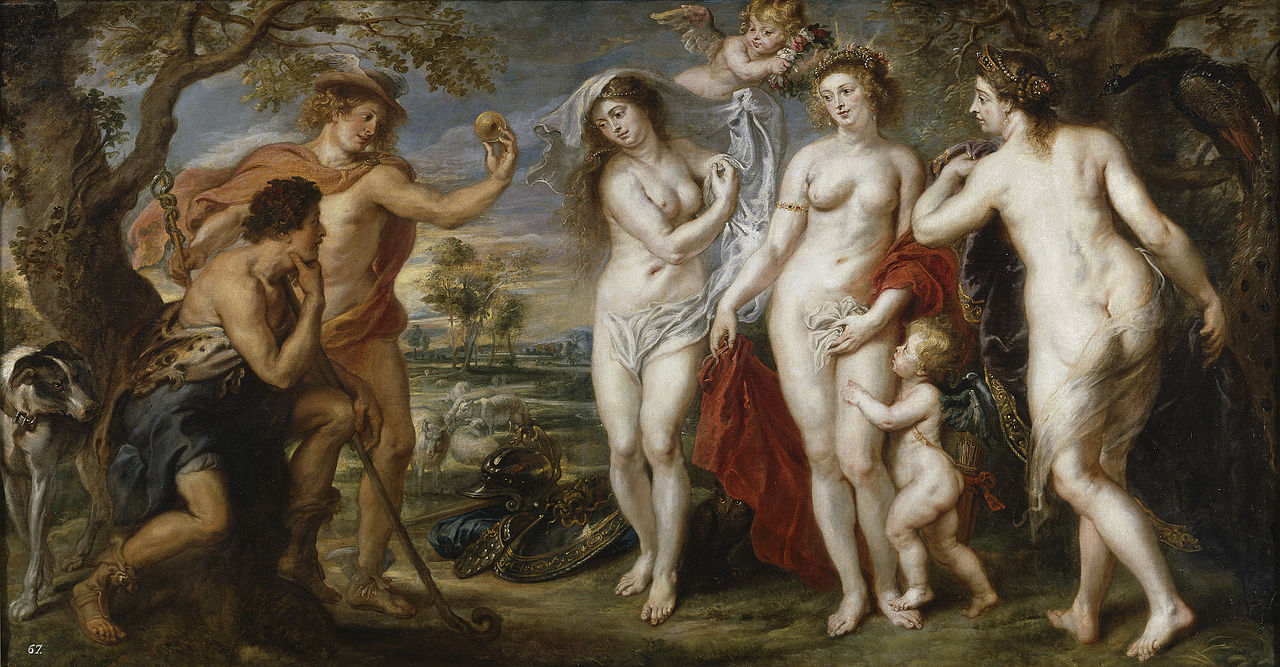
Foto: Peter Paul Rubens · Public domain · Wikimedia Commons
The Judgement of Paris
Painted around 1636.
💡 Did you know? Paris must choose the fairest of three goddesses, for Rubens a welcome excuse for three nudes.

Foto: Peter Paul Rubens · Public domain · Wikimedia Commons
Helena Fourment in a Fur Robe
Painted around 1638.
💡 Did you know? Rubens painted his young second wife wrapped only in a fur: a very private, sensual picture.

Foto: Peter Paul Rubens · Public domain · Wikimedia Commons
Peter Paul Rubens
Peter Paul Rubens (1577 to 1640) was the foremost Flemish painter of the Baroque, famous for his dynamic, sensual and richly coloured pictures.
💡 Did you know? Rubens was not only a prince of painters but a diplomat: he spoke several languages and mediated between Europe's powers on kings' behalf.
Home · All topics · Legal notice · Privacy · Terms · Contact