PurFact

Piet Mondrian

19 questions · Art

Piet Mondrian is born in 1872 in the Netherlands. He begins as a fairly traditional landscape painter: he paints trees, windmills, the wide Dutch plain. But step by step he simplifies what he sees. His famous series of tree pictures shows how, over several paintings, a tree becomes more and more a web of lines, until the subject almost disappears. Out of this search Mondrian develops one of the most radical pictorial ideas in modern art. He reduces painting to its absolute basic elements: straight horizontal and vertical lines, rectangular fields, and only the three primary colours red, yellow and blue, plus black, white and grey. Everything round, slanting or accidental he leaves out. He calls this style "Neoplasticism" and seeks in it a pure, universal harmony. Mondrian is a co-founder of the Dutch movement "De Stijl", which carries this strict clarity into architecture and design as well. His influence reaches far beyond painting to this day: his characteristic grids of black lines and coloured fields appear on dresses, buildings and products of every kind. In 1940 Mondrian flees the war to New York. The energy of the metropolis and jazz music thrill him and bring new momentum to his last pictures, such as "Broadway Boogie Woogie", in which the strict lines suddenly seem to dance. He dies in 1944 in New York. Did you know that Mondrian was a passionate dancer and that his late pictures are directly inspired by the rhythm of boogie-woogie? Mondrian reduced painting radically to straight lines and the primary colours. His path there shows in ‘The Red Tree’, ‘Gray Tree’, ‘Evolution’ and the ‘Lighthouse in Westkapelle’, before pure abstractions like ‘Composition II in Red, Blue, and Yellow’, ‘Composition with Red, Yellow and Blue’, ‘Composition 10 in Black and White’ and ‘Composition with Large Red Plane’ emerged. In New York he found a new rhythm: in ‘New York City’, ‘New York City I’, ‘Broadway Boogie Woogie’ and the unfinished ‘Victory Boogie Woogie’.

Practise for free

PurFact brings every card back right before you would forget it. That's how knowledge sticks.

All questions with answers

To which basic elements did Mondrian reduce his pictures?

Show answer

lines, rectangles, primary colours

Mondrian radically reduced his pictures to black lines, right angles and the primary colours red, yellow and blue.

💡 Did you know? He strictly rejected diagonals and curves: when a colleague introduced them, Mondrian indignantly left the group.

How did Mondrian begin (and where did he develop)?

Show answer

from landscape to abstraction

Mondrian began with naturalistic landscapes and trees and abstracted them step by step down to the pure grid.

💡 Did you know? His tree series shows how the subject almost disappears.

Which movement did Mondrian help found?

Show answer

De Stijl

It carried the strict clarity into architecture and design too.

💡 Did you know? With „De Stijl“ Mondrian sought a universal, ordered art: a model for architecture and design worldwide.

Where does Mondrian's characteristic grid still appear today?

Show answer

in design (fashion, products)

Mondrian's grid of lines and primary colours became a classic of modern design.

💡 Did you know? Yves Saint Laurent created famous „Mondrian dresses“ in 1965: the pattern still adorns everything from fashion to packaging.

Which country was Mondrian from?

Show answer

Netherlands

Mondrian came from the Netherlands and lived in Paris, London and New York.

💡 Did you know? Originally he was „Mondriaan“ with a double a: in Paris he dropped an „a“ to seem more international.

What inspired Mondrian's last pictures such as 'Broadway Boogie Woogie'?

Show answer

New York and jazz

In New York the street grid and jazz thrilled Mondrian: his last pictures grew more colourful and lively.

💡 Did you know? He was a passionate dancer; he died in 1944 in New York.

Broadway Boogie Woogie

Foto: Piet Mondrian · Public domain · Wikimedia Commons

Which famous work is shown here?

Show answer

Broadway Boogie Woogie

Around 1942/43: inspired by the rhythm of jazz; the lines seem to dance.

💡 Did you know? Blinking coloured squares echo the rhythm of New York and the boogie-woogie jazz Mondrian loved.

Victory Boogie Woogie

Foto: Piet Mondrian · Public domain · Wikimedia Commons

What is this work called?

Show answer

Victory Boogie Woogie

Painted around 1942.

💡 Did you know? Mondrian's last, unfinished work: he died in 1944 in the middle of working on it.

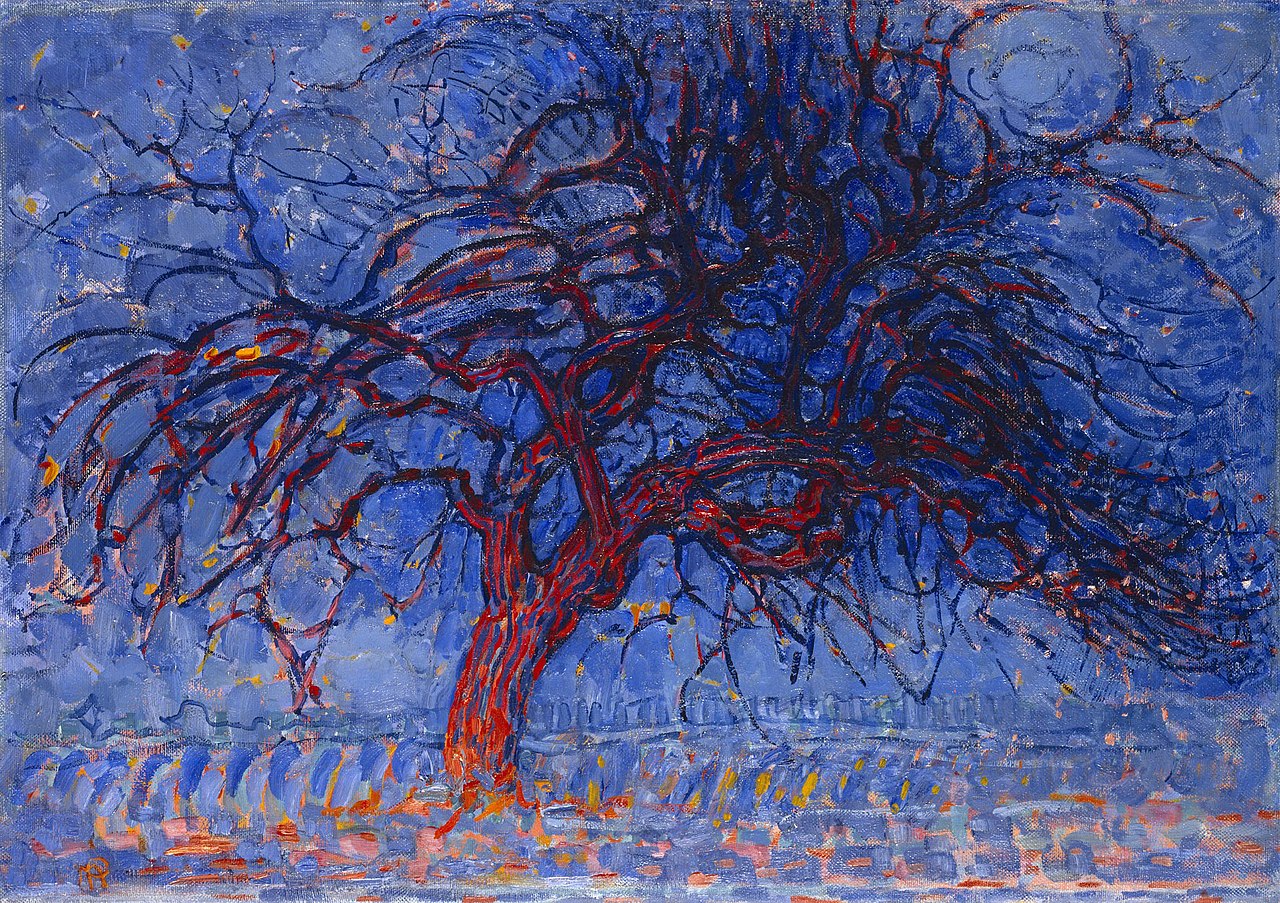
The Red Tree

Foto: Piet Mondrian · Public domain · Wikimedia Commons

What is this painting called?

Show answer

The Red Tree

Painted around 1909.

💡 Did you know? An early tree in glowing red and blue: still far from the later grid.

Gray Tree

Foto: Piet Mondrian · Public domain · Wikimedia Commons

Which famous work is shown here?

Show answer

Gray Tree

Painted around 1911.

💡 Did you know? Here the tree already dissolves into a web of lines: a step toward pure abstraction.

Composition II in Red, Blue, and Yellow

Foto: Piet Mondrian · Public domain · Wikimedia Commons

What is this work called?

Show answer

Composition II in Red, Blue, and Yellow

Around 1930: the classic Mondrian grid of lines and primary colours.

💡 Did you know? The prime example of his mature style: only lines, angles and three primary colours.

New York City

Foto: Piet Mondrian · Public domain · Wikimedia Commons

What is this painting called?

Show answer

New York City

Painted around 1942.

💡 Did you know? A grid of red, yellow and blue lines captures the energy of the metropolis.

Evolution

Foto: Piet Mondrian · Public domain · Wikimedia Commons

Which famous work is shown here?

Show answer

Evolution

Painted around 1911.

💡 Did you know? An early, still symbolist-spiritual triptych from Mondrian's theosophical phase.

New York City I

Foto: Piet Mondrian · Public domain · Wikimedia Commons

What is this work called?

Show answer

New York City I

Painted around 1941.

💡 Did you know? Coloured tape strips that Mondrian kept rearranging: painting as endless balancing.

Composition with Red, Yellow and Blue

Foto: Piet Mondrian · Public domain · Wikimedia Commons

What is this painting called?

Show answer

Composition with Red, Yellow and Blue

Painted around 1937.

💡 Did you know? One of many variations on the theme: Mondrian sought the perfect balance of the planes.

Composition 10 in Black and White

Foto: Piet Mondrian · Public domain · Wikimedia Commons

Which famous work is shown here?

Show answer

Composition 10 in Black and White

Painted around 1915.

💡 Did you know? This picture grew out of plus and minus signs: abstracted from the sight of the sea.

Composition with Large Red Plane

Foto: Piet Mondrian · Public domain · Wikimedia Commons

What is this work called?

Show answer

Composition with Large Red Plane

Painted around 1921.

💡 Did you know? A large red plane dominates: Mondrian played with the equilibrium of unequal fields.

Lighthouse in Westkapelle

Foto: Piet Mondrian · Public domain · Wikimedia Commons

What is this painting called?

Show answer

Lighthouse in Westkapelle

Painted around 1908.

💡 Did you know? An early lighthouse in cool tones, before Mondrian found pure abstraction.

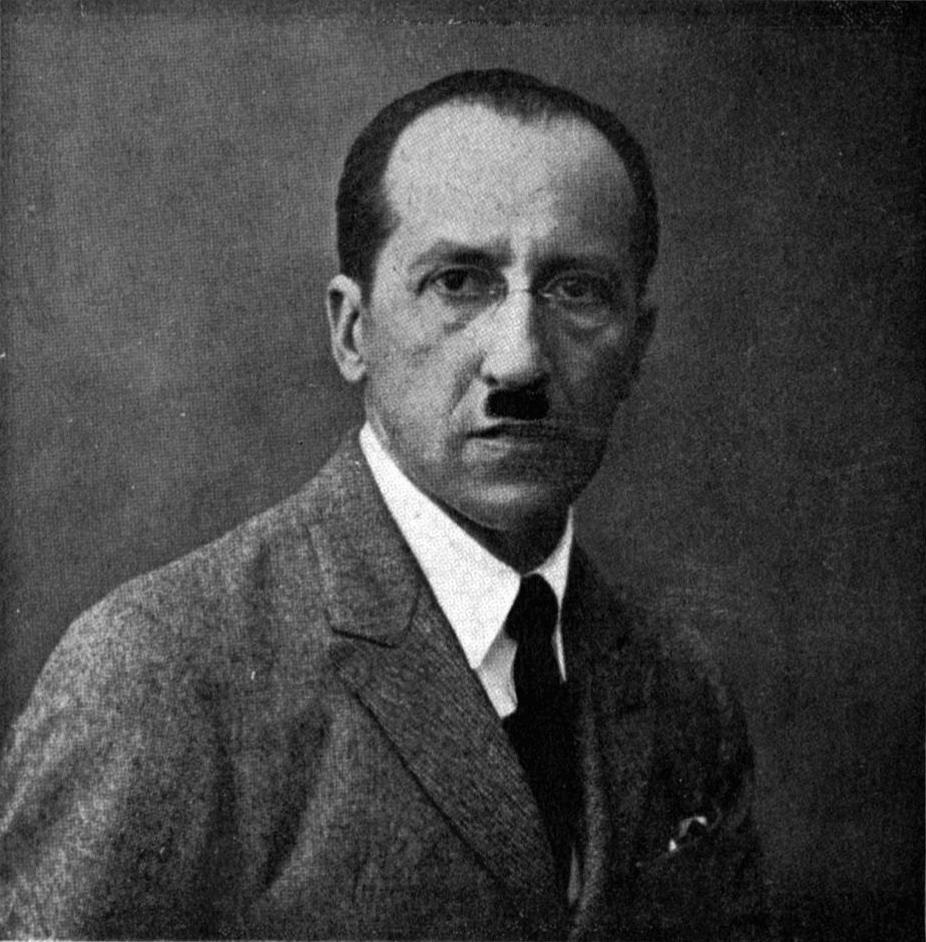
Piet Mondrian

Foto: Anonymous (photographer) · Public domain · Wikimedia Commons

Which artist is shown here?

Show answer

Piet Mondrian

Piet Mondrian (1872 to 1944) was a Dutch painter and co-founder of abstract art, famous for his pictures of lines and primary colours.

💡 Did you know? Mondrian was a passionate dancer: the rhythm of the Charleston and boogie-woogie flowed straight into his late pictures.

How PurFact works

Practise for free

More on this topic

Art: all topics →