
Where was Botticelli born, around 1445?
Show answer
Florence
The nickname "Botticelli" means "little barrel".
💡 Did you know? The nickname „Botticelli“ (little barrel) actually came from his elder brother.
19 questions · Art
Sandro Botticelli is born around 1445 in Florence, right in the flowering of the Italian Renaissance. The nickname "Botticelli" ("little barrel") actually comes from his older brother. As a young man he learns painting in a workshop and soon becomes a celebrated artist in the circle of the powerful Medici, who become his most important patrons. Botticelli's art captivates with graceful, weightless-seeming figures, flowing lines and a poetic, often dreamlike mood. Unlike many contemporaries he paints not only religious subjects but also themes from ancient mythology. Thus arise his most famous works: "The Birth of Venus", in which the goddess of love rises from the sea on a shell, and the "Primavera" (Spring), an enigmatic dance of mythological figures in a blossoming grove. In his later years Botticelli comes under the influence of the stern preacher Savonarola, who condemns luxury and worldly art. Botticelli's painting grows more serious, more pious, darker. Legend has it that he even threw some of his own works into the "bonfire of the vanities". After his death in 1510, Botticelli falls almost into oblivion for centuries: only in the 19th century is he rediscovered and celebrated as one of the greatest masters of the early Renaissance. Did you know that "The Birth of Venus" was among the first great paintings of the modern era to show a life-size nude woman not as a sinner but as an emblem of beauty? Botticelli’s fame rests on the mythological icons ‘The Birth of Venus’ and ‘Primavera’, joined by ‘Venus and Mars’, ‘Pallas and the Centaur’ and the ‘Calumny of Apelles’. Also from his hand: the tender ‘Madonna of the Magnificat’, the ‘Adoration of the Magi’, the ‘Idealized Portrait of a Lady’ of Simonetta Vespucci, ‘The Trials of Moses’, ‘Temptations of Christ’, the ‘Punishment of the Rebels’ and the late, devout ‘The Mystical Nativity’.
Practise for freePurFact brings every card back right before you would forget it. That's how knowledge sticks.
Florence
The nickname "Botticelli" means "little barrel".
💡 Did you know? The nickname „Botticelli“ (little barrel) actually came from his elder brother.
Renaissance
Botticelli was one of the leading painters of the early Florentine Renaissance in the Medici circle.
💡 Did you know? His graceful linear style soon seemed old-fashioned once Leonardo and Michelangelo arose.
the Medici
The Medici banking family sponsored Botticelli and commissioned many of his works.
💡 Did you know? In the „Adoration of the Magi“ Botticelli immortalised several Medici and, at far right, himself.
ancient mythology
„The Birth of Venus“ and „Primavera“ show ancient gods life-size: unusual for such a deeply Christian age.
💡 Did you know? "The Birth of Venus" was among the first to show a life-size nude woman as an emblem of beauty.
Savonarola
Savonarola condemned luxury and worldly art.
💡 Did you know? The fire-and-brimstone preacher Savonarola burned „vanities“ in Florence in 1497: Botticelli is said to have thrown his own paintings into the flames.
19th century
He died in 1510 and was long almost forgotten.
💡 Did you know? It was the English Pre-Raphaelites who made Botticelli popular again in the Victorian 19th century.

Foto: Sandro Botticelli · Public domain · Wikimedia Commons
The Birth of Venus
Around 1485: the goddess of love rises from the sea on a shell.
💡 Did you know? Venus is blown ashore on a shell: one of the first large-scale nudes since antiquity.

Foto: Sandro Botticelli · Public domain · Wikimedia Commons
Primavera
Around 1480: an enigmatic dance of mythological figures (Spring).
💡 Did you know? Across „Primavera“ are scattered more than 500 botanically accurate plants, many in bloom: an eternal spring.

Foto: Sandro Botticelli · Public domain · Wikimedia Commons
Venus and Mars
Painted around 1485.
💡 Did you know? Little fauns play with the sleeping war god's weapons: Love (Venus) has conquered War (Mars).

Foto: Sandro Botticelli · Public domain · Wikimedia Commons
Adoration of the Magi
Painted around 1475.
💡 Did you know? Botticelli painted the Medici as the Magi and placed himself at far right, looking out at the viewer.

Foto: Sandro Botticelli · Public domain · Wikimedia Commons
Madonna of the Magnificat
Painted around 1483.
💡 Did you know? The round format (tondo) was especially popular for images of the Madonna in Renaissance Florence.

Foto: Sandro Botticelli · Public domain · Wikimedia Commons
Calumny of Apelles
Painted around 1497.
💡 Did you know? In it Botticelli reconstructed a lost ancient painting solely from a written description.

Foto: Gennadii Saus i Segura · Public domain · Wikimedia Commons
Pallas and the Centaur
Painted around 1482.
💡 Did you know? The goddess of wisdom tames the wild centaur: an emblem of reason over impulse.
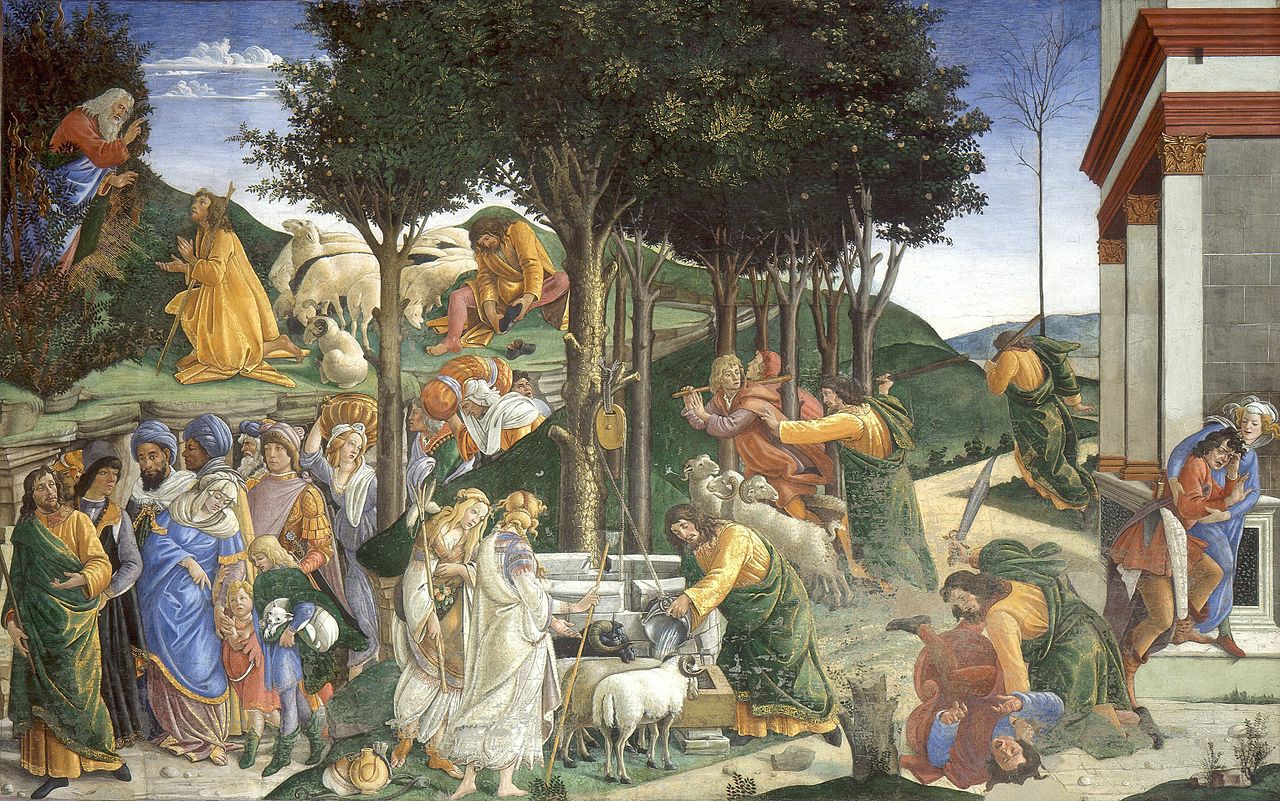
Foto: Sandro Botticelli · Public domain · Wikimedia Commons
The Trials of Moses
Painted around 1481.
💡 Did you know? Botticelli was among the painters who decorated the walls of the Sistine Chapel in 1481/82: before Michelangelo's ceiling.

Foto: Sandro Botticelli · Public domain · Wikimedia Commons
Idealized Portrait of a Lady (Portrait of Simonetta Vespucci as Nymph)
Painted around 1482.
💡 Did you know? Simonetta Vespucci was reckoned the most beautiful woman in Florence; Botticelli reportedly wished to be buried beside her.

Foto: Sandro Botticelli · Public domain · Wikimedia Commons
The Mystical Nativity
Painted around 1500.
💡 Did you know? It is Botticelli's only signed and dated work: made under the impression of Savonarola's dark sermons.
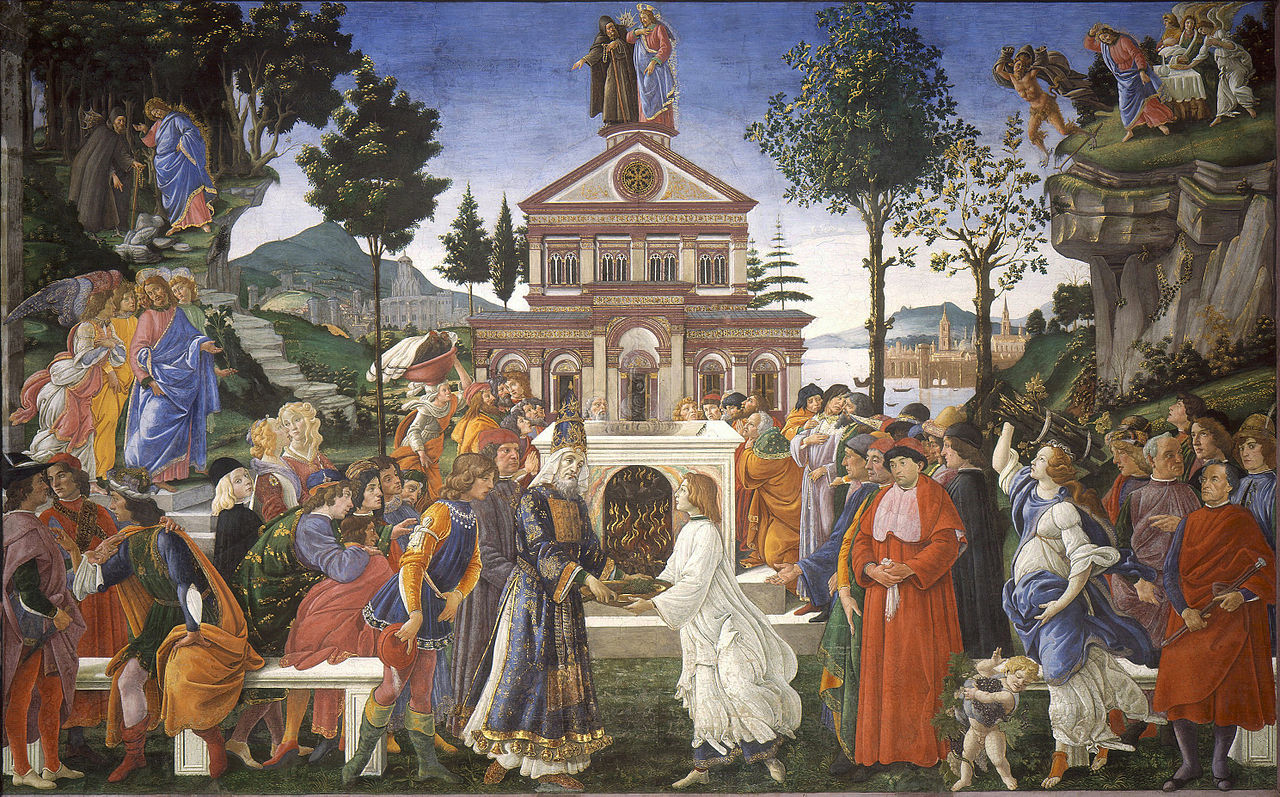
Foto: Sandro Botticelli · Public domain · Wikimedia Commons
Temptations of Christ
Painted around 1480.
💡 Did you know? This fresco too Botticelli created on the walls of the Sistine Chapel.

Foto: Sandro Botticelli · Public domain · Wikimedia Commons
Punishment of the Rebels
Painted around 1481.
💡 Did you know? In the background Botticelli painted the Roman Arch of Constantine: a reference to papal authority.

Foto: Sandro Botticelli · Public domain · Wikimedia Commons
Sandro Botticelli
Sandro Botticelli (c. 1445 to 1510) was an Italian painter of the early Florentine Renaissance. Works like „The Birth of Venus“ are icons of art history.
💡 Did you know? After his death Botticelli was nearly forgotten for some 400 years: only the 19th century rediscovered him.
Home · All topics · Legal notice · Privacy · Terms · Contact