PurFact

Science & Technology

13 questions · Society & Everyday

The history of women in science follows a pattern that repeats with uncomfortable regularity: they do the work, and the credit goes elsewhere. Lise Meitner explained nuclear fission from exile, and the Nobel Prize went to her colleague Otto Hahn alone. Rosalind Franklin produced the decisive X-ray image of DNA, and her name became a footnote. How much Mileva Marić, Einstein’s first wife and a physicist herself, contributed to his early work is still debated today. For decades hardly anyone knew that the trajectories of the first American spaceflights were calculated by Katherine Johnson, or that the Hollywood star Hedy Lamarr co-invented the frequency-hopping technique on which Wi-Fi and Bluetooth build today. And yet there they are. Marie Curie is still the only person with Nobel Prizes in two different natural sciences. Ada Lovelace described the first computer program for a machine that was never built. Grace Hopper convinced the world that computers could be programmed in something close to English. Florence Nightingale proved with statistics that hygiene saved more lives than the scalpel. Others changed our picture of ourselves: Jane Goodall saw a chimpanzee make a tool and forced science to redefine what it means to be human; Dian Fossey, author of “Gorillas in the Mist”, was murdered while protecting the mountain gorillas. And some left the planet altogether: Valentina Tereshkova orbited the Earth alone in 1963 as the first woman in space, and Christina Koch spent 328 days in space, longer than any woman before her.

Practise for free

PurFact brings every card back right before you would forget it. That's how knowledge sticks.

All questions with answers

Marie Curie

Foto: Fotograv. - Generalstabens Litografiska Anstalt Stockholm · Public domain · Wikimedia Commons

Who researched radioactivity and was the first person to win two Nobel Prizes?

Show answer

Marie Curie

Nobel Prize in Physics 1903 and Chemistry 1911; she discovered polonium and radium.

💡 Did you know? She remains the only person with Nobel Prizes in two different sciences.

Who became the first woman in space, in 1963?

Show answer

Valentina Tereshkova

The Soviet cosmonaut orbited the Earth solo.

💡 Did you know? She stayed in space for almost three days.

Who spent years studying the mountain gorillas of Rwanda?

Show answer

Dian Fossey

Her book 'Gorillas in the Mist' became famous; she fought poaching.

💡 Did you know? She was murdered at her research station in 1985.

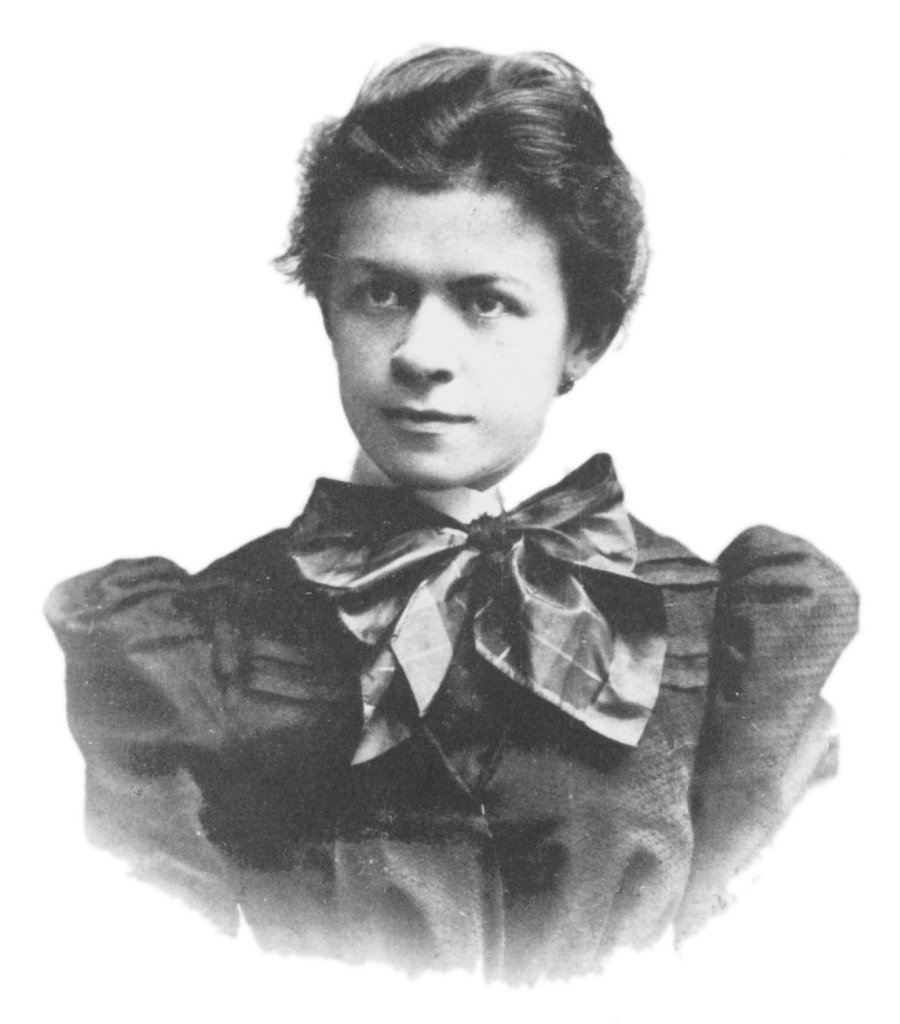
Mileva Marić

Foto: Unbekannt · Public domain · Wikimedia Commons

Who was the Serbian physicist and mathematician, Albert Einstein's first wife?

Show answer

Mileva Marić

She studied physics with Einstein in Zurich.

💡 Did you know? Her possible contribution to his early work is still debated today.

Who holds the record for the longest single spaceflight by a woman?

Show answer

Christina Koch

The NASA astronaut also took part in the first all-female spacewalk.

💡 Did you know? She is slated to fly to the Moon on the Artemis programme.

Ada Lovelace

Foto: Margaret Sarah Carpenter · Public domain · Wikimedia Commons

Who is regarded as the first computer programmer in history (19th century)?

Show answer

Ada Lovelace

She wrote algorithms for Charles Babbage's planned calculating machine.

💡 Did you know? She was the daughter of the poet Lord Byron.

Who spent decades studying chimpanzees and changed how we see great apes?

Show answer

Jane Goodall

The British primatologist is also known as an environmental activist.

💡 Did you know? She observed that chimpanzees use tools.

Florence Nightingale

Foto: H. Lenthall, London · Public domain · Wikimedia Commons

Who is regarded as the founder of modern nursing?

Show answer

Florence Nightingale

In the Crimean War she became famous as 'the Lady with the Lamp'.

💡 Did you know? She used statistics and charts to save lives.

Who, as a NASA mathematician, computed spaceflight trajectories ('Hidden Figures')?

Show answer

Katherine Johnson

Her calculations were crucial for the first US spaceflights.

💡 Did you know? Astronaut John Glenn had her personally check the numbers before his flight.

Rosalind Franklin

Foto: MRC Laboratory of Molecular Biology · CC BY-SA 4.0 · Wikimedia Commons

Whose X-ray images provided the key clue to the double-helix structure of DNA?

Show answer

Rosalind Franklin

Her famous 'Photo 51' was central to discovering the structure of DNA.

💡 Did you know? She died before the Nobel Prize for the discovery was awarded.

Lise Meitner

Foto: Harris & Ewing · Public domain · Wikimedia Commons

Who was the physicist who provided the theoretical explanation of nuclear fission?

Show answer

Lise Meitner

Her collaborator Otto Hahn received the Nobel Prize; she was overlooked.

💡 Did you know? Element 109, meitnerium, is named after her.

Who was the US computer scientist and naval officer, a pioneer of early programming languages?

Show answer

Grace Hopper

She helped drive the development of compilers and the language COBOL.

💡 Did you know? She helped popularise the term 'bug' for a computer fault.

Who was the Hollywood star who also co-invented a radio technique that anticipated Wi-Fi and Bluetooth?

Show answer

Hedy Lamarr

Her 'frequency hopping' is seen as a forerunner of modern wireless tech.

💡 Did you know? For a long time her role as an inventor was entirely unknown.

How PurFact works

Practise for free

More on this topic

Society & Everyday: all topics →