📖
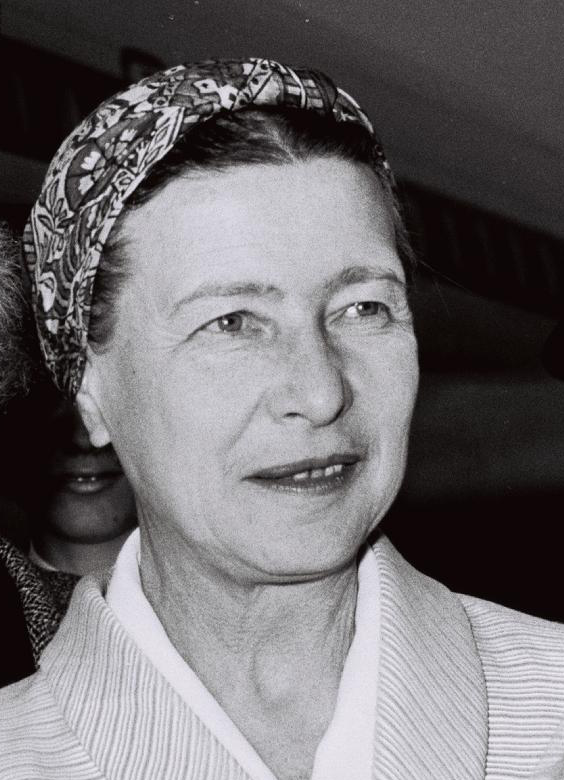
Simone de Beauvoir
10 questions · Society & Everyday
Simone de Beauvoir, born in Paris in 1908 into a middle-class family, is an exceptionally bright child who breaks early with the Catholic faith and the conventions of her upbringing. She studies philosophy at the Sorbonne and sits the notoriously difficult agrégation: the youngest candidate ever to do so at the time. In the exam she comes second, narrowly behind a young man named Jean-Paul Sartre. From that meeting grows a lifelong, unconventional partnership: no marriage, no shared household, but an intellectual bond that unites the two until death.
Beauvoir becomes one of the most important thinkers of existentialism; the philosophy that holds that human beings have no fixed essence but create themselves through their choices. She writes novels, essays and diaries, but her epochal work appears in 1949: 'The Second Sex'. In it she analyses, with razor-sharp clarity, how "woman" was made over centuries into the deviant "Other" against man.
From this book comes her most famous line: "One is not born, but rather becomes, a woman." By this she means that femininity is not nature but social conditioning. The idea becomes a cornerstone of the modern women's movement; for the feminist wave of the 1960s and 70s, Beauvoir is a guiding figure.
She remains politically engaged all her life: against the Algerian War, for the right to abortion, for the women's movement. When she dies in 1986 she is buried next to Sartre in the Montparnasse cemetery in Paris. Her work is still regarded as one of the pillars of feminist thought: a book that gave millions of women the language to understand their own situation.
Practise for free
PurFact brings every card back right before you would forget it. That's how knowledge sticks.