✍️
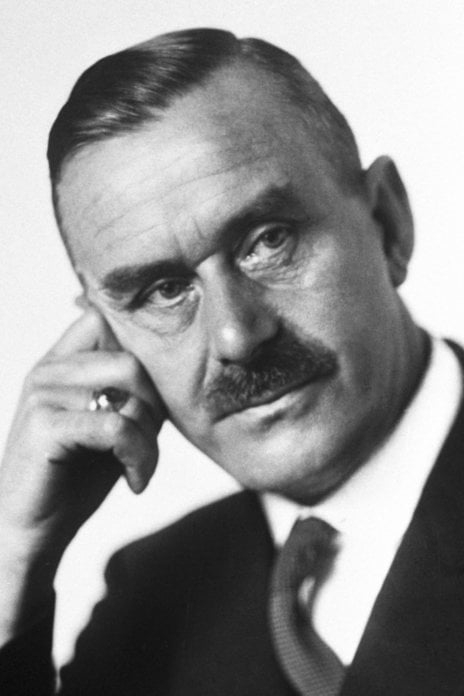
Thomas Mann
13 questions · Literature
Thomas Mann, born in Lübeck in 1875 as the son of a senator and grain merchant, achieved at 26 what others dream of for a lifetime: 'Buddenbrooks' (1901), the 'decline of a family' across four generations of Lübeck merchants: so close to his own family history that the Hanseatic city was at first outraged. Almost three decades later, the Swedish Academy justified the 1929 Nobel Prize expressly ('principally') with this debut.
Mann became the very representative of German literature: disciplined as a civil servant, he wrote every morning. There followed the novella 'Death in Venice' (1912), in which the ageing writer Gustav von Aschenbach, in the cholera-stricken city, succumbs to his fascination with the beautiful boy Tadzio, and 'The Magic Mountain' (1924): young Hans Castorp intends a three-week visit to a Davos lung sanatorium and stays seven years, while the ideas of pre-war Europe talk at him. His wife Katia, mother of their six children, managed house and work; Mann's concealed homoerotic leanings were revealed only by the diaries opened after his death.
In 1933 the soon-to-be-expatriated author did not return from abroad: exile in Switzerland, from 1938 in the USA. From California he addressed 'German listeners!' over the BBC against Hitler, wrote the Joseph tetralogy and 'Doctor Faustus': the story of the composer Adrian Leverkühn, who, like Germany, makes his pact with the devil. He died in Zurich in 1955.
Did you know that literature was a family affair with the Manns? His brother Heinrich wrote 'The Loyal Subject', and the children Erika, Klaus and Golo became important authors themselves, while the two writing brothers' relationship remained fraught for years.
Practise for free
PurFact brings every card back right before you would forget it. That's how knowledge sticks.