
Where was Titian born, around 1488?
Show answer
near Venice
His Italian name was Tiziano Vecellio.
💡 Did you know? Titian was born in the mountains near Venice and came to the lagoon city as a child to train.
19 questions · Art
Titian, in Italian Tiziano Vecellio, is born around 1488 in the mountains north of Venice. As a child he comes to the lagoon city to learn painting and makes it his home. Venice is at this time a rich trading metropolis: the ideal soil for a painter who soon rises to become the most celebrated artist of his age. Titian becomes the supreme master of the Venetian Renaissance. His hallmark is colour: where others seek the drawing first, Titian builds his pictures from glowing, saturated hues and loose, lively brushstrokes. His female figures, such as the "Venus of Urbino", radiate sensual warmth; his religious works, such as the vast "Assumption of the Virgin", a dramatic power. His fame reaches far beyond Venice. Emperor Charles V, the most powerful ruler in Europe, makes him his court painter and is said once even to have picked up a brush he had dropped: an honour unheard of for an artist. Titian paints popes, kings and princes and becomes a wealthy, highly respected man himself. Titian works into old age and dies in 1576, at a great age, in Venice while the plague rages through the city. His loose, colour-driven style influences painting for centuries, from Rubens to the Impressionists. Did you know that his late works are painted so freely and blurred that some contemporaries thought them unfinished, while later painters saw in them precisely the future of art? Titian, the master of Venetian colour, painted sensuous female figures like the ‘Venus of Urbino’, the ‘Sleeping Venus’, ‘Flora’ and ‘Sacred and Profane Love’. For the church he created the mighty ‘Assumption of the Virgin’ and the ‘Pesaro Madonna’, for the princely courts the ‘Equestrian Portrait of Charles V’. From mythology come ‘Bacchus and Ariadne’, ‘Diana and Actaeon’, ‘The Feast of the Gods’, ‘The Rape of Europa’ and the ‘Allegory of Prudence’.
Practise for freePurFact brings every card back right before you would forget it. That's how knowledge sticks.
near Venice
His Italian name was Tiziano Vecellio.
💡 Did you know? Titian was born in the mountains near Venice and came to the lagoon city as a child to train.
Venetian Renaissance
Titian was the towering master of the Venetian Renaissance and shaped painting for decades.
💡 Did you know? Unlike the Florentines, the Venetians around Titian relied on colour and light rather than strict drawing.
colour
Titian built his pictures from glowing layers of colour, at the end often applying paint with his fingers.
💡 Did you know? His late works are painted so freely that some thought them unfinished.
Emperor Charles V
Emperor Charles V esteemed Titian so highly that he ennobled him: by legend, he once picked up the painter's dropped brush himself.
💡 Did you know? Legend has it the emperor once picked up a brush Titian had dropped.
popes, kings and princes
Titian portrayed the powerful of his time: popes, emperors, kings and princes across Europe.
💡 Did you know? To own a Titian portrait was the ultimate status symbol: rulers waited patiently for their turn.
1576 in Venice
His style influenced painting up to the Impressionists.
💡 Did you know? Titian lived well past 80 (his exact age is uncertain) and died in 1576 during a plague epidemic in Venice.

Foto: Titian · Public domain · Wikimedia Commons
Venus of Urbino
Around 1538: one of the most famous nudes in art history.
💡 Did you know? The frank, self-assured gaze of the reclining Venus inspired Manet's „Olympia“ centuries later.
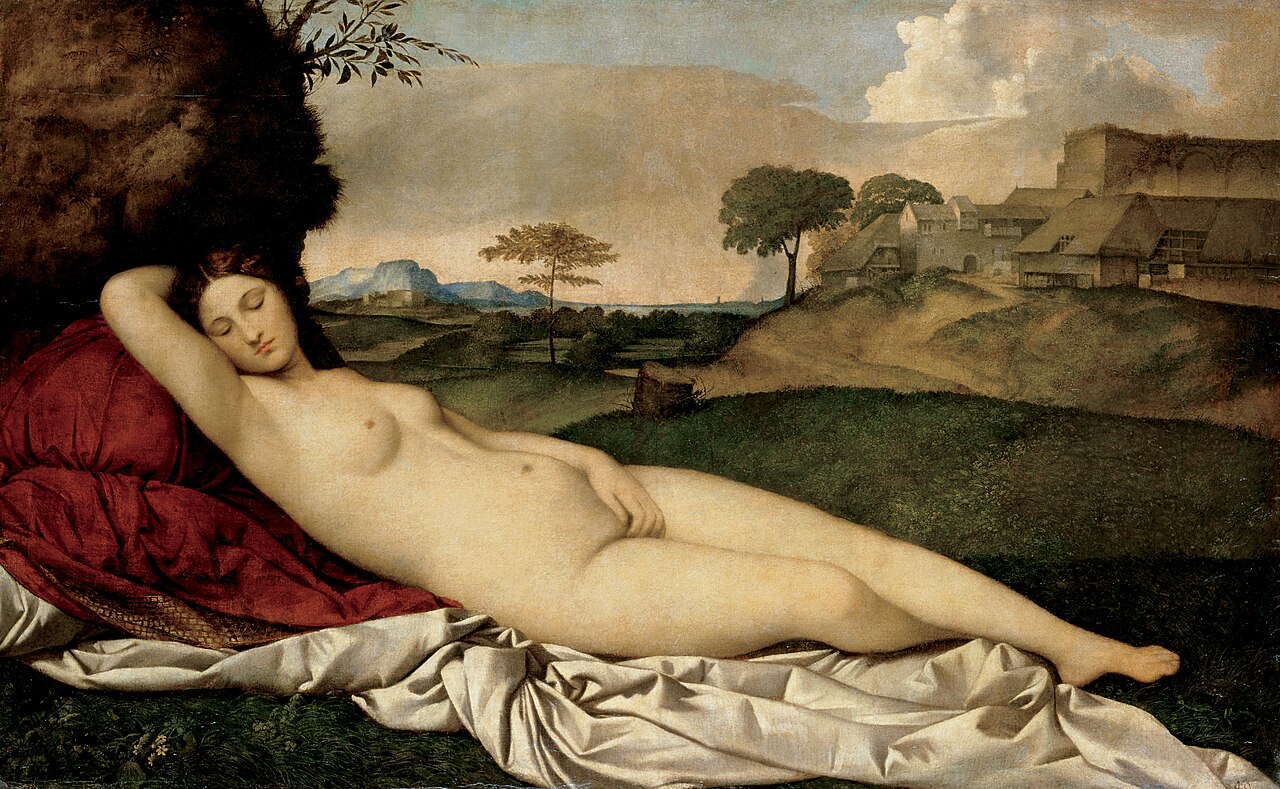
Foto: Titian / Giorgione · Public domain · Wikimedia Commons
Sleeping Venus
Painted around 1509.
💡 Did you know? Titian finished this picture by his early-deceased teacher Giorgione: a turning point in the painting of the nude.

Foto: Titian · Public domain · Wikimedia Commons
Assumption of the Virgin
Around 1516 to 1518: a vast altarpiece of dramatic power.
💡 Did you know? The huge altarpiece in Venice amazed contemporaries with its bold upward movement.

Foto: Titian · Public domain · Wikimedia Commons
Sacred and Profane Love
Painted around 1514.
💡 Did you know? Two female figures (one clothed, one nude) embody two forms of love; the meaning is still disputed.

Foto: Titian · Public domain · Wikimedia Commons
Equestrian Portrait of Charles V
Painted around 1548.
💡 Did you know? The equestrian portrait of the emperor became the model for all royal equestrian portraits of the following centuries.

Foto: Titian · Public domain · Wikimedia Commons
Flora
Painted around 1517.
💡 Did you know? A young woman as goddess of flowers: the epitome of Venetian, sensual beauty.

Foto: Giovanni Bellini / Titian · Public domain · Wikimedia Commons
The Feast of the Gods
Painted around 1514.
💡 Did you know? Titian completed and reworked this mythological feast begun by the aged Giovanni Bellini.

Foto: Titian · Public domain · Wikimedia Commons
Allegory of Prudence
Painted around 1550.
💡 Did you know? Three human heads and three animal heads stand for past, present and future.

Foto: Titian · Public domain · Wikimedia Commons
Bacchus and Ariadne
Painted around 1520.
💡 Did you know? The wine god leaps from his chariot in wild motion: a high point of dynamic Renaissance painting.
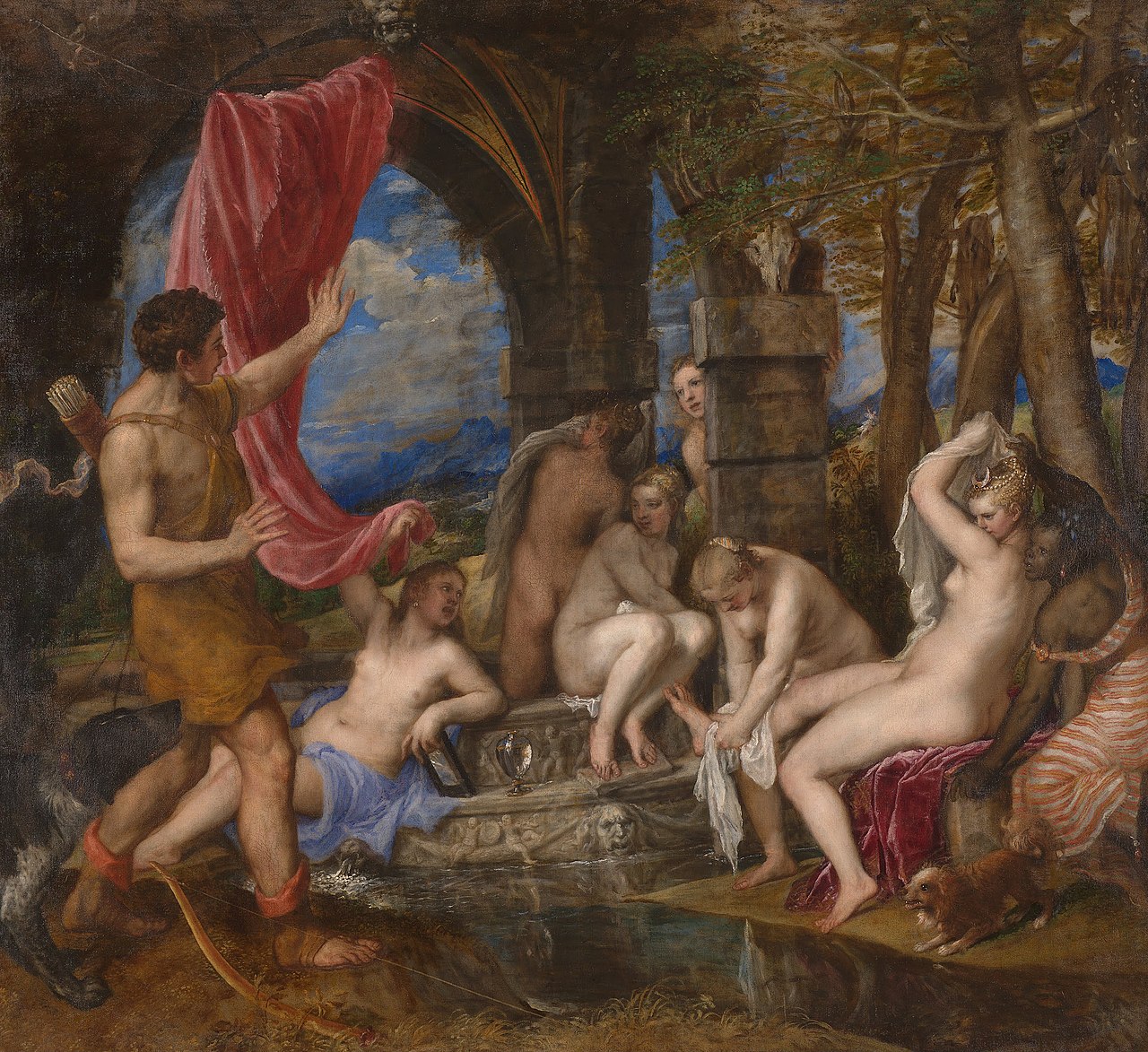
Foto: Titian · Public domain · Wikimedia Commons
Diana and Actaeon
Painted around 1557.
💡 Did you know? The hunter Actaeon surprises the bathing goddess: a masterpiece from Titian's series of myths for the Spanish king.

Foto: Titian · CC BY-SA 4.0 · Wikimedia Commons
Pesaro Madonna
Painted around 1522.
💡 Did you know? Titian boldly moved the Madonna from the centre to the side: a revolutionary composition.

Foto: Titian · Public domain · Wikimedia Commons
The Rape of Europa
Painted around 1560.
💡 Did you know? Zeus as a bull carries Europa off across the sea: a late, wildly dynamic riot of colour.

Foto: Titian · Public domain · Wikimedia Commons
Titian
Titian (c. 1488 to 1576) was the towering painter of the Venetian Renaissance, famous as a master of colour and as portraitist of Europe's powerful.
💡 Did you know? Titian lived to a great age and worked to the last; his late pictures, with their almost dissolving colour, look astonishingly modern.
Home · All topics · Legal notice · Privacy · Terms · Contact