🚀
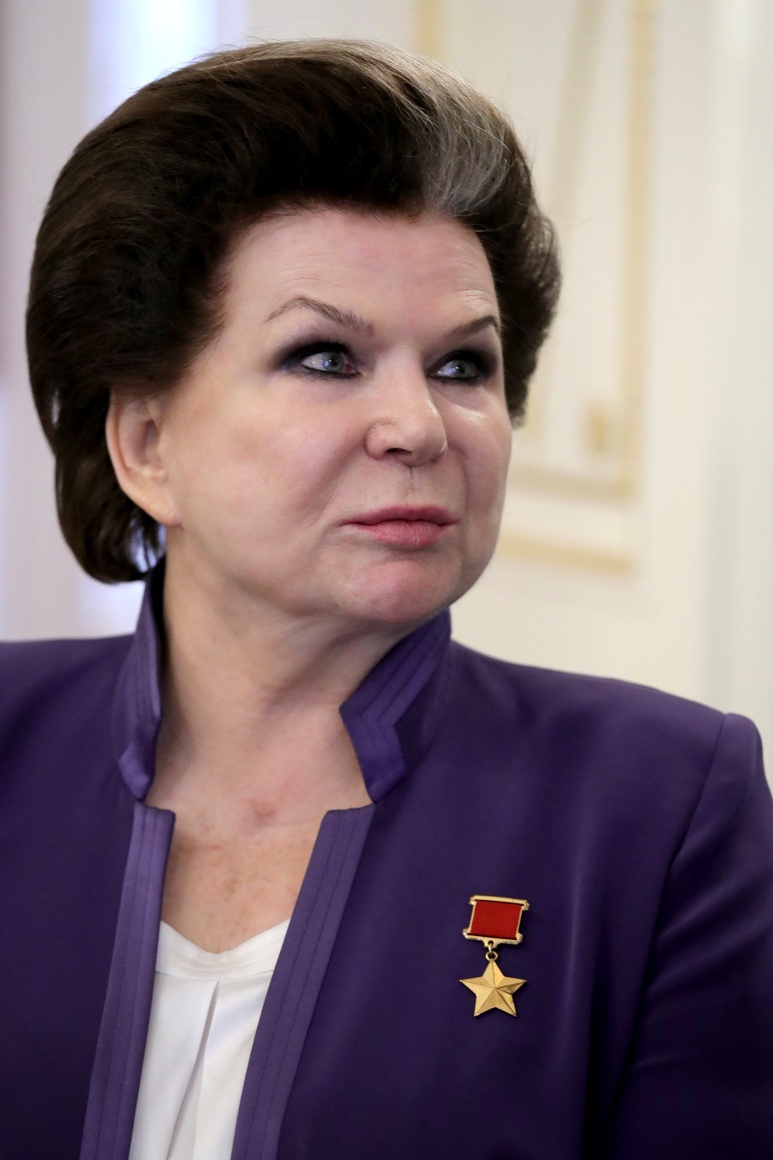
Valentina Tereshkova
11 questions · Society & Everyday
When Valentina Tereshkova is born in 1937 in the village of Maslennikovo on the Volga, nothing hints at a place in history. Her father, a tractor driver, is killed in the war against Finland; her mother works in a textile mill and soon Valentina is standing at the looms of Yaroslavl herself. Her heart, though, belongs to an unusual hobby: at the local aeroclub she jumps out of planes, logging well over a hundred parachute jumps.
That is precisely what makes her a candidate when, after Yuri Gagarin's triumph, the Soviet Union secretly starts looking for women to fly in space. Vostok cosmonauts did not land inside their capsule: they were ejected by catapult seat and floated down by parachute. Out of hundreds of applicants, the weaver is chosen. On 16 June 1963 she lifts off aboard Vostok 6: the first woman in space. Her call sign: "Chaika", the seagull.
She stays up for almost three days and circles the Earth 48 times: accumulating more hours in space than all American astronauts combined up to that point. The flight is no joyride: she suffers from nausea, and an error in the automatic guidance system has to be corrected by radio. But she lands safely in a field in the Altai region: where villagers promptly offer her bread and cheese, while she hands out her tubes of space food in return.
After landing, Tereshkova becomes a Soviet icon: she marries fellow cosmonaut Andriyan Nikolayev, completes an engineering degree and later enters politics, where she has served for years as a deputy in the State Duma. One record still stands: she remains the only woman ever to have flown in space entirely alone and it took 19 years before another woman, Svetlana Savitskaya, reached space at all.
Practise for free
PurFact brings every card back right before you would forget it. That's how knowledge sticks.